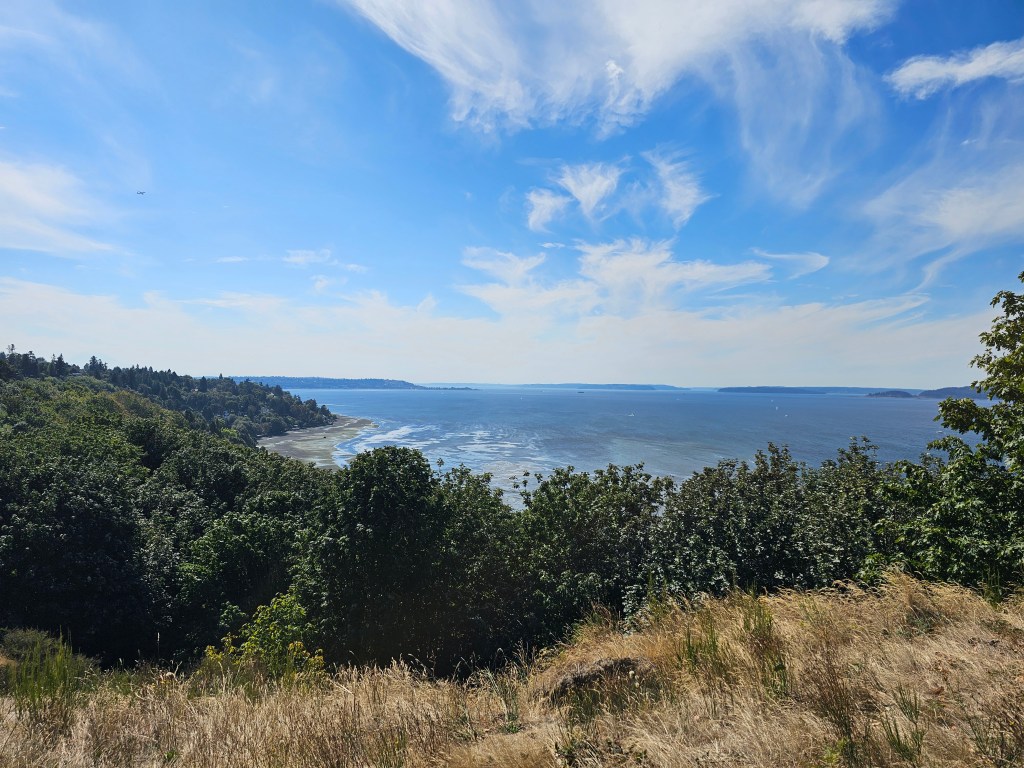
This post is a part of My MFA Journey blog series going into my grad school experience at the top low residency MFA program, the Bennington Writing Seminars. My previous posts go over my application process, my decision process, the residency experience, and my first year. In this post, I’ll be going over the first half of my thesis year: what I studied, what I worked on, and what I read. There will also be pictures throughout to give a peek inside my grad school life.
When I set out to write this MFA Journey series, I wanted to create a set of blogs that a writer couple use to help inform their own decisions about grad school or live vicariously through me. This past summer residency at Bennington that marked the start of my thesis year I had several writers on campus come up to me and mention that they had read this series! Some even credited my writing of my experience at Bennington as being a reason they applied and ultimately said yes.
That right there is writing magic
I started writing this series with a little bit of hope, insight, and a deep love of writing and its gone on to help others. I wish all my stories could do that in some way.
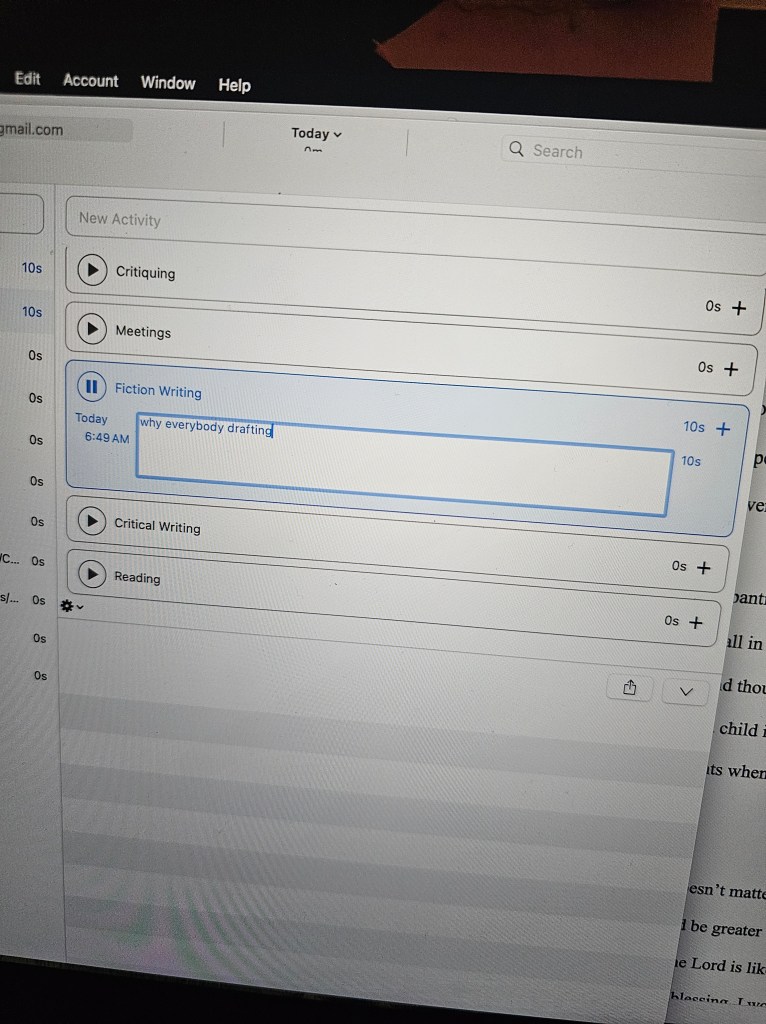
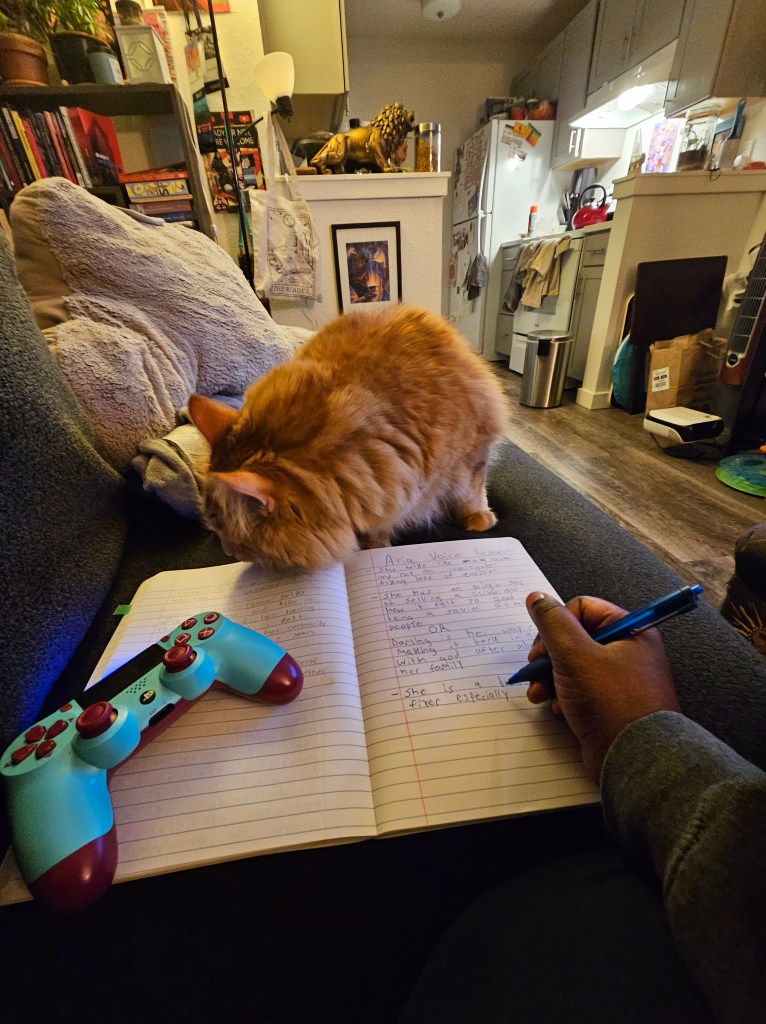
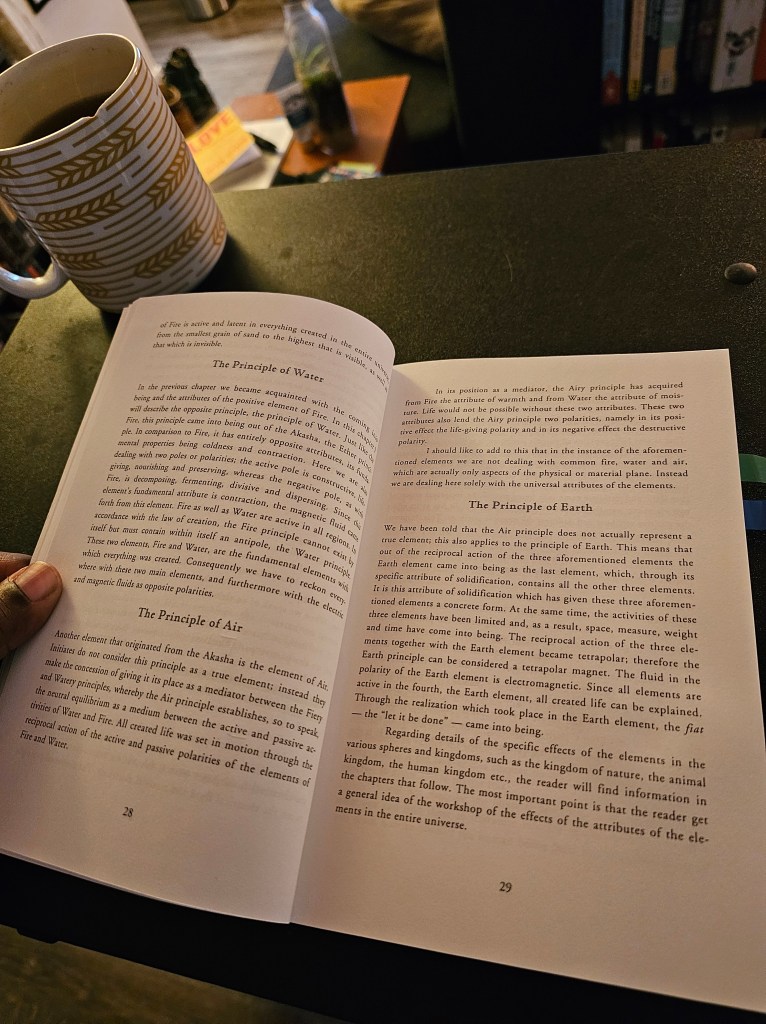
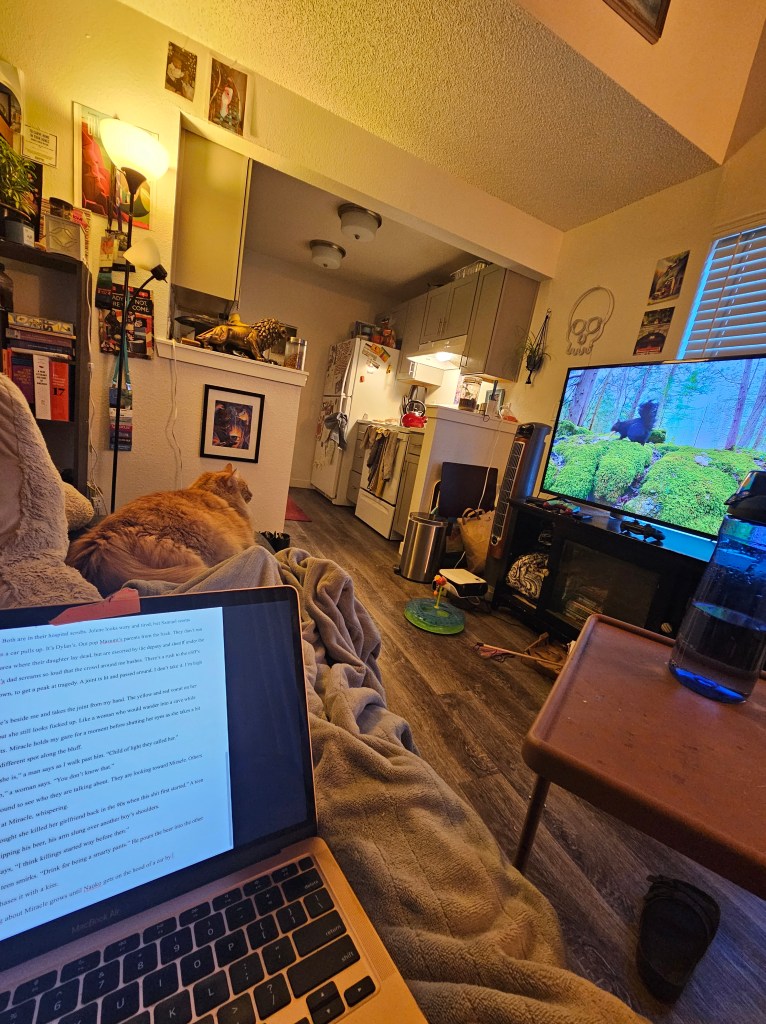
My Thesis Term First Residency
Originally, I was going to do this thesis post as one long post detailing my entire thesis year, including both my third and fourth terms. But the first half of my thesis year has felt like a whole year in itself. So, I wanted to give each part of my thesis year their own space.
And please, if there’s something I didn’t cover in this post that you want me to or have questions about, simply ask in the comments! I’ll answer and make sure to include that info on my thesis year part two post, which I am currently drafting as I write this. To do each of these thesis posts, I’ve treated my WordPress like a diary where each week, I check in and write about what I’m working on or reading and how its informing my thesis.
I’ve already detailed my third term June residency on my newsletter. What I didn’t share there, however, is the work I did on my thesis while on campus. I used my time in Bennington to dig up the trauma critical theory books at the library. When I found ones that seemed helpful for my critical thesis, I purchased them, except for one that cost over $100.
My critical thesis is about the narrative structure of horror stories and how they use trauma plots. It is a blend of history, craft, and critical analysis looking at how trauma is at the heart of all horror stories. My thesis proposes that while this may be the case there are some horror stories that have the potentiality to help readers process their own trauma by following a specific narrative structure. I then chart that structure in the paper using the books Beloved, The Reformatory, and Mongrels as examples.
My critical thesis is a 15-20 page paper analysis craft that goes along with my creative thesis as part of my graduation requirement. My critical paper ended up being about 18 pages that I had already cut down from 20! My creative thesis is my work of fiction. For the program, it needs to be 120 or 150 pages (30,000-45,000 words) and will be the beginning of a horror thriller novel about three women trying to solve a rash of serial killings in a small Wyoming town. The story at its core is about trauma, how it shapes us, and how we learn to rebuild ourselves in the aftermath.

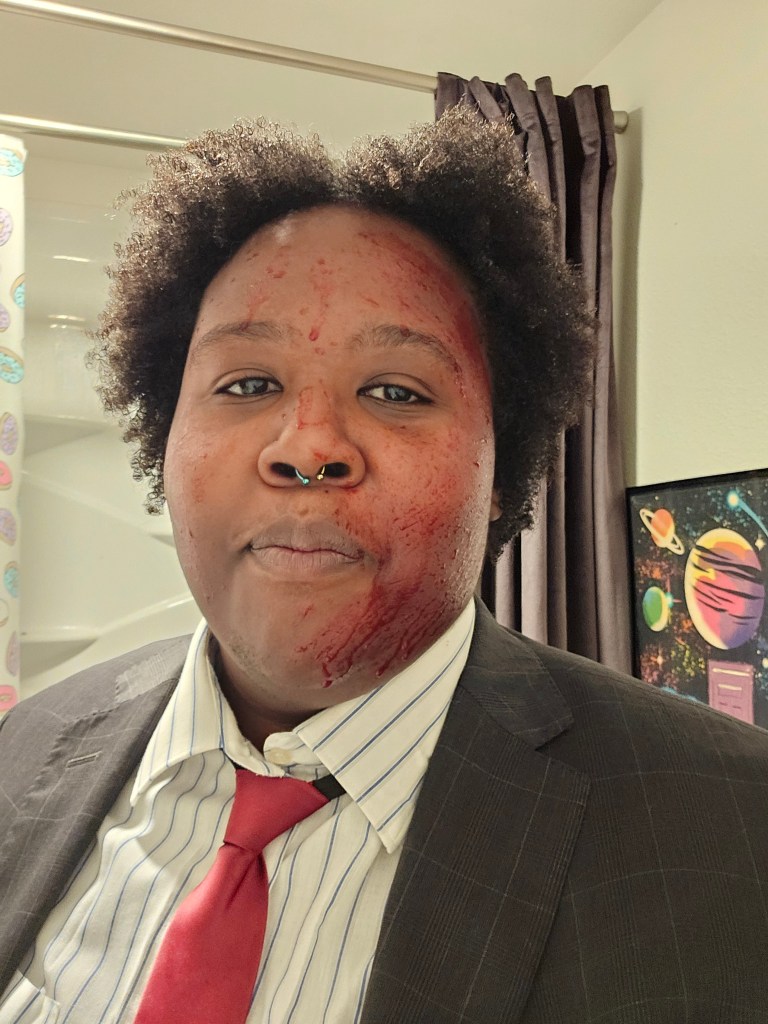
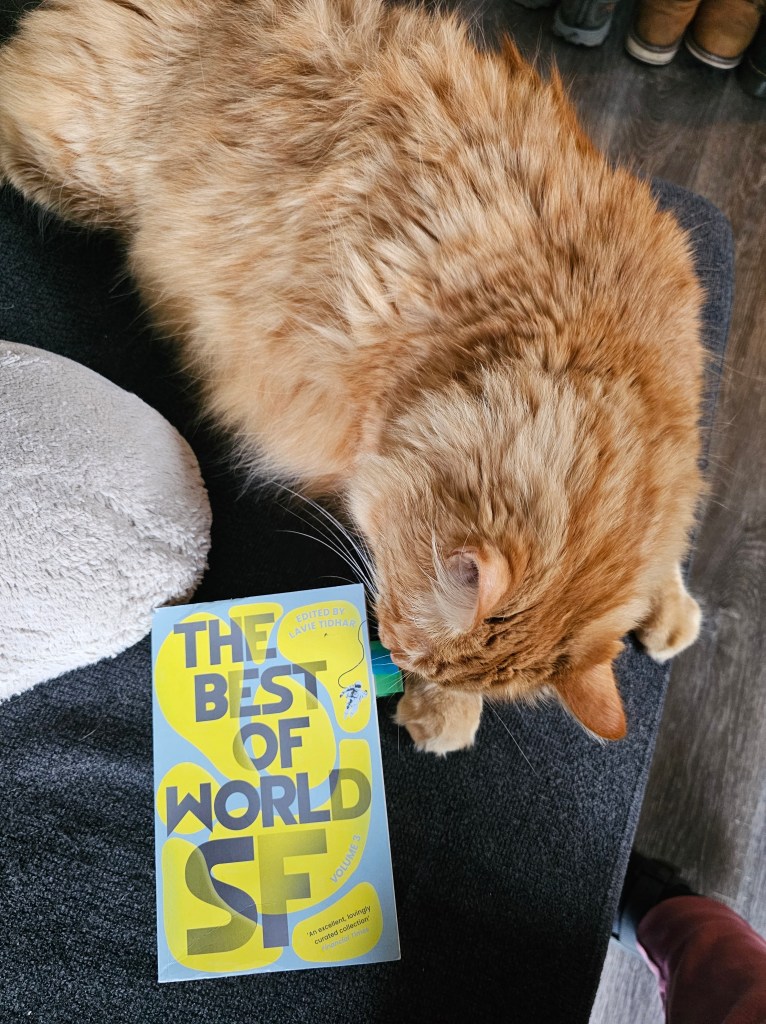
What I Wrote and Worked On During the 1st Half of My Thesis Year
After getting home from residency, I got into packet mode. Each month, I have to compile 50 or so pages of fiction writing, essays, and correspondence with my teacher. Third term is also when we are meant to work on a 15 page critical paper doing a deep dive into an author’s work, a particular book, craft technique, or other critical analysis around the writing craft. While Bennington gives us guidelines on what these critical papers can entail, we have pretty much free reign to come up with a topic of graduate level literary merit.
As long as our teachers approved it.
Before starting my term, I knew that I wanted to work on short stories and the beginning to my novel rewrite. My third term teacher was ‘Pemi Aguda—who I screamed when I saw that she was teaching at Bennington. Having gotten to work with her on my stories was a real dream come true and pleasure. It felt like she understood what I was doing and was immensely helpful at strengthening that. She also gave me a long list of book recommendations that I am still working through to help me with the themes and structure of my novel.
During the first half of my thesis year, I spent a lot of time reading to hear or learn what captivated me and also what drove story for writers that I admired. A few things stood out to me across a lot of the stories I read, watched, or played. The stories that pulled me in the most were the ones that spawn from character. Stories like Native Son and Beloved and Firefox: Confessions of a Girl Gang and so many others have an energy to them unmatched and totally unique that is rooted in how character shapes every aspect of the novel.
The other element of narrative that writers I love use without fault are unexpected moments and turns. They write in a way that makes the readers feel like they know what will happen next because the author uses reader or genre expectations to lull the reader into a state of confidence. Then the author does something totally unexpected in the story but absolutely plausible, knocking the reader out with how easily they were led into thinking they had any idea what would happen next. And that unexpected moment will reveal something about character, world, or story that makes the reader realize they don’t know anything at all but the author knows how to tell a story.
And this is what keeps readers reading an author.
I tried my hand at writing this more intuitive way and wrote a short story about a group of kids who get a taste of magic that leads them to doing a bad thing. The voice was strong and came to me steady, telling a story that felt so real and right that I don’t think it ever existed in me before. It wasn’t like a story idea I had been noodling on but a story that started with a character beginning to speak in my mind, telling me their story.
Despite all the energy I was getting from my reading and thinking about craft, I could tell that I wasn’t operating at the level I should be or pushing myself hard enough. A couple weeks away from my submitting my first packet, I could tell that I was still stuck in first year grad school brain, where I was thinking very small and granular.
For one of my annotations, I wanted to write about a specific passage in Stephen King’s The Outsider because of how it made me feel and the emotional blend of the physical beats in the passage. The only problem was that I had already done an annotation like that during my first year and wasn’t digging new territory with King. For my first packet of my thesis year, I wanted to write about something more difficult. I wanted to get my hands dirty with story and not just stare at it and say how pretty.
Thinking on what I wanted my critical essay idea to be, I thought it would be a good idea to break the big arching idea of ‘horror and trauma narratives’ down into its basic parts. The idea was that I would be able to use my shorter annotation essays as a way of exploring the larger ideas of my critical paper. That way by the time I started writing the paper I would have sort of already been writing on it for several months. This busted my mind way open and excited me because I was beginning to actually explore on the craft level what makes up a horror trauma narrative. That small paper on King’s The Outsider helped me start breaking down what a horror trauma narrative structure looks like.
Since I had a larger critical paper due, I wanted to get my shorter annotations out of the way early, so I could focus on my critical paper and the rewrite to my novel, which will be my creative thesis for the program. Some days while working on my school work, I would meet up with a writer who lives in my town and is also in the fiction program at Bennington.
One of these days I worked on another annotation for several poems out of the collection Heaven Looks Like Us. A form of pattern poetry is used in several of the poems in the collection. I wanted to explore how pattern poetry and structure can be used on the small scale to create resonance in the reader. I went with a vague sense of that idea and used the resources at the library to find books on poetry and poetic form to help me learn about pattern poetry (its history, uses, and practitioners). Then I tried my hand at writing some verse in a patterned way to see how it made me feel. After that, I wrote some reflections on what I learned and experienced and tried to conceptualize it around the poems I was examining in my annotation.

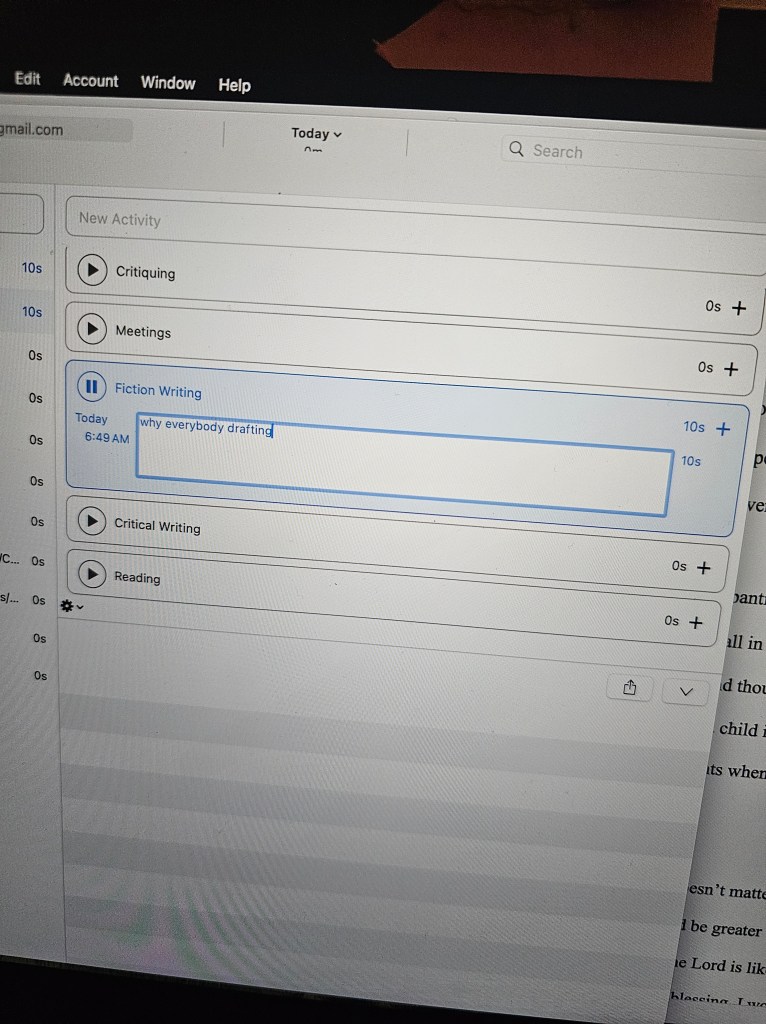
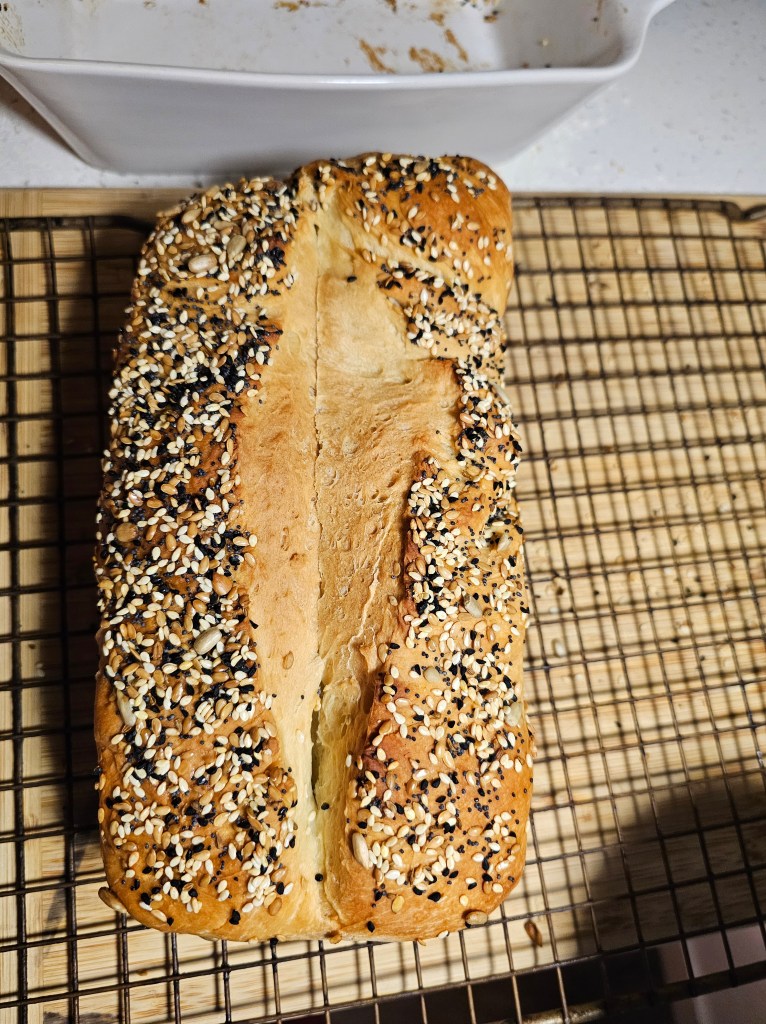
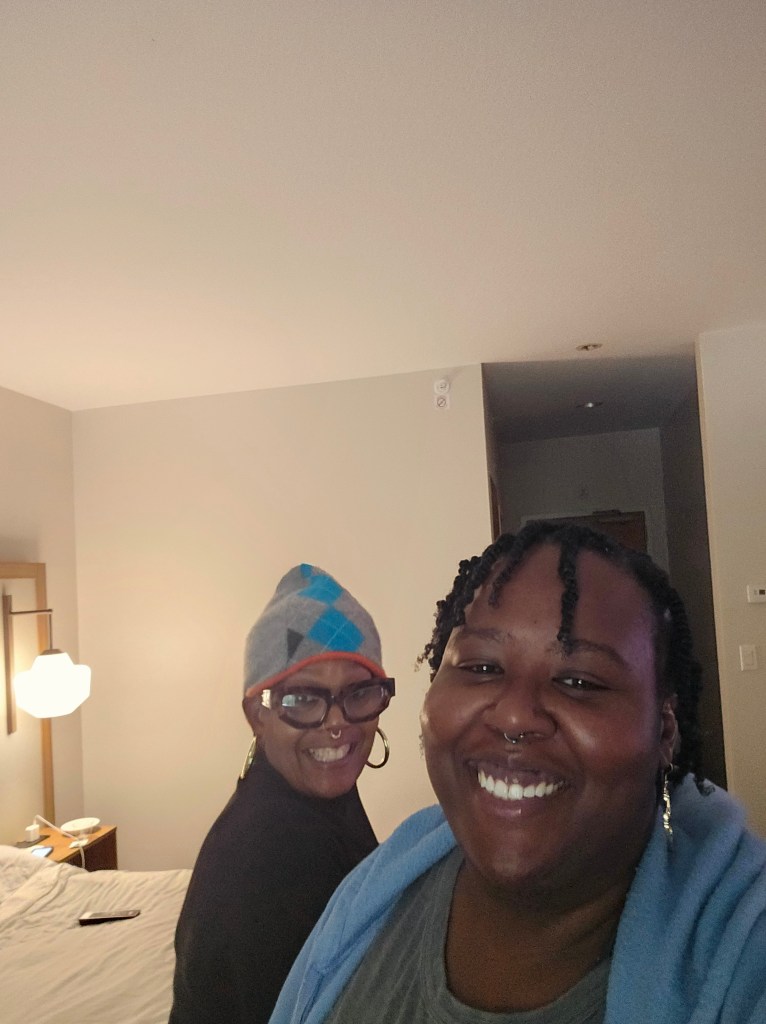
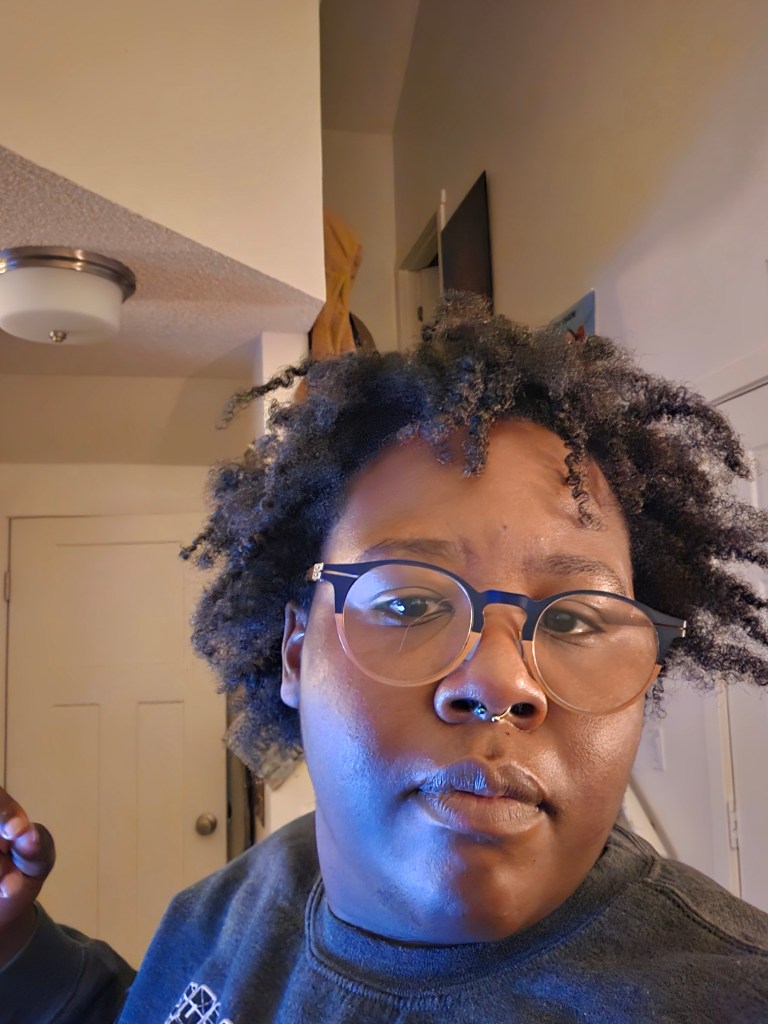

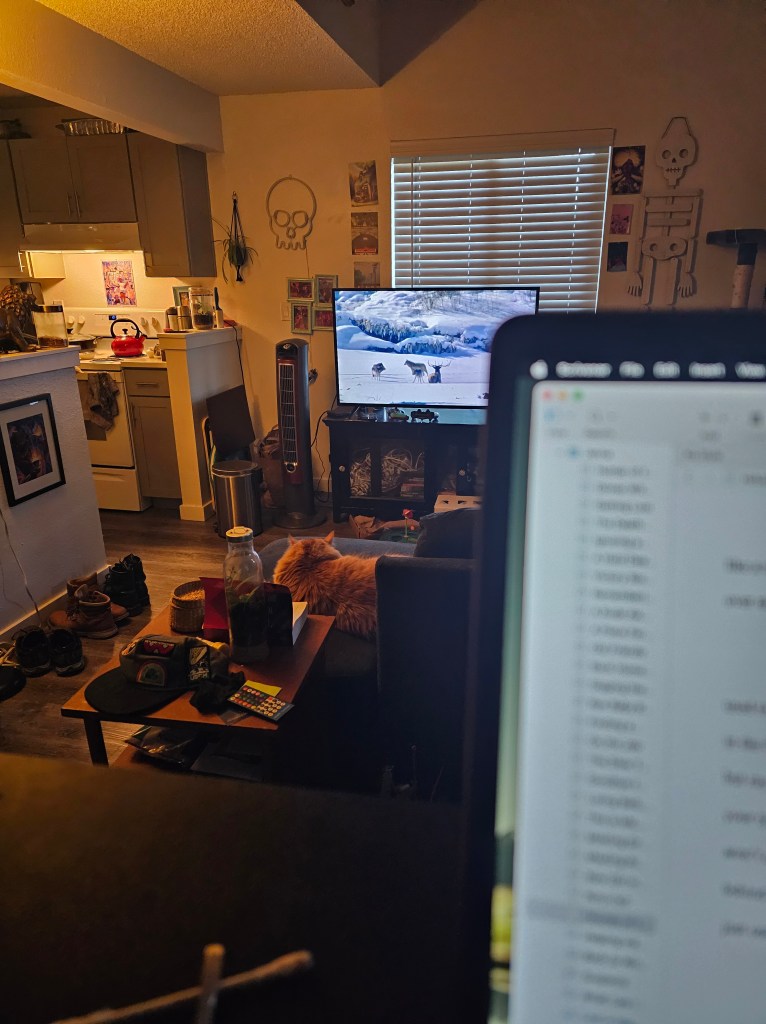
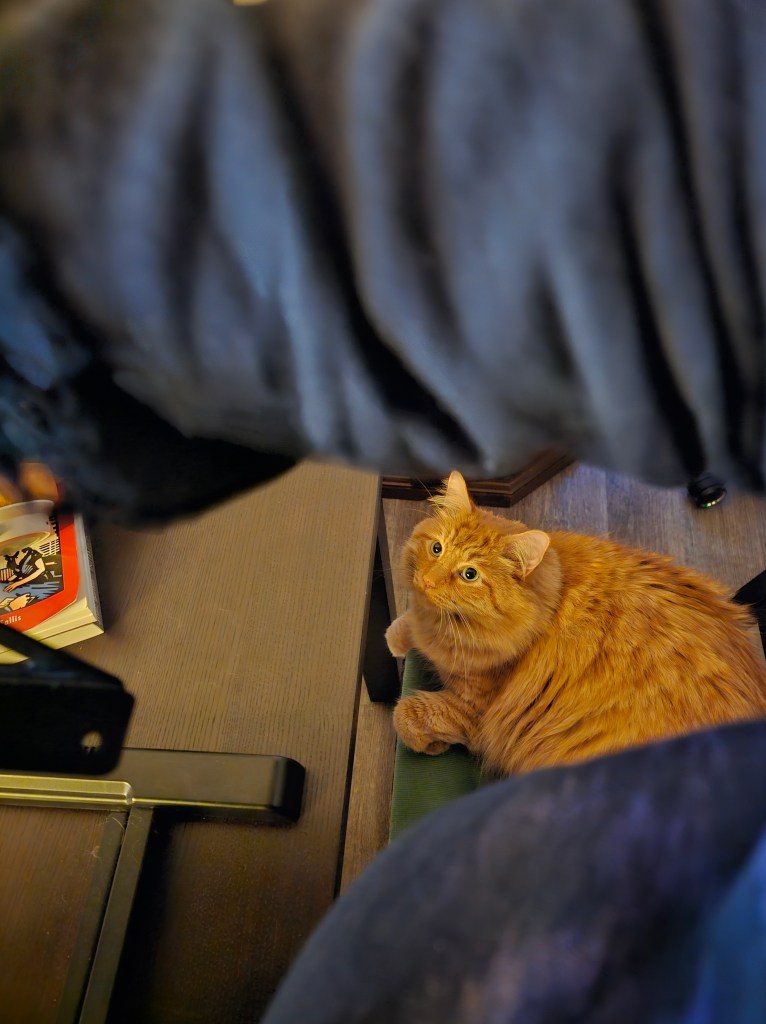
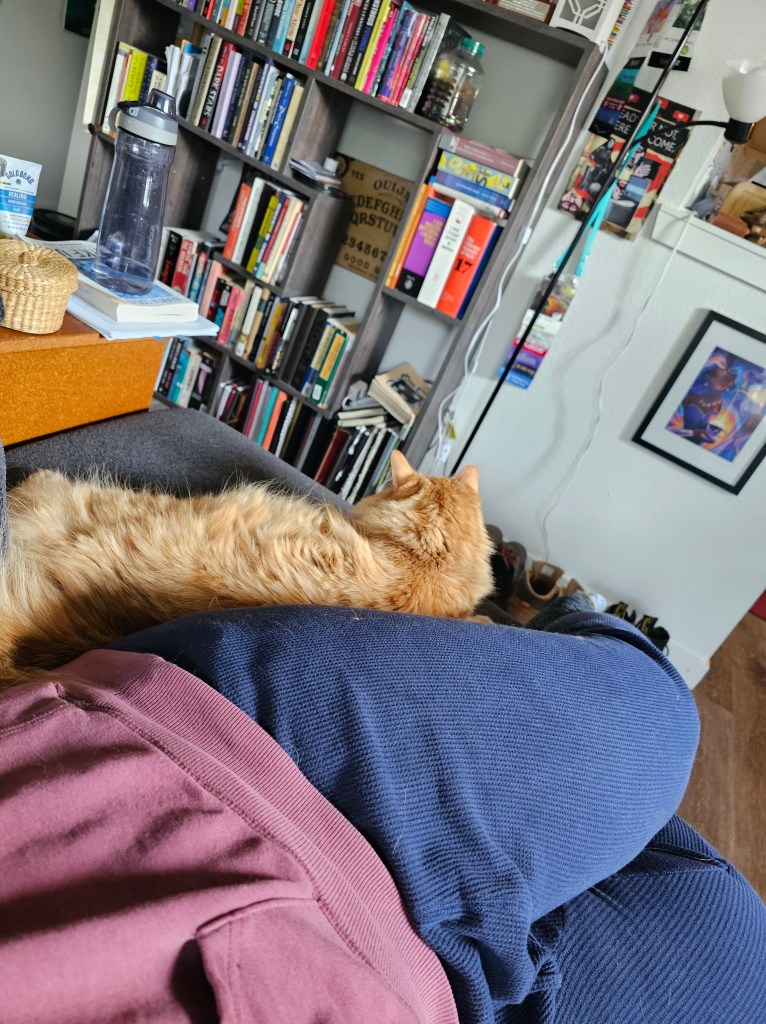
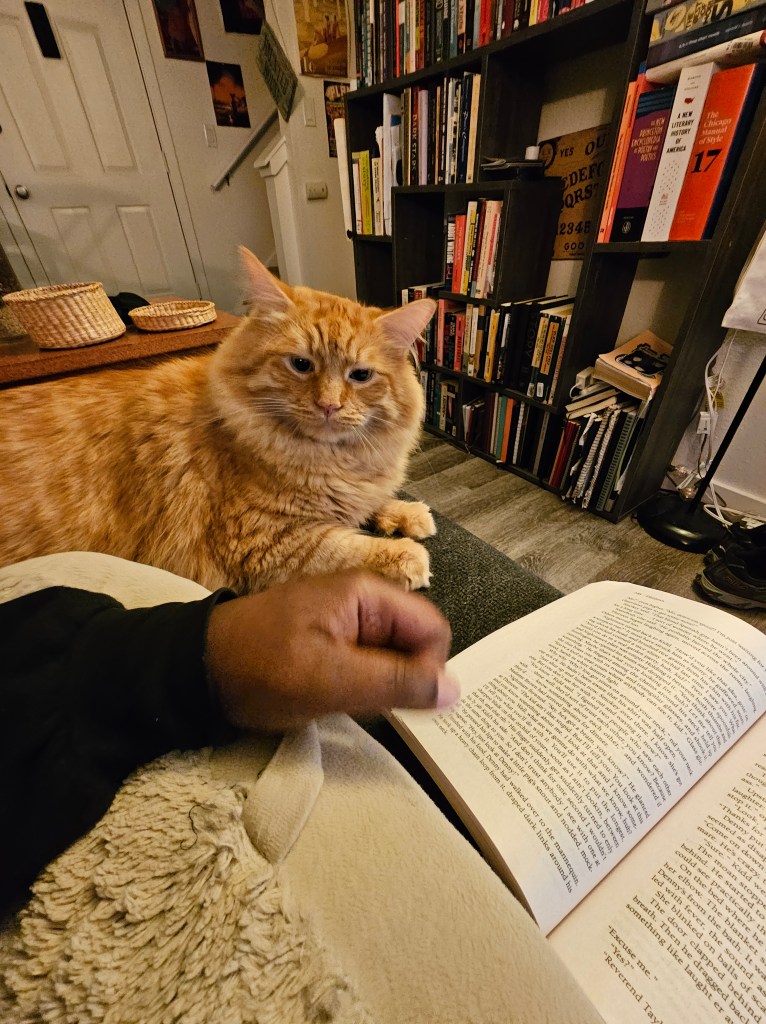
Library study sessions like that were really helpful at getting me into the right headspace for school work. I am lucky enough to live alone in a very comfy loft, but that comfort is often a hinderance to my productivity and creativity. I can go days or even a week without leaving my apartment. I have everything I need there to sustain myself. But living like that also leaves me stagnant and under stimulated at times. When I meet up with another person in the program, it’s like we’re having our own residency study session.
One thing I didn’t spend as much time on during my third term was reading over the first draft of my novel. I did a lot of thinking and researching about the book, but my original plan was to write the first draft, read it over closely to use it as a guide for world building and refining elements during the second draft. But I didn’t really do that, and because of that, I was a bit lost on how I would approach the second draft.
I set a target rewrite start date of September 1, 2025 with a end date of January 1, 2026. Three weeks out from that start date and I had no idea what the new draft of the book was meant to do on the page besides be better than the first. I did a speed read of the final 100 or so pages of the first draft and spent a lot of time staring at the wall and reading books that felt like good inspiration for how I wanted my novel to feel. No matter what, I was determined to start my rewrite on my target date and just start writing, using the looping method of going back and reading what I wrote the day before to propel me to the next scene and moment in the book.
One of the biggest lessons I’ve learned during my time in my MFA program has been to base my story not on an idea or cool world but the characters in the idea and world. The characters are the force of the novel and the story. Things happen on the page because of them—not me and especially not because of a silly little thing called plot. The first draft of my novel failed because I put my plot and my idea of the story above the characters and lost them in the telling. I didn’t want to have that happen again, so I would follow my characters through the story and world, allowing them to tell me their stories.
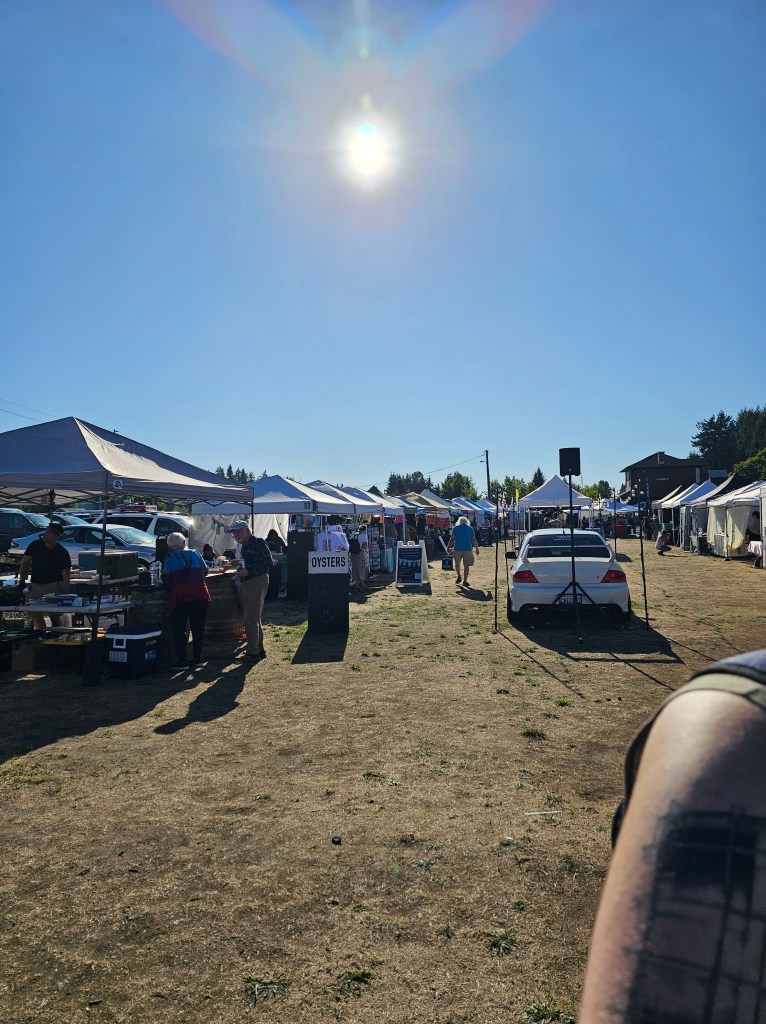
A highlight of my thesis year was WorldCon coming to Seattle in 2025. WorldCon is a convention honoring and celebrating scifi, fantasy, and horror books, authors, and other creations. I went to a couple of industry events and the Hugo Award ceremony, where Strange Horizons was up for an award for Best Semipro Zine. This wasn’t my first time at a convention but the first time I tried to mingle as a professional and found out I am not good at it.
At least I wasn’t good at it during the moments that I wanted to be, though from the outside I’m sure I looked like I was doing very well at mingling. But when editors or people asked me what I was working on, I either buffed their questions by saying I’m not in a submitting place or that I’m working on many things and ending there. I didn’t talk about my stories or my writing or what I’m trying to do in grad school.
Nothing.
It was like I didn’t know how to talk about my writing and tried to focus on coming off as no one as much as possible. I didn’t let that stop me from trying to show up better each day. I even made a point to meet professionals who have had an impact on my career and authors that I’ve worked with as an editor. That felt great and way better than trying to network.
Being in Seattle for a few days away from home at a writing convention felt like one of those dreamy ‘living the writer’s life moments’. In my Airbnb, I imagined a future where I was further away from home at a convention where I’d be giving a talk or lecture or signing books. I thought of what traditions I would have when I was out on the road like always making sure to try the Thai food of a place or walk the streets.
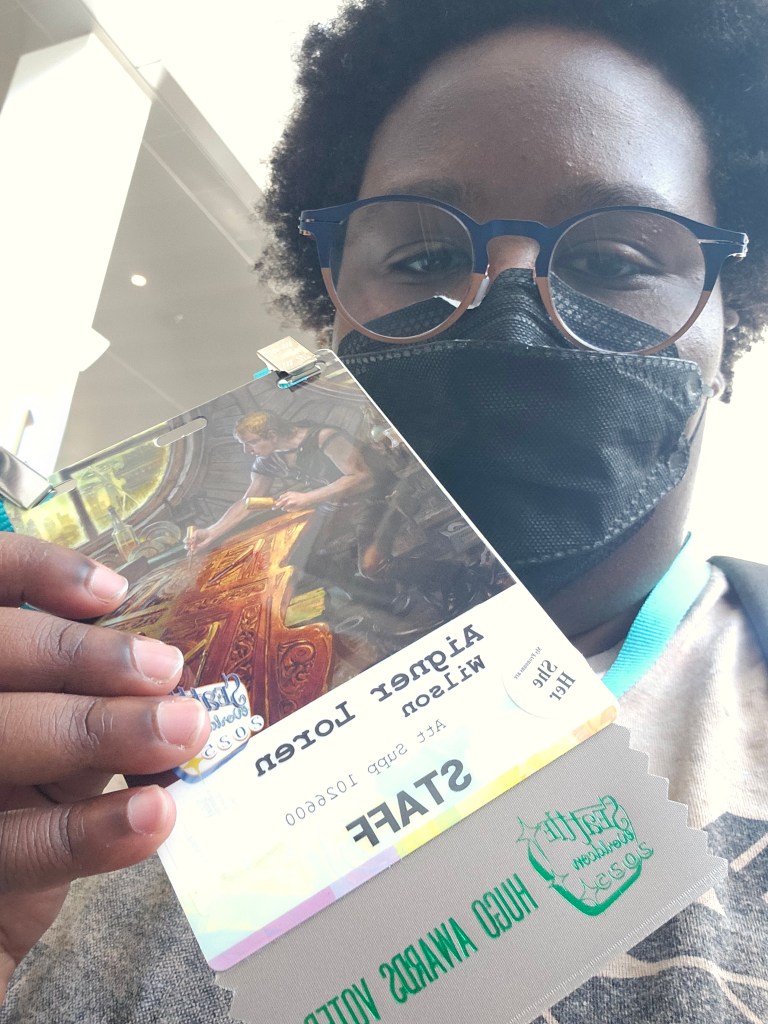
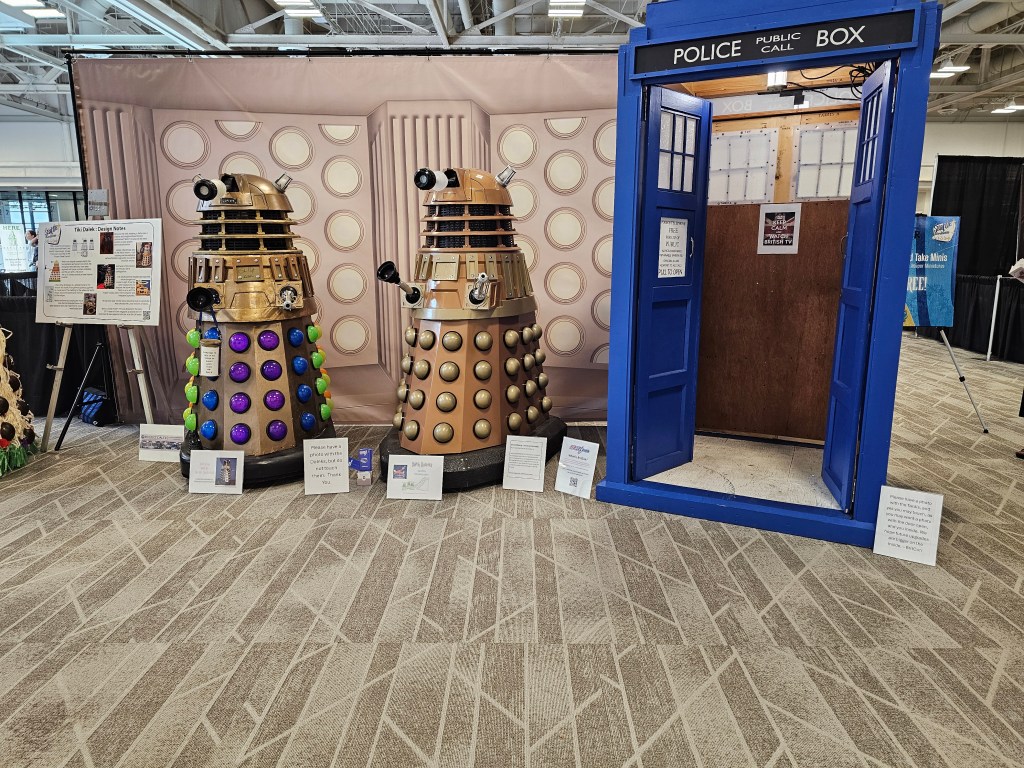
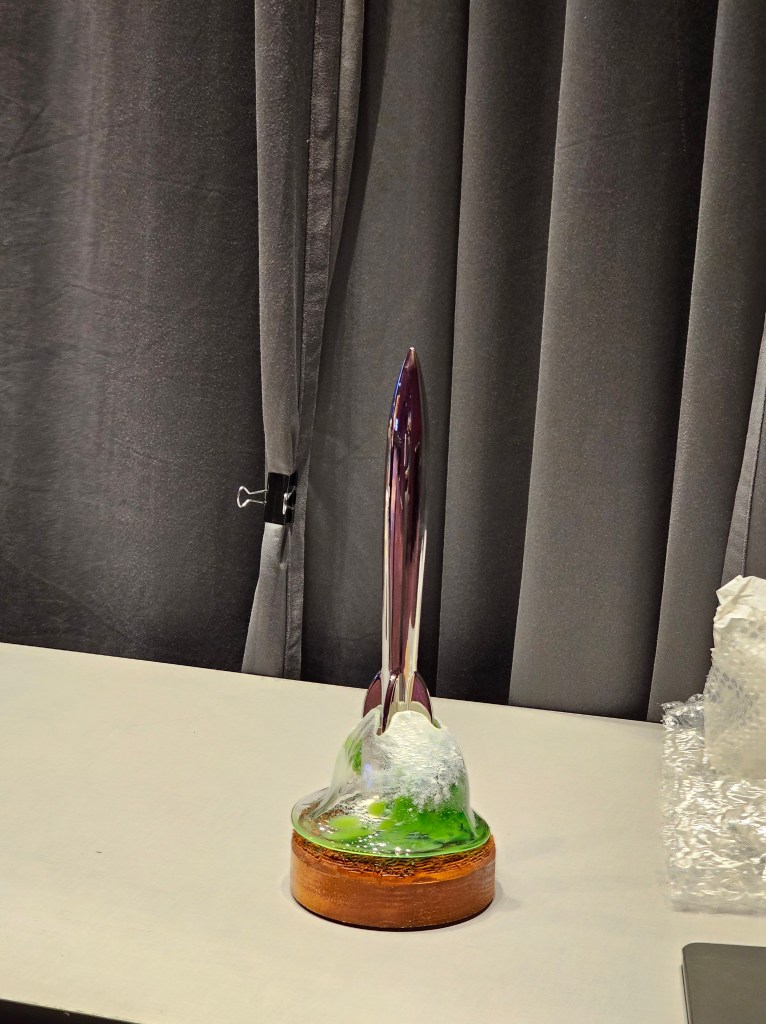
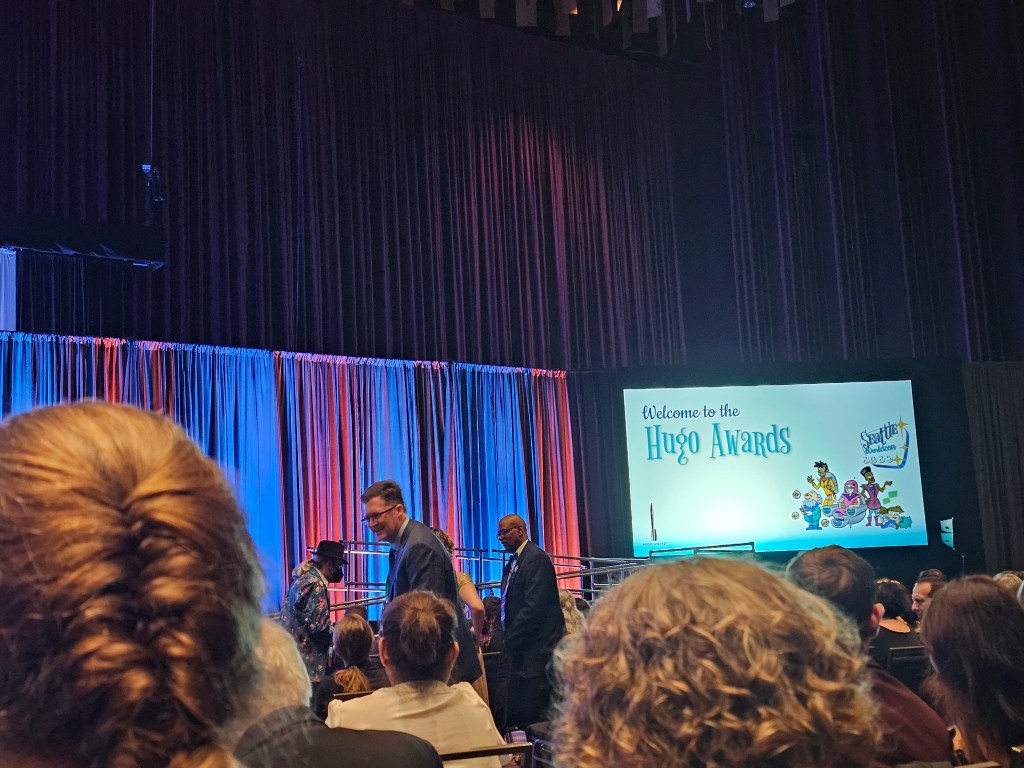
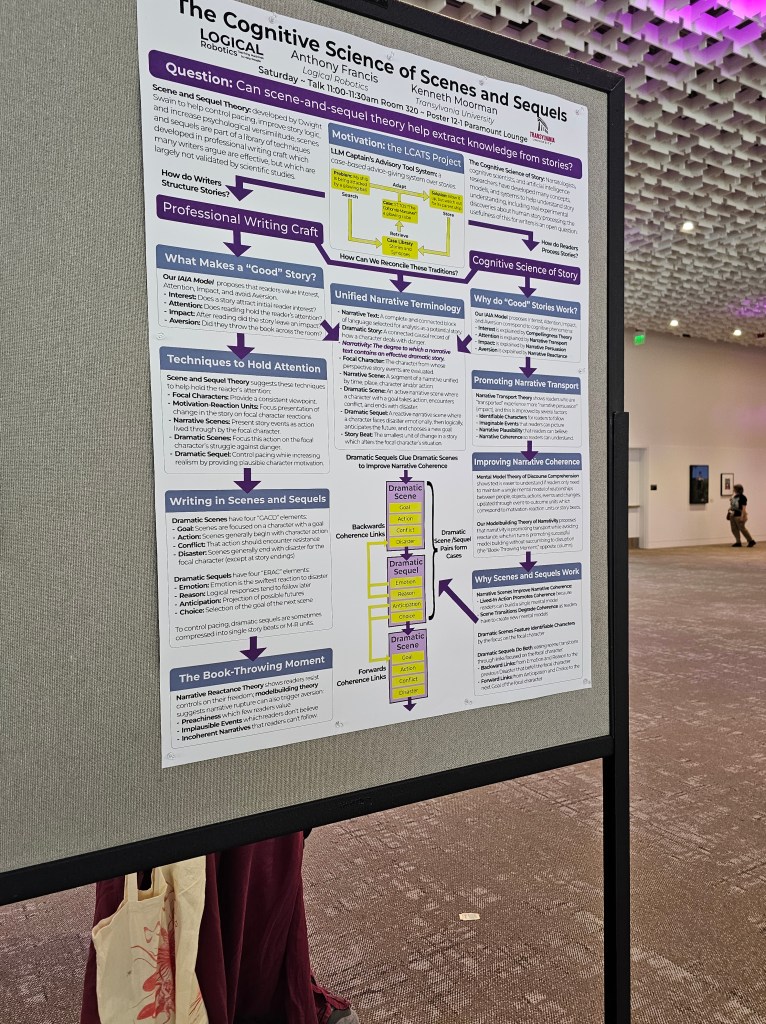
WorldCon was the perfect way to end my summer and head into my fall. Right after I got home, I focused on getting a rough draft of my critical paper done and building out a loose scene outline for the opening to the rewrite of my novel. That focus helped me jumpstart my rewrite on September 1st and finish that month strong with over 20,000 words written on the novel.
The draft was doing things that the first wasn’t. It flowed more naturally out of me. It moved more cleanly on the page. It was captivating from the first word to the next. I felt more alive in this draft and more like I was in my character’s head. There are more moments of beautiful surprise and disturbing revelation.
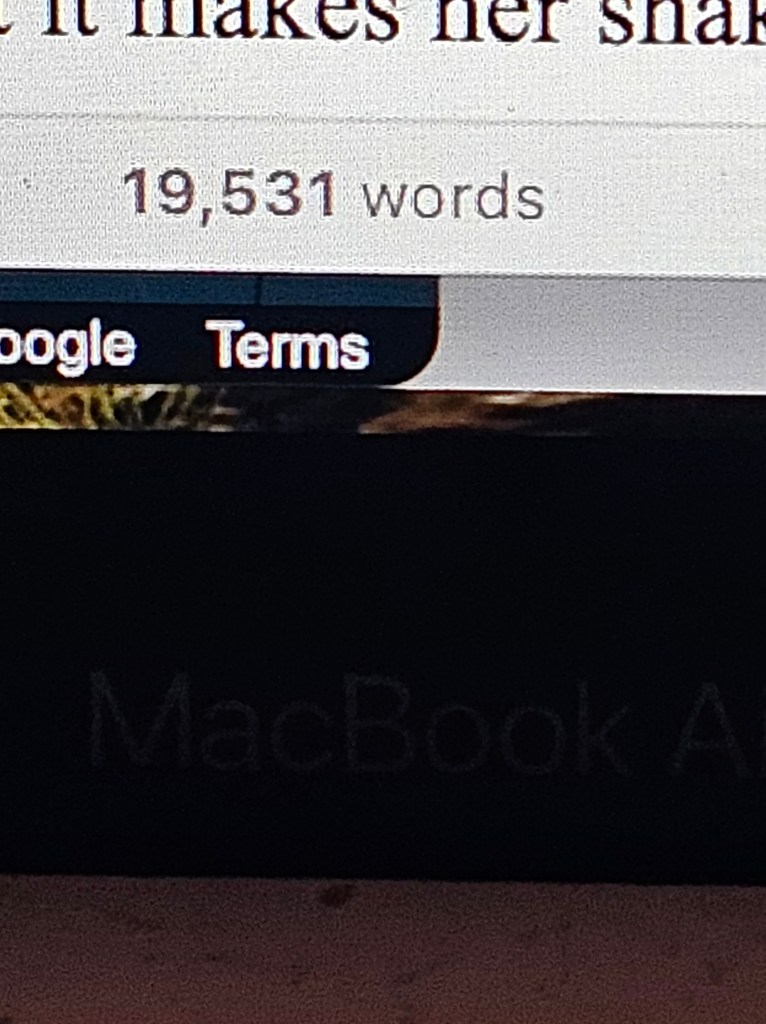
My schedule for drafting was writing for two hours in the morning before switching to my day time job. I also used the evening to write my critical paper and was able to get 7,000 words done in September on the critical essay. The writing of that project felt like a total rewriting of my brain because I committed to watching and reading as much horror as I could to help me chart the structure of the horror trauma narrative.
The process of researching and writing it went into full gear at the end of August but carried through into September and October. The main nonfiction texts to inform my paper and theory proposed were Trauma and Survival in Contemporary Literature; Comics, Trauma, and the New Art of War; and Trauma and Representation in Literature. I also read and watched tons of horror movies and books to come up with the plot structure and read reviews of people who felt that a particular book or movie helped them process trauma in some way. The paper is part craft essay, part horror history, part trauma history, part personal essay, and part structure analysis. It’s a paper that at multiple times I felt brilliant for seeing the connections I was in horror stories, and at other times, I felt like I was missing something and not fully as brilliant as I thought. By the end of the first draft, I wasn’t sure if what I wrote was easily understandable or ‘done’.
Actually, I know it isn’t done. I’ll be expanding on it and turning it into a book. But more on that over the next couple of years.
After I submitted my critical paper and the opening pages to my novel to ‘Pemi, my teacher, I felt relived and also anxious. What if all the great feelings I had while writing and researching were me getting high on my own supply? What if everything I wrote was shit? My teacher has the ability to reject my critical paper and make me start over or revise it. While waiting the week or so to hear back from ‘Pemi about my writing, I prepared for the possibility that I would have to rewrite or rework my critical paper. For my novel? I just kept writing. Getting to the end of the novel for me is the biggest goal while drafting. Even if ‘Pemi told me the novel was crap and didn’t work, I’d still keep writing till I got to the end.
I actually had a moment similar to learning my novel was crap happen during the beginning of my rewrite. It happened when I read Our Share of Night. In the book, there is a cult like religion that is based around the power hidden in darkness. That was the same idea I had for my book’s religion. Our Share of Night is a knock out of a book written with such power and specificity that I could never write a religion based around the dark and have it be any better or even in conversation with that novel. So, the main religion and driving force of my novel was no longer any good. I needed to go back to the world building drawing board.
I’d be lying if I said that I wasn’t discouraged for a day or so, but I really believe in the novel and knew that there was a different way I could design my religion that kept the main themes alive. It took a few days of journaling, reflecting, and meditating but I came up with a new idea and was able to get my novel back on track with more force and direction because I felt more connected to the new religion.
Sometime during all of this floundering, I heard back from ‘Pemi that my critical paper was approved and she found it really well written, deeply researched, and interesting. She also was very into the opening of my novel and encouraged me to keep writing.
So I did.
I kept writing the novel and sharing pages with ‘Pemi each month. I would sometimes look over her feedback on the pages I sent, but for the most part I just focused on churning out pages and words all with the help of my character. By October, I was certain that I would have my novel done by my end of year deadline. Then I finished the point of view character chapters I was writing and moved on to my next point of view character who was not as forthcoming or open as my first. While my opening pages were alive with life and fire, I felt like the middle of my novel where the second POV is introduced felt stilted and forced.
Instead of feeling like my character was talking to me and showing me the story, I felt like I had to pull teeth with this new character. Everything felt like what she was saying was coming through heavily filtered and guarded. This slowed my drafting down considerably because I didn’t want to force my story just to reach the end. I wanted to get to the end because my characters trusted me enough to take them there. Through a lot of journaling and reflecting and sitting with the silence my character often left me in, I figured out why my character was being the way she was with me.
I had not earned her trust.
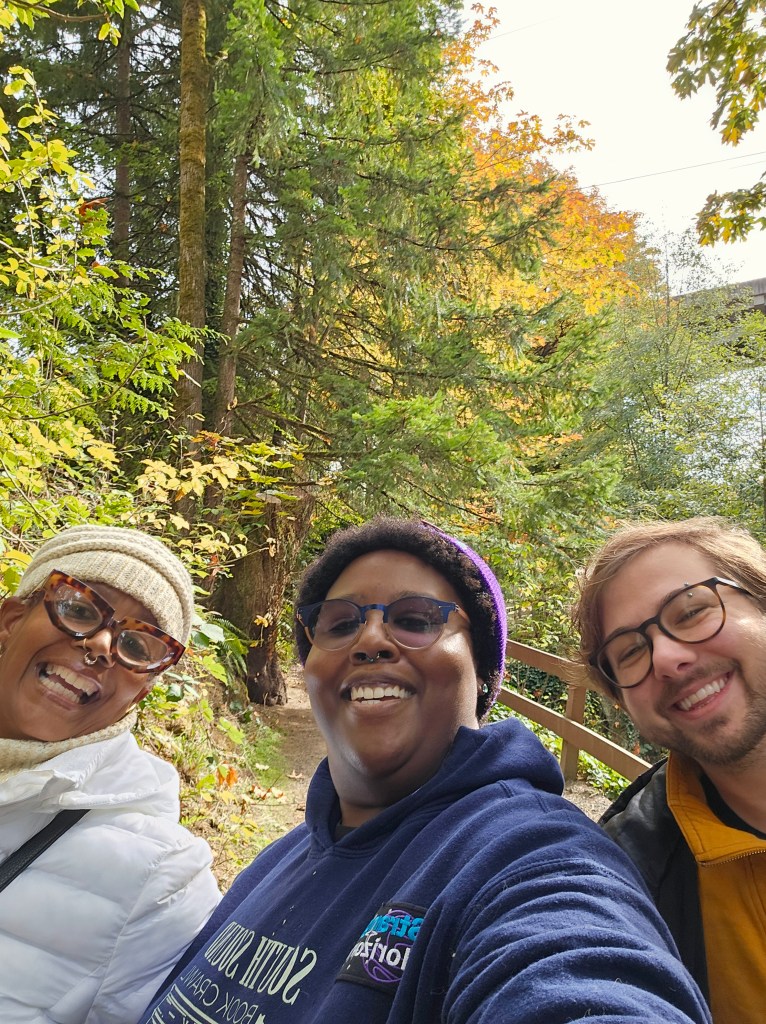
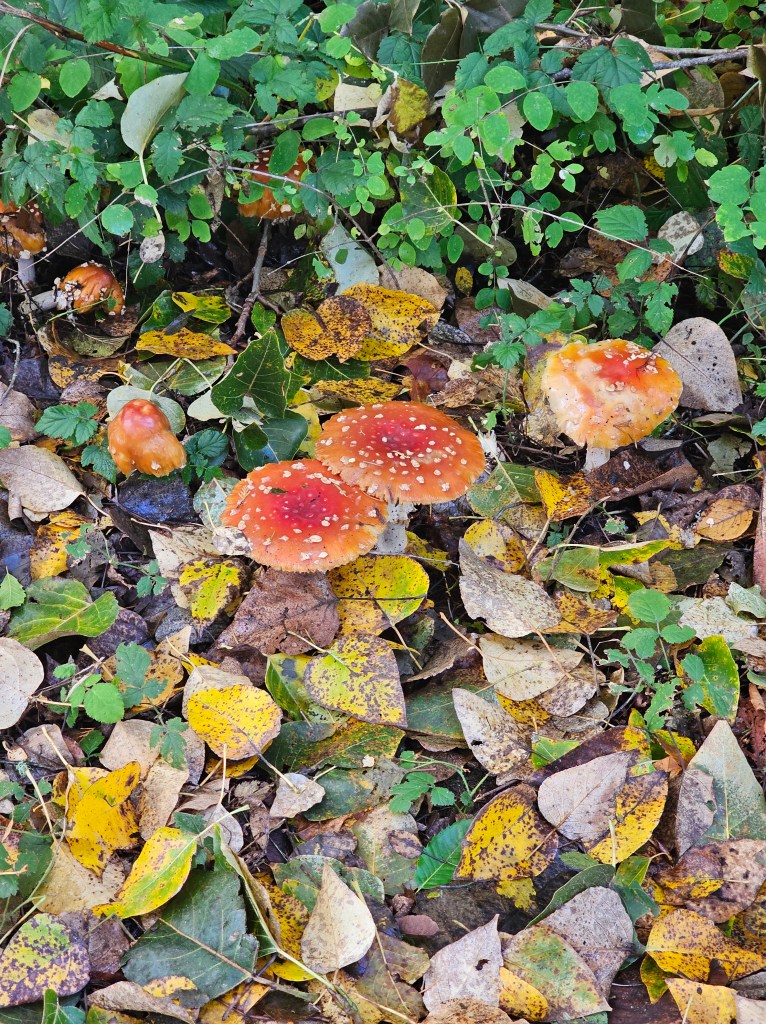
Learning this changed how I approached drafting. I gave up on my December deadline and instead focused on becoming a person my character could trust. I focused on learning how to listen and push past my own biases. I learned to interrogate my beliefs and examine my past in ways that put me in states of vulnerability. Over time, my character began to trust me and tell me her story.
I’m writing this post during my fourth and last term, though I did little diary entries throughout my third term to help me remember what was happening when. I’m still drafting the novel rewrite and have set a soft completion date for end of April, but realistically and truthfully, I am not going to rush the telling of this story. It is so wild and strange that I know it needs me to be slow, intuitive, and skilled.
In three months, I’ll be submitting my novel for my creative thesis and degree. A month after that, I’ll be reading it and defending it on campus.
After that, I’ll be done with my MFA and grad school. Such little words for such a big moment.
Half My Reading List for My MFA Thesis Year – A Writers’ Syllabus
I am trying not to get lost in the future of graduation while still in the present of working on everything I need to prepare me for that moment. So I will save any big thoughts and feelings about graduation for the second part of this post that I’ll publish after I graduate about the second half of my thesis year. For now, here is my grad school reading list for my third term studying fiction:
- The Varieties of Religious Experience
- Heaven Looks Like Us
- The Jewels of Aptor
- Native Son
- The Outsider
- Out of the Dead City
- World Science Fiction: Collection of International SciFi
- Babel 17
- Stars in My Pocket Like Grains of Sand
- Our Share of the Night
- Spring Summer Asteroid Bird
- Of Solids and Surds
- Legion
- The Deep
- A Girl’s Story
- Sorrowland
- About Writing by Delany
- Dhalgren
- Comics, Trauma, and the New Art of War
- Revival
- Victorian Psycho
- Happily
- The God of the Woods
- Atlantis: Three Novels by Delany
- Trauma and Contemporary Literature
- A Head Full of Ghosts
- Fates and Furies
- Trauma and Survival in Contemporary Fiction
- The Vegetarian
- Chase Darkness With Me
- Bad Cree
- Starve Acre
- The Shining Girls
- Dance Hall of the Dead
Has My MFA Been Worth It?
Applying and attending a low residency MFA program comes with a unique and big question. While I had already asked myself this question before saying yes and sending over my tuition deposit, I had to reflect again during my final year.
Is this MFA really worth it? Which translates to:
At the end of these two years will I have developed my craft enough to make a return on my investment in the tuition I paid?
That may be hard to quantify for some, but for me, the MFA combined with my experience and skills would set me up for entering the book publishing world by helping me:
- compile and edit a short story collection
- pick an editing and craft specialization
- write a novel with the help and guidance of professionally published authors
- obtain a degree needed for applying to college faculty positions
- build my resume with an advanced degree
For some, those five career advancements may not be enough or seem worth it, but for me, that is what would make this degree worth it career-wise.
You may be wondering, curious reader, but has the MFA made me a better writer?
Before I came to Bennington, I already had a fair amount of published pieces out in the world and an established career and routine as a writer. I could write stories that sold. I entered this program with a clear intention around what type of writer I wanted to be when I left it.
I wanted to be unrecognizable on the page.
A bit scary and totally unhinged. I wanted to lean into the skill and experience I already have to craft stories in a honed and developed voice that readers trusted no matter where I took them.
After almost two years in my MFA program I am a different writer that, to me, feels new and startling in ways that have made me scared, made me cry, and made me laugh. The stories I wrote before my grad program were easy and entertaining. The stories I have written since being in the program have been hard and complex and beyond anything I think I could have ever written without the help of my teachers in the program.
So, yeah, my MFA has totally been worth it.
If you’re new to the website, consider subscribing to stay up to date with all my posts. I’m Aigner! An award nominated writer of fantasy, science fiction, horror, and all things weird. You can check out all my stories here. I normally post once or twice a month, and it’s always about writing and my author career.
 Aigner Loren Wilson
One thought on “My MFA Journey: Thesis Year Part One”
Comments are closed.