This post is a part of My MFA Journey blog series going into my first year grad school experience at the top low residency MFA program, the Bennington Writing Seminars. My previous posts go over my application process, my decision process, and the residency experience. In this post, I’ll be going over my first full year of grad school and what I worked on during my first two terms.
What are Low Residency Terms?
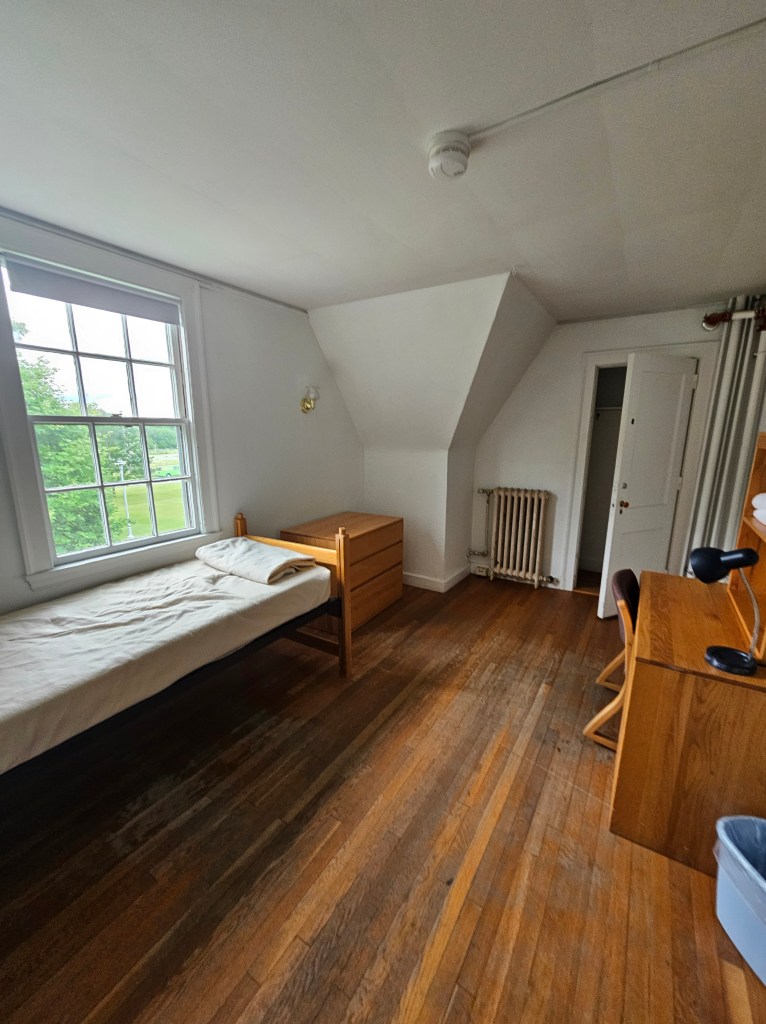
Low residency MFA programs are structured around terms that start with a residency. A residency is a short time on campus to meet with teachers, cohort members, workshop pieces in small groups, attend classes and lectures, and listen to readings. Different low residency MFA programs do their residencies differently, however, so they may not all look like how mine did. Bennington Writing Seminars holds their residencies two times a year in Bennington, Vermont, for 10 days.
Depending on how you think about residencies, the term starts before, during, or after. For me, my term starts about a month before residency. At Bennington, terms last 4-6 months depending on if it’s a winter term (4-5 months) and spring term (5-6 months).
During the term at Bennington, I am required to do packet exchanges with my teacher each month and to read 25 books over the term. It’ll take me 4 terms to graduate with my MFA in writing, so 2 years.
The main difference between low residency terms and full residency terms is that at a full residency program, you’re there on campus the whole time, while at a low residency program the terms are done from anywhere and bookended by on campus residencies that are packed with classes, readings, workshops, lectures, activities, and graduation.
Bennington Writing Seminars Packet Exchanges
From what I’ve learned about low residency MFA writing programs, they are all built around an exchange of packets. Packets at Bennington Writing Seminars are about 40-60 pages of writing sent to your teacher each month.
Bennington’s packets call for:
- Up to roughly 25 pages of new work or significantly revised work
- 2 annotations or critical analysis/techniques analysis on 2 books read (these can be 2-5 pages)
- A letter correspondence to teacher ranging in length
- 10-15 pages critical analysis or author review (due once)
My packets tend to look like about 30-45 pages where 20-25 pages are of a new story or a rewrite, 5-7 pages of critical analysis, 6-12 pages of a letter to my teacher about what I worked on, thought about, and struggled with during the term. My final term critical papers tend to be closer to 15 pages.
Each term I work with a different teacher within the fiction discipline one on one where they give me directions on how best to do what I want with the stories I write. While many grad programs have a reputation for not being accepting of speculative fiction, my teachers so far have been alright with it. There have been moments and discussions or arguments on what is speculative fiction and what is literature that have always felt more challenging than combative.
My teachers will write me about 7-10 pages of responses to my writing along with a detailed edit of my fiction writing. And we meet and talk over my term both at the beginning and at the end. Bennington does not do grades but instead does short written evaluations done by the teachers that state what work or effort you put in through the term. You can request a letter grade at Bennington, but I’m not sure if other low residency programs offer that.
The packet exchanges are what make up my work during the term, but I try to take my learning beyond just what is asked of me to get my degree. I will try and task myself with going to museums, talks, shows, watching documentaries, lectures, and reading books in subjects outside of writing. I consider these my electives. The learning that helps strengthen the foundation of my writing.
My electives during my first year of grad school were
- French History
- French Literature
- Roman Philosphy
- Film History
- Advertising an Design
- Forensic Science
- American Slavery
- Realist Imagery
- African Revolutions
- Attend book readings
- Attend talks
- Go to museums
- Watch Bennington Writing Seminar lectures and classes
- Critique cohort stories
- Go on adventures
- Do research trups
- Attend grad school social events
- Caribbean Philosophy
- Japanese Film History
- Forensic Anthropology
- Realist Imagery
- African Revolutions
- Go to history and cultural musems
- Do craft technique exercises


I do have a life and a career outside of grad school so I wasn’t able to do everything on that list but I did a lot of the things that I set out to do to help create a well rounded first year of grad school experience. A lot of the reason I made these electives and extracurricular assignments for myself were to try and recreate what I believed a full residency program would give me.
As for the letter exchanges that make up my communication with my teacher, they are hard to explain. The best way I can describe it as a correspondence between a writer and their mentor. For my first two teachers, I took very different approaches to how I drafted the letter but the one thing I kept the same between both was pushing myself to be vulnerable even if it scared me or if it made me feel uncomfortable. I said things in those letters I’d only say in my own personal journals. I admitted my faults, my fears, my anxieties, where I felt like I was failing, what I felt like I was trying to do.
The letters have been an intimate time for me to work closely with two authors (Taymour Soomro and Moriel Rothman-Zecher) both writers who have had very different impacts on my writing. While Moriel was/is a wonderful supporter of my writing, Taymour has been challenging. Encouragement gave me the ability to get weirder and stranger and try harder in my work and believe that I could do it. The push that Taymour has given me has allowed me to trust that I can step away from what I know and into the unknown and to build my own road map.
I’ve never learned in this way or been mentored in such a deep style. It’s cliche to say but what I am writing now has changed and become better or technically stronger. I’m able to weave narratives in ways that I didn’t know if I could but have been given the tools and guidance to do amazing work.
For people wondering if a letter exchange in a low residency format would be beneficial to them, I’d say it depends on how best you learn. Weekly workshops like that happen at many full residency programs aren’t as helpful for me as getting direct feedback from an author at a level I want to be at and who has been where I am now and where I want to go. Not everyone in my cohort has felt that way and have found that the monthly exchanges of work are too limited to the amount they want to get out of the program.
Through my exchanges with my teacher, I’ve gotten advice and guidance that more than not goes beyond the basic advice found in most classes and books and stretches into the advanced territory of professional literary writing that has been hard for me to achieve in the ways I have learned before. I’ve been able to access my higher instinct of writing thanks to my teachings.
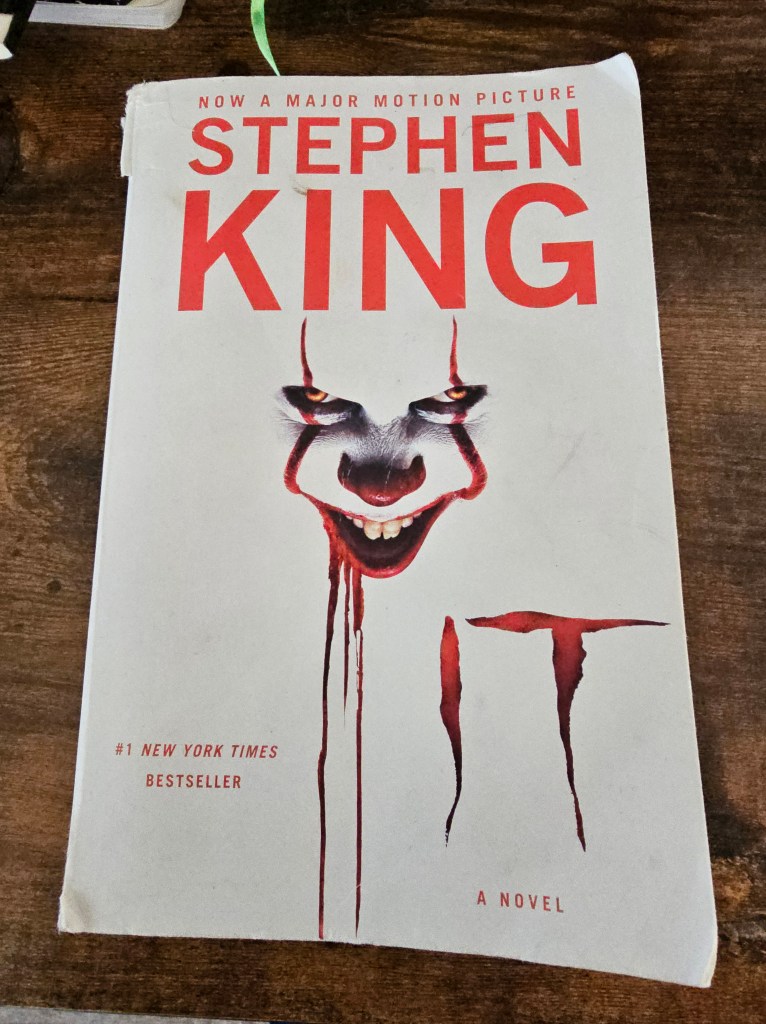
Reading List for My First Year in My MFA – My Writers’ Syllabus
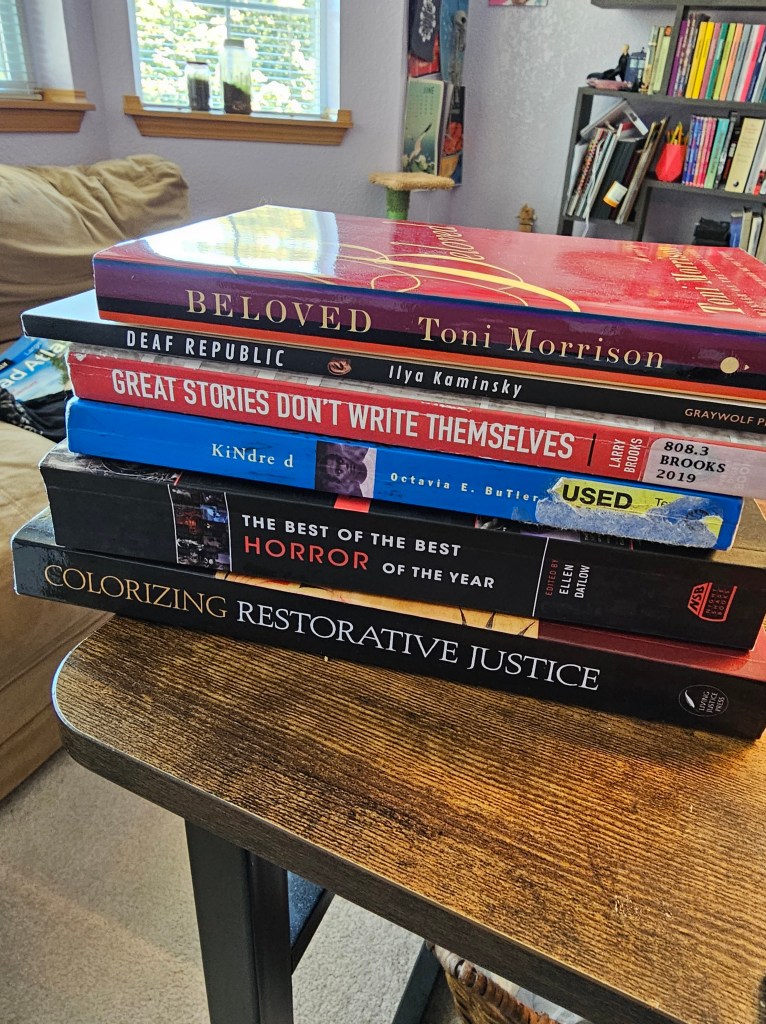
I go into more of how I build my reading lists over on my newsletter if you’re interested in how I choose my book list. Over the course of the two years while in my grad program, I’m meant to read 100 books. The tagline even for the school when I applied was “read 100 books, write 1.” So each term is balanced with at least 25 books you are committed to reading.






- Her Body and Other Parties
- Helter Skelter
- Emergent Strategy
- The Signifying Monkey: A Theory of African American Literary Criticism
- Varieties of Religious Experience
- No God’s, No Monsters
- The Exploration of the Inner World: A Study of Mental Disorder and Religious Experience
- We Keep Us Safe
- Parable of the Sower
- Parable of the Talents
- Stories of Ray Bradbury
- I Sing the Body Electric
- Killer, Come Back to Me
- Future Home of the Living God
- Never Let Me Go
- The Memory Police
- Frankenstein in Baghdad
- Storytelling in Design
- Bradbury Speaks
- Bradbury Chronicles
- Yestermorrow: Obvious Answers to Impossible Futures
- The Reformatory
- Palestine +100
- Night Sky with Exit Wounds
- Triggering Town
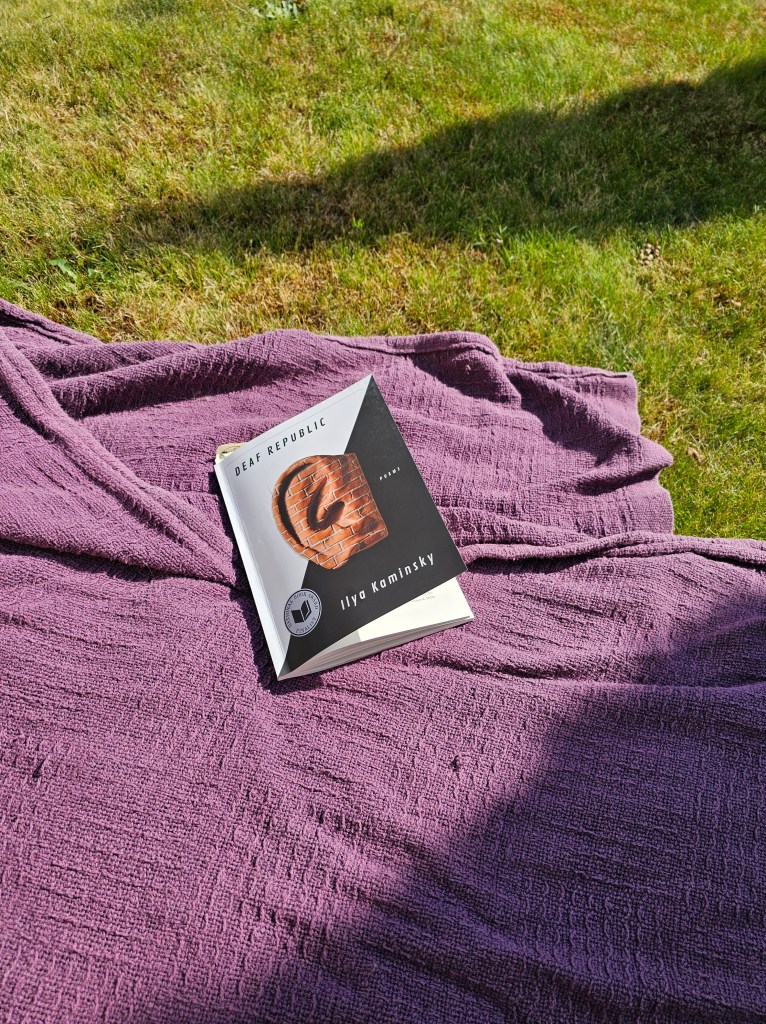
- Deaf Republic
- Great Stories Don’t Write Themselves
- Best Horror of the Year
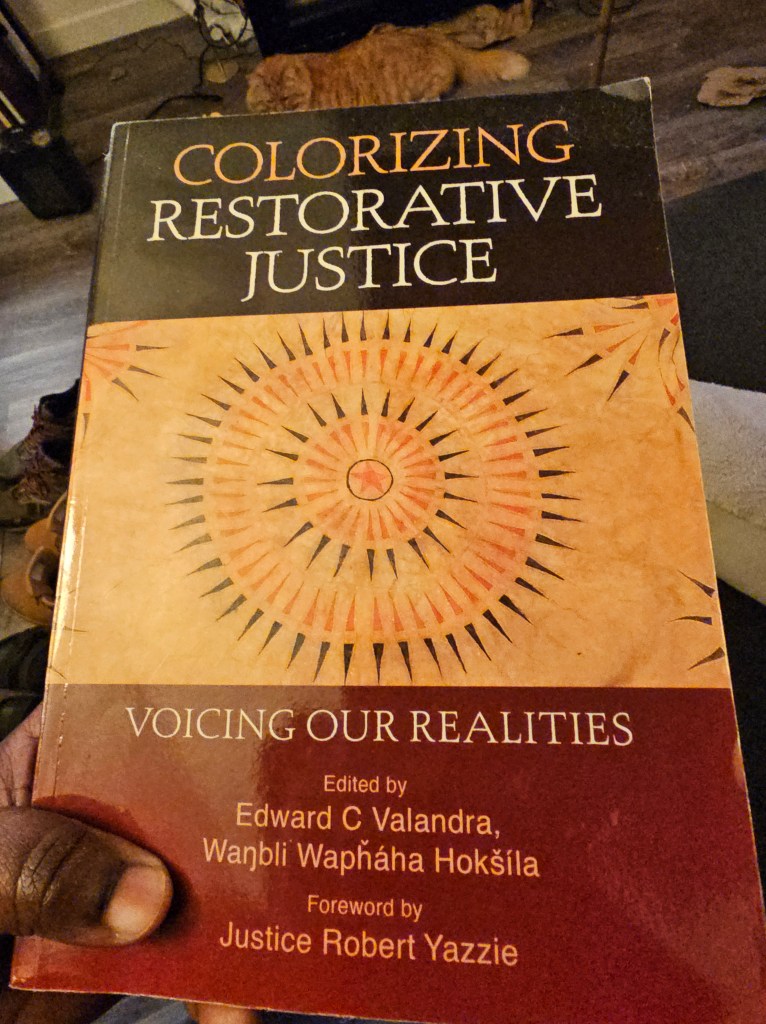
- Colorizing Restorative Justice
- Kindred
- Beloved
- Stamped from the Beginning
- Annihilation
- Authority
- Acceptance
- Tender is the Flesh
- Magical Negro
- Paradise
- Song of Solomon
- A Swim in a Pond in the Rain
- Meander, Spiral, Explode
- Playing in the Dark
- Recitatif
- Dracula
- The Odyssey of Phillis Wheatley
- The Lottery and Other Stories
- Journey to the Center of the Earth
- Long Haul
- Freedom is a Constant Struggle
- All Fours
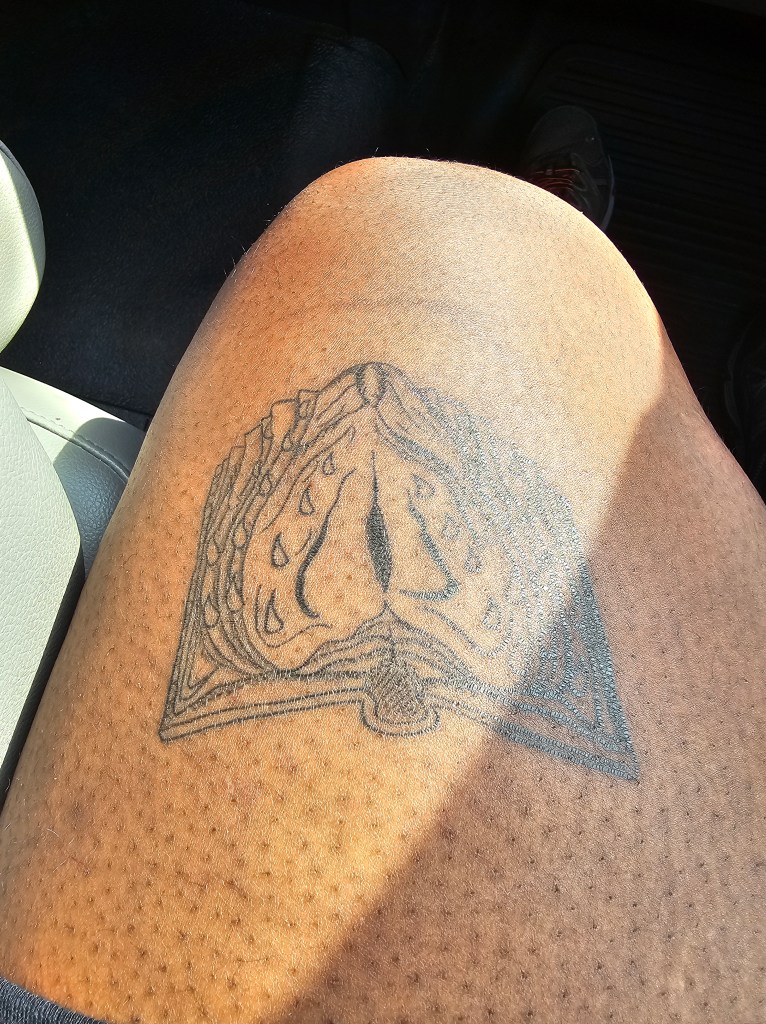

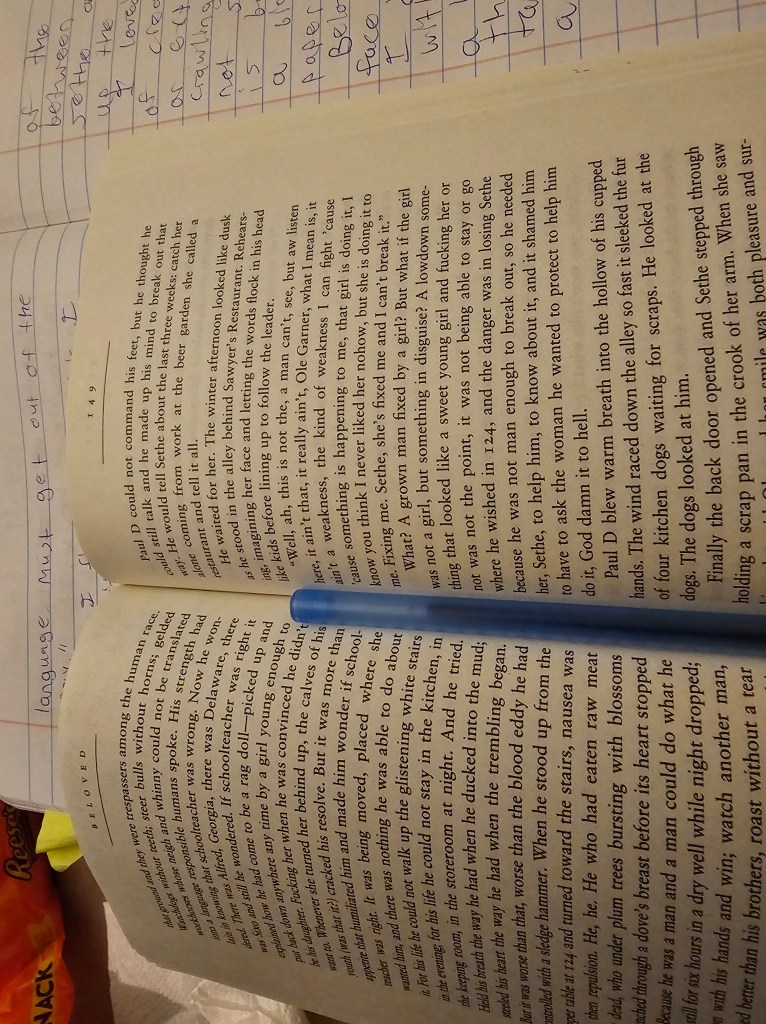

I build my list out before the start of term, but I do often take suggestions from my teachers when they see that I’m trying to do something in my writing that I’m not quite landing or that will inspire me in the ways they know I need inspiring. To be honest, too, I end up reading around 30-40 books each term outside of the books on my reading list because I try to mix in some pleasure reads to my learning.
Reading has always been a huge part of my learning process and was a big part in why I choose to apply to Bennington. What differentiates what I’ve done in the past to what I’m doing now is that I write about the book in a thoughtful way that focuses on technique and emotion. I then share two of these essays with my teacher for their feedback on what I may have overlooked, what I should consider, and how I should use what I’ve learned in my own stories.
Some books that have been immensely impactful on how I think about story and write are:
Even though I am studying fiction, the books that have helped shape my craft over the past year have all been largely nonfiction books. I love a good novel but the way Colorizing Restorative Justice gave me useful tools and ideas to try out in my work and ways of thinking about my work and how I use language, resolution, and conflict to perpetuate harm in certain ways and how to do it differently has been more impactful than books I’ve read that show these elements. Meander Spiral Explode sparked my new love of trying to create narrative forms based on patterns I see in nature and around me that intrigue or capture me (whether positively or negatively). Because of Meander Spiral Explode I started designing a new narrative form that has been challenging and exciting to explore and play in.
Each term I have also chosen an author to focus on. My first term I read through books by Toni Morrison and read articles and books about her work to try and get deeply influenced by her work and ideas. It helped me write a short story that is WEIRD and sad and dark and so very real. I’ve heard great things from readers and it’s out on submission now with hopefully good news coming soon on it. For my second term, I focused on Ray Bradbury. I was very divided on whether or not I should focus on him or Octavia E. Butler because I have been reading a lot of her work over the past couple of years, but I’ve always wanted to dig into Bradbury and his style so gave myself that space.
It was a wild ride and I’ve learned a lot about Bradbury as a writer, thinker, and person. I am still in the middle of thinking about and reading Bradbury but have only seen his style and influence come up lightly in my writing. I think as I do more exercises and finish up my Bradbury studies for the term it will show up more strongly. Or I am expecting Bradbury to impact my writing and self as deeply as Morrison did and that may never happen.
As of this writing, I am a little over halfway through my 100 books planned for the program, but the list I built at the beginning of my program is not the list that I will end up with at the end. My reading tastes have changed and I am easily swayed by a teacher’s argument to read a certain author if they think what I am doing is very much in line with the writer. I’ve noticed that when I read books or stories even just for fun, I try and turn on some sort of absortion. I try to listen to the story and what the writer is doing in a way that I hope will imprint itself on me and lead to a change in how I write and think about story—think about what I can DO with story.
What Stories I Worked On During My First MFA Year
While it isn’t required for my grad program, I wanted to give myself a sort of guided focus that would inform my writing, reading, and learning while getting my masters. Before I applied to grad school, I spent a lot of time trying to figure out what I wanted to spend my time in grad school working on related to writing and fiction. What I came up with was:
Coming Out the Other Side: How stories shape and heal us; an exploration into narrative trauma
Over the year, I’ve been trying to specialize it more by focusing on horror stories specifically and looking at the different types of trauma narratives that show up and what works for some to create a sense of catharsis or healing for the reader. So the stories I’ve worked on during my first year have so far been a novel, novella, novelette, and two short stories.
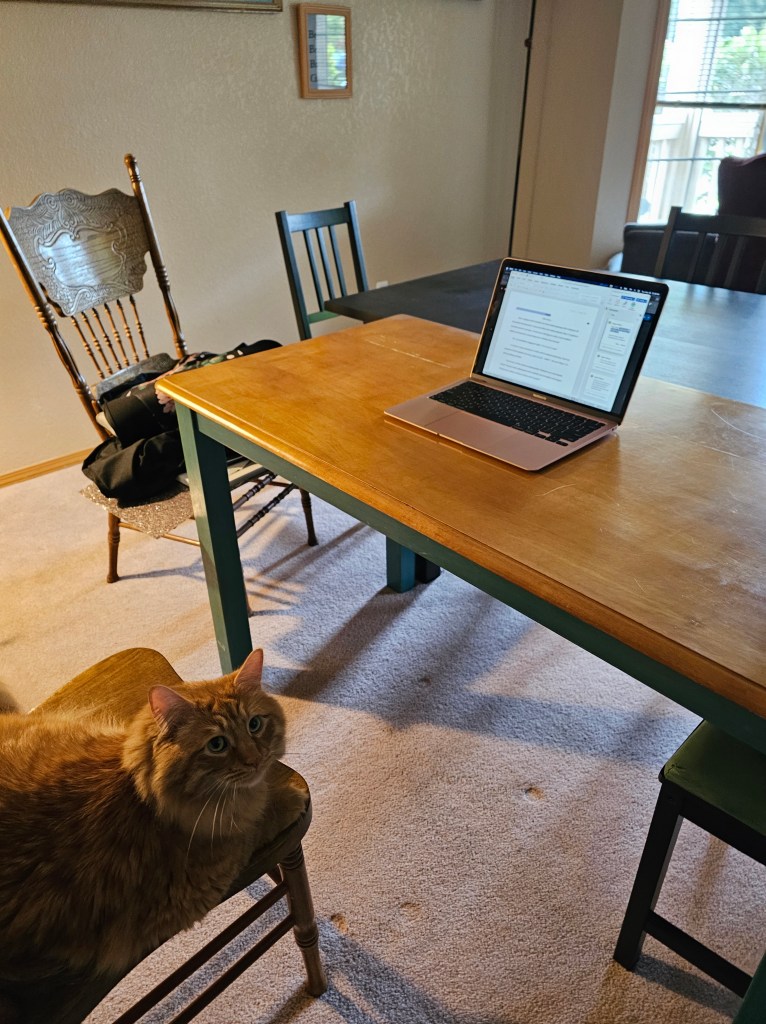
The novel I drafted will be my thesis for the program, which at Bennington, your fiction thesis must be 100-120 pages of a collection of stories and/or a novel excerpt. My thesis/novel and is a horror thriller about faith, addiction, and healing. I’ve been researching, outlining, and worldbuilding the novel for two years now and wrote the 1st draft during winter and my second term (I was even able to get about 25,000 words done during one of my Bennington residencies!). I am trying a very different style with this new novel and am hoping that through my studies and focus that I can create a work that is alarming, beautiful, and cathartic.
I did a photo journey of my drafting process over on my newsletter if you want to see how drafting that novel looked.
During my first term, I worked on both a novella and a novelette. The novella is a dark fantasy about teen suicide clusters and community healing that I had worked on leading up to my first term at Bennington and did several major revisions while working with my teacher Moriel and doing my studies. The way that story came out is exactly what I wanted to do with that work, but like everything I write, it’s odd and strange and has been having a hard time finding a home, but it is still out on submission and since it’s been almost a year since I completed it, I will go through and do revisions to help it find a home (hopefully).
The novelette I worked on during my first term is about myth making and murdered women that I drafted during my solo cross country road trip through the states on my way to my first residency. There were so many scary situations in wooded areas and bathrooms that nothing bad happened but it felt like bad was lurking really close and watching me or that bad had happened there. It didn’t help that once you’re on the highway hitting rest stops you start noticing all the missing women, children, and human trafficking fliers plastered everywhere like the existence of women is slowly being eradicated, stamped, and sold. All that went into the story and while I’ve shared it with some friends and people in my cohort, it hasn’t found a home yet, but I just sent it out on submission for the first time about a month ago, so it may have a home soon.
For my third term, I’ve focused on working on two newish stories. One short story is a science fiction story about space racers falling in love that I originally drafted a couple years ago and did a full rewrite of. It was a good exercise but ended up yielding a draft that didn’t feel as good to write as my original which I liked how that padded along. And the other story I wrote is a horror story about desire so dark it consumes and mutilates. For every story that I’ve worked on for the first year at grad school, I’ve planned to write.
This story I did not plan or set out to write. I set myself the task of listening and receiving all that was happening around me and within myself. Not to make judgements or ideas or creative sparks out of them but just to be receptive. Then to listen to the stories my writer in the basement made out of what I was taking in. Most of the stories I heard were interesting but they didn’t feel right and then one did and it turned out to be a story very unlike anything I have ever written. I didn’t feel like a writer when I wrote that story and instead felt like a witness or a scribe.
I don’t have plans for those two short stories at the moment, but am playing with the idea of editing them up and submitting them out to some places to see if I can place them anywhere.
Day in the Life of an MFA Student
My days are pretty structured because I realized a long time ago that it helps me reach my goals and do the things I love without losing myself in all the all.
5 – 6 AM – Exercise. I wake up early and try and do some sort of movement like kettle bell exercises, riding my stationary bike, yoga, or playing with my cat.
6 – 8 AM – Writing time. This is how I’ve been able to work on and complete so many stories over the past year. I often write around 2,000 to 4,000 words during this time.
8 AM – 4 PM – Day job. I have a full time job from Monday to Friday and spend the day working on that which includes doing a lot of writing, reading, and researching. When I don’t need to use my brain as much, I’ll put an audio book on in the background, which helps me get my reading in for school.
Random times – Throughout the day I often take breaks and will do some random writing here and there or respond to emails.
4 PM – 7 PM – Freelance/grad work/social time – Depending on what social plans I got scheduled, my evenings are a mixture of career type work like writing essays, working on my newsletter, Strange Horizons editing, or editing my work. It is also sometimes also for me to do essay writing for grad school.
7 PM – 9 PM – Reading. This is for reading physical books for my studies.
On my weekends is usually when I can spend full days on school and writing if I don’t have social things planned. I usually call those days my literary days and it’s usually a solid mix of early morning writing, afternoon reading and research, and evening reading with sporadic moments at libraries and book stores. These days, though heavy with work and travel and ALL THE THINGS, tend to be great refills of my creative well because they take me out of my regular routines of writing at home alone. Like on some weekends I meet up with a local writer who also goes to Bennington and we work together at a library and talk about how the term is going.
I also have a lot of cohort meetings throughout the week and month. There’s a biweekly Saturday meet up that I host and a couple of meet ups on Fridays that other cohort members host, though my schedule has not made it easy for me to attend those meetings. There are also a few early morning writing sessions with cohort members that I’ve do sometimes if there are others who are up around the time I am. These social and writing sessions with my cohort members have been a great way of staying connected as a community even when we aren’t on campus.
Working full time and being a student part time while also being an author full time has its long days and tiring moments that I’ve been trying to be graceful with myself about and allow myself a nap or two during the day or that extra cup of tea to get me over an energy lull after being up and working for 12+ hours. Sometimes I take a step back and realize that before it’s even 11 AM, I’ve written about 5,000 words and done work on between 3-5 projects and it blows my mind.
It’s a lot of work and looking at my time tracker, I can see that I’ve worked a whole hell of a lot of hours splitting time between my marketing writing work, my studies, and my creative career. I’ve even tailored back work on somethings and taken other things off my plate entirely. And while it sounds like a lot, I love that I’m doing it and couldn’t imagine how I would have learned or written the things that I have without the push and encouragement of my teachers and cohort.
And I am also looking forward to July 1, 2026, the first day of the first month out of grad school. Whoever that writer is going to be, she’s got a really solid break coming her way.
Lessons From My First Year of Grad School
One of the biggest critiques about writing grad programs is that they generate writers who write the same style and voice. That hasn’t been my experience at Bennington. I’ve found that the weirder I get, the more my teachers encourage me to stretch even further and try to support my strangeness with something grounding to deepen the reader’s experience.
A lot of time that grounding affect is centered in tenderness and intimacy. Showing my characters (all of them) care and attention and affection no matter who they are on the page or what I believe about the topic I am writing about.
When I went into workshops my first two residencies, I believed that everyone was bringing work that was similar to mine and by that I mean thought about writing in the way that I do. When I bring a piece to workshop, it’s one I’ve worked on for a while and have a firm grasp on. Sometimes that’s not what other writers do, but I would often treat them like their piece should be or was like mine without thinking about what the author may want.
I think I did that because I had this idea of what a grad workshop should be or would be like. Instead of going into it the way that I would with my writing group or other critique situations, I went into with the aim to make a story better by any means necessary. And I would behave like a fighter in the ring with my own story, defending it against all attacks with sound arguments and theories. I’ve been unlearning this behavior and am planning on approaching my final two workshops different.
Something else I am just really starting to learn and allow myself to do is unintentionally put myself into the piece. I normally have some sort of connective personal tissue to the story that I thread throughout to give it a sense of real unrealness, which may not make sense, but is the best way I can describe it. My second term teacher told me when we started that if I give that up, the story will make its on connective tissue and my experiences, feelings, beliefs, etc. will worm their way into the story.
I pushed against this at first because I am an intentional writer and leaving something so important up to instinct didn’t feel in line with my art. But I am a learner and in order to learn, I have to be wrong. So I gave up my intentional ghost and a story very different than what I would have normally written if I would have intentionally gone into it came out and it was better than what I could have outlined or planned. I’ll continue leaning into that instinct because I have been doing this for long enough that the instinct is there and strong and I don’t need to force it into an intentional box but I can use them together. I’m going to try and work to become an intentional and instinctual writer over my final year as an MFA student.
Some people may judge their MFA experience by the publishing credits they get from it or got during it. If I held myself to that standard, my grad experience has been an absolute failure. I haven’t published anything since starting my studies. I am judging the success of my grad school experience by what I learn and what I can learn to do with my writing and stories. In that regard, my MFA program has been a total success.
Thanks for reading this blog post a part of my MFA Journey series. You can read the others here:
- My MFA Journey: Applying to Grad School
- My MFA Journey: Deciding on a Grad School
- My MFA Journey: Bennington Writing Seminars Residency Experience
- My MFA Journey: My Thesis Year Part One
If you’re new to the website, consider subscribing to stay up to date with all my posts. I normally post once or twice a month and it’s always about writing and my author career. I’m Aigner! An award nominated writer of fantasy, science fiction, horror, and all things weird. You can check out all my stories here.
 Aigner Loren Wilson
3 thoughts on “My MFA Journey: My First Year of Grad School”