This is the final post in My MFA Journey blog series going into my grad school experience at the top low residency MFA program, the Bennington Writing Seminars. My previous posts go over my application process, my decision process, the residency experience, my first year, and the first half of my thesis year. In this post, I’ll be going over how I approached completing my thesis novel, working on residency applications, preparing for post-MFA life, and more.
Since this is the last post in the series, I went into this post with the intention of making it a true deep dive and experience of what I went through. With this blog post, I attempted to make the type of post I would have wanted to read as a writer before applying to school or even while in my MFA program and working on my thesis. Because of that, this is going to be a very long blog. There will be diary entries that I wrote along the way so I could capture the feelings and work I was doing in the moment. I’ve added additional context to help weave a narrative that I hope inspires and entertains.
Bennington Writing Seminars Winter 2026 Residency
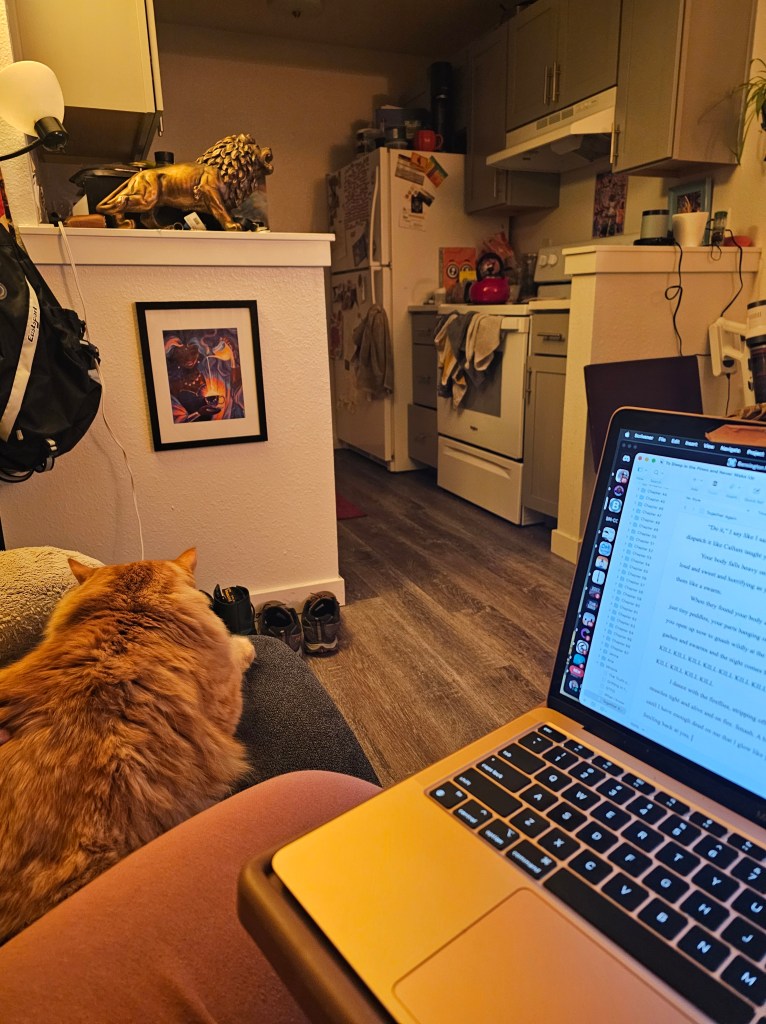
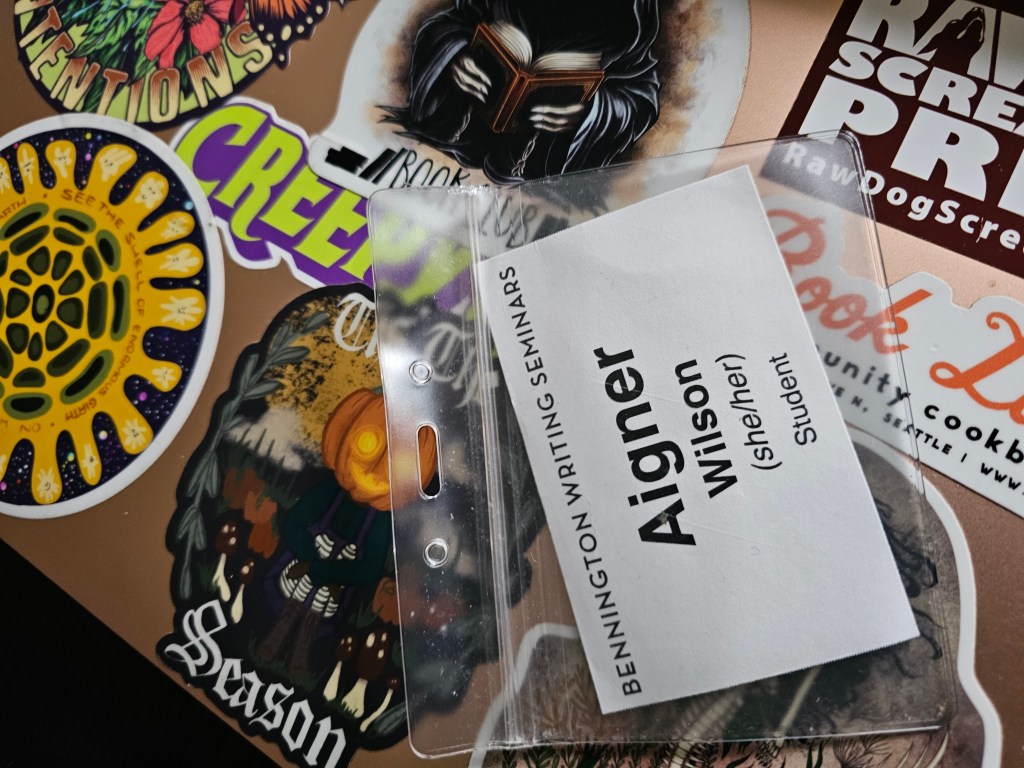
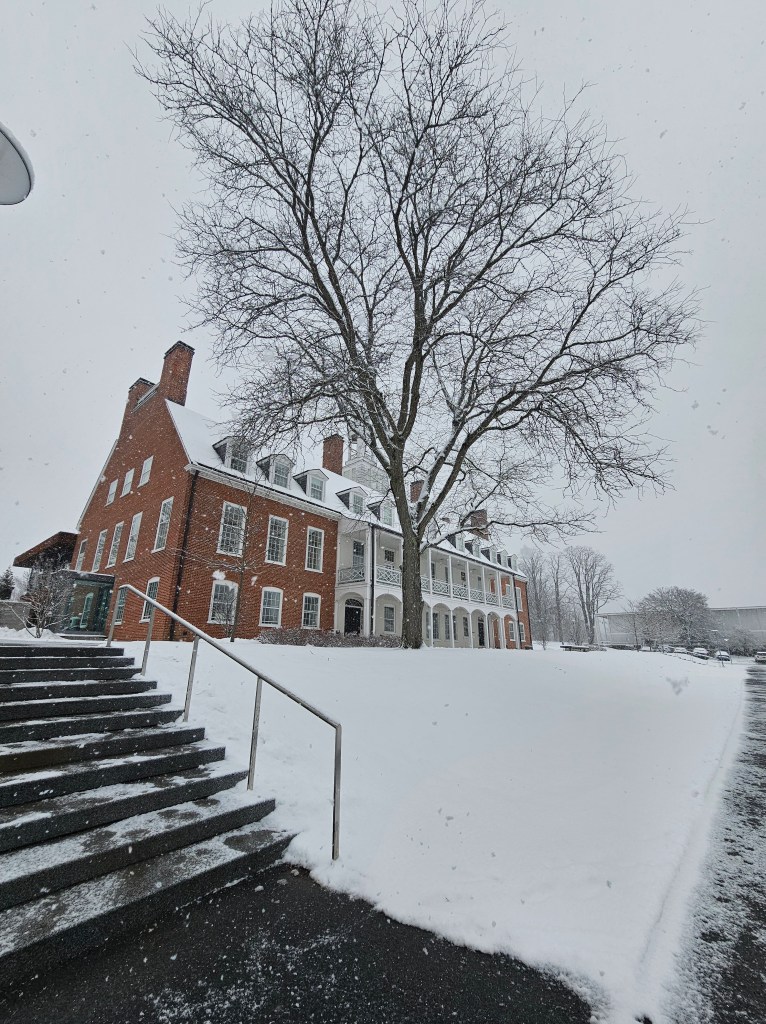
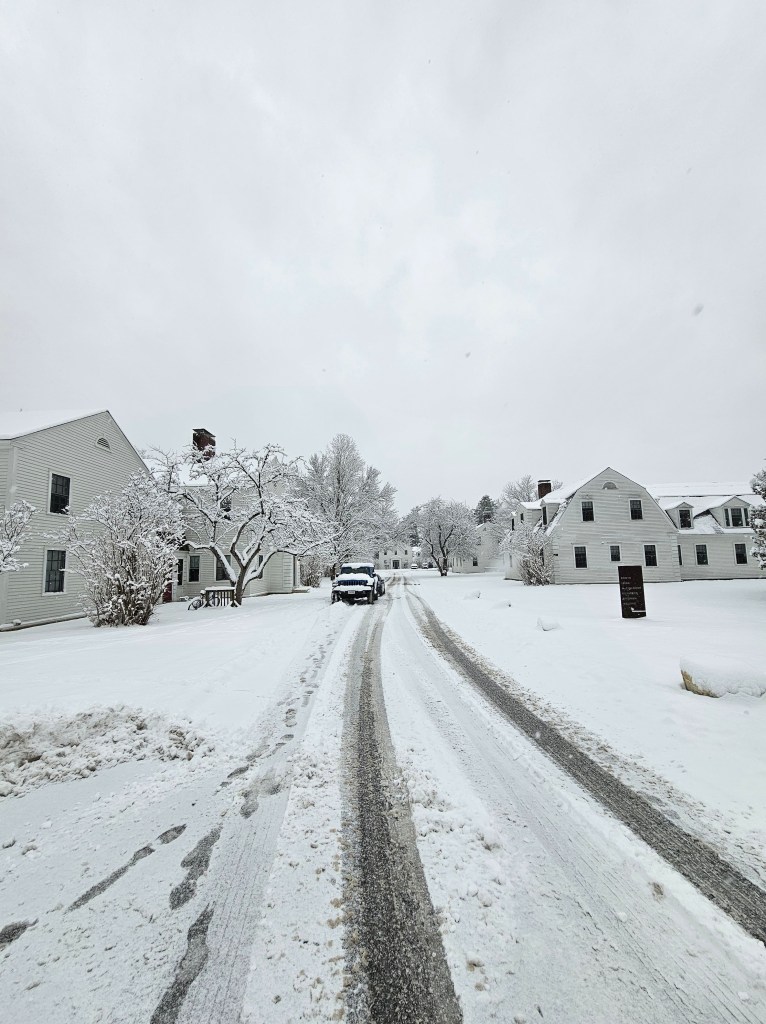
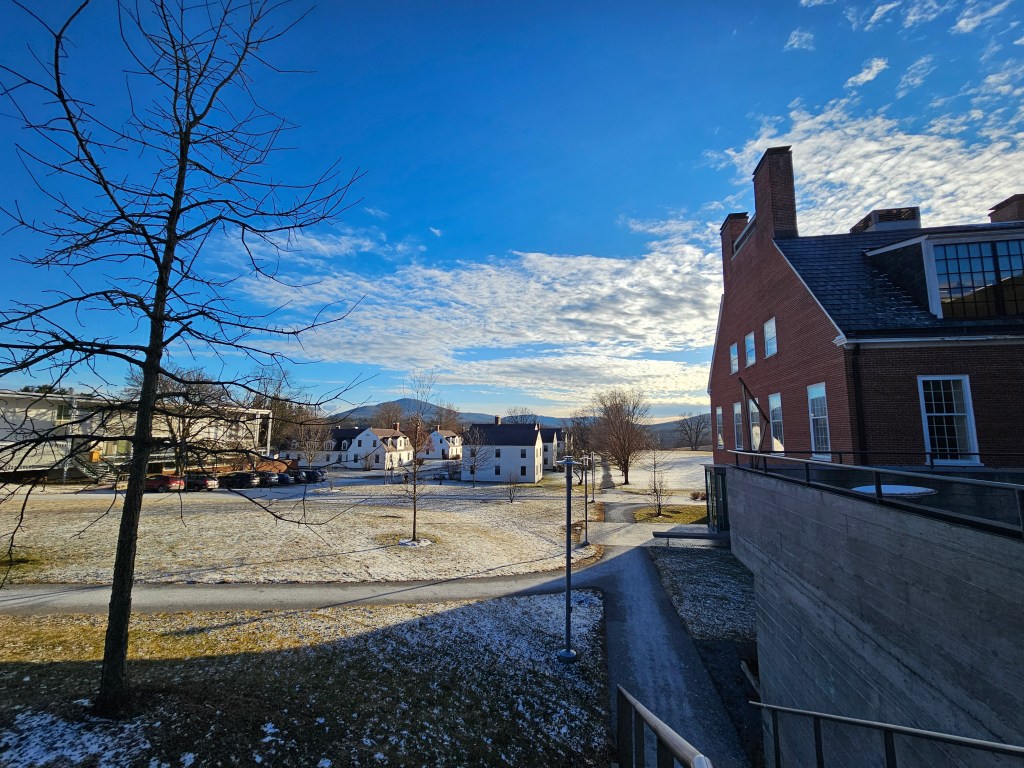
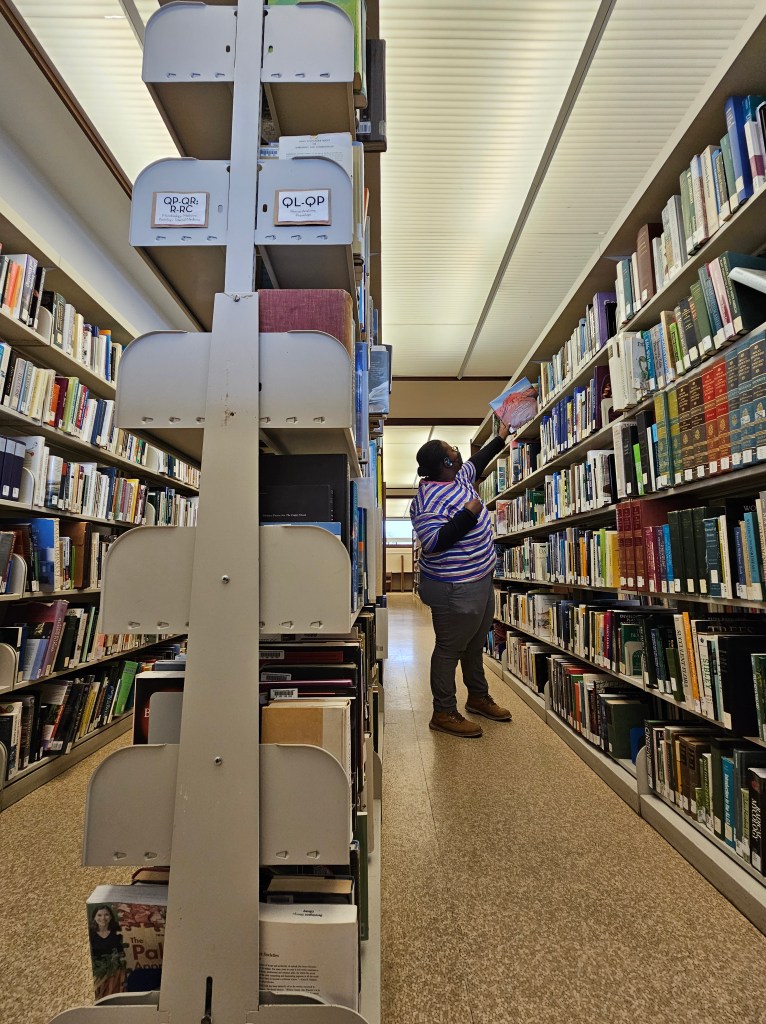
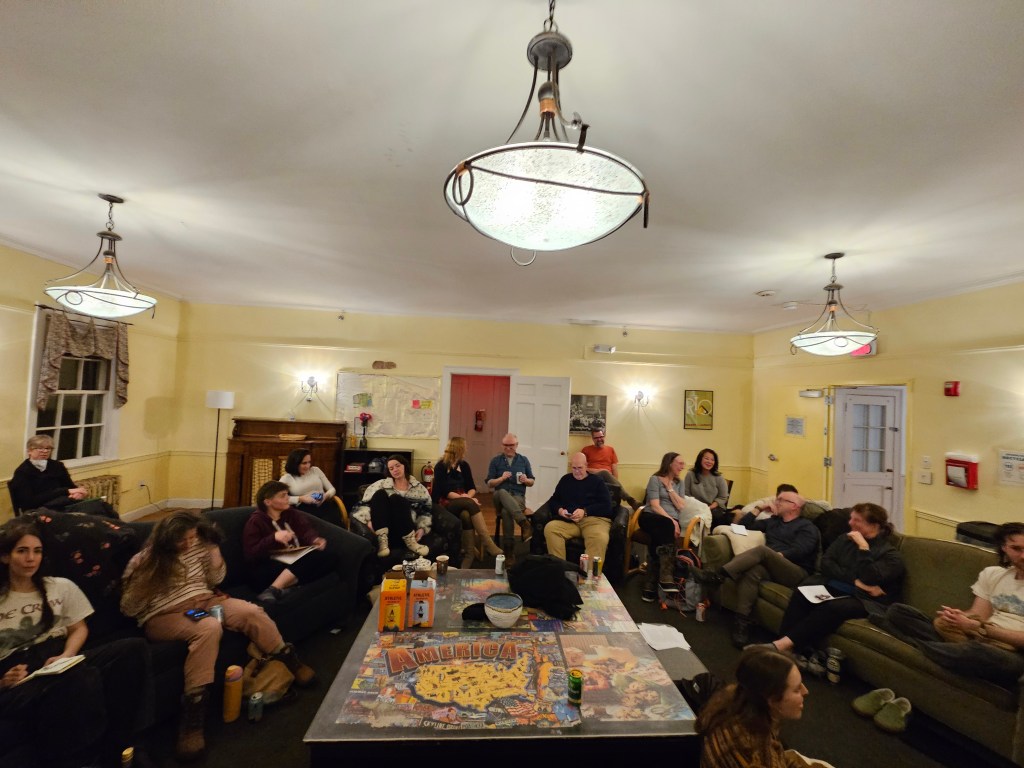
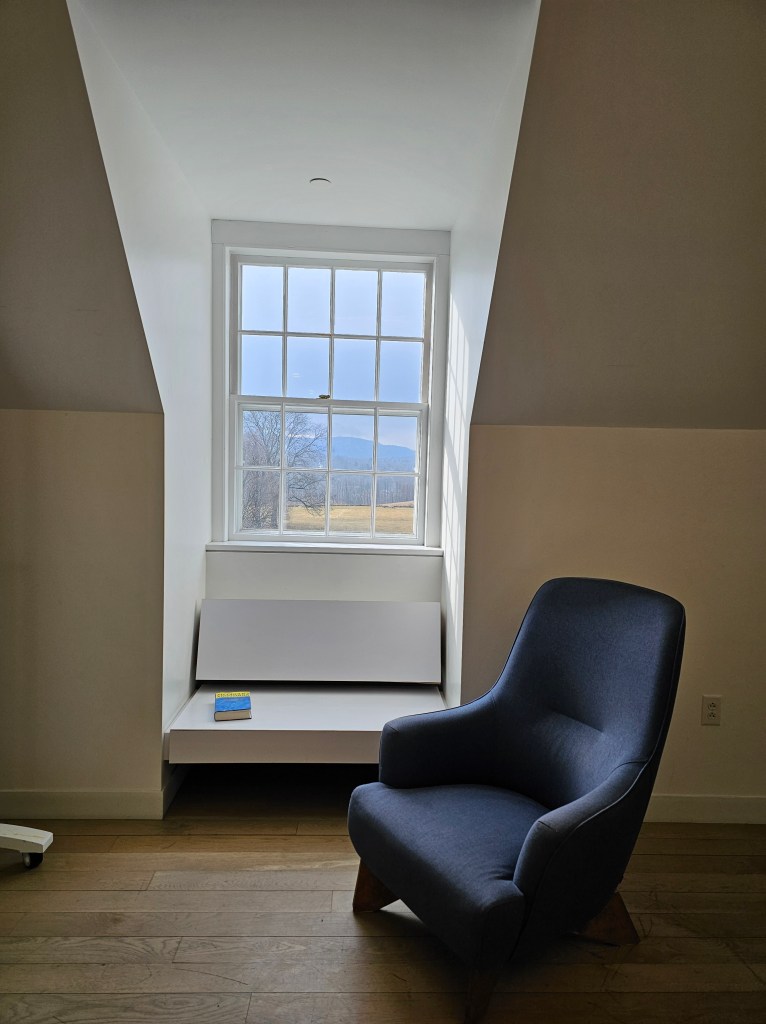
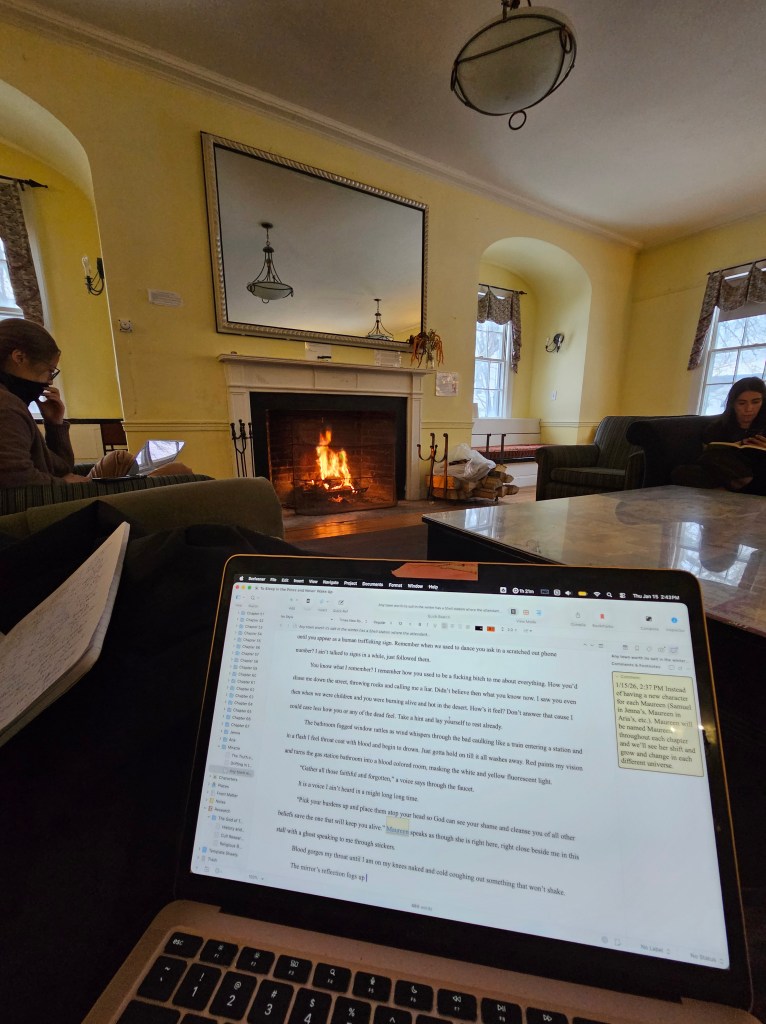
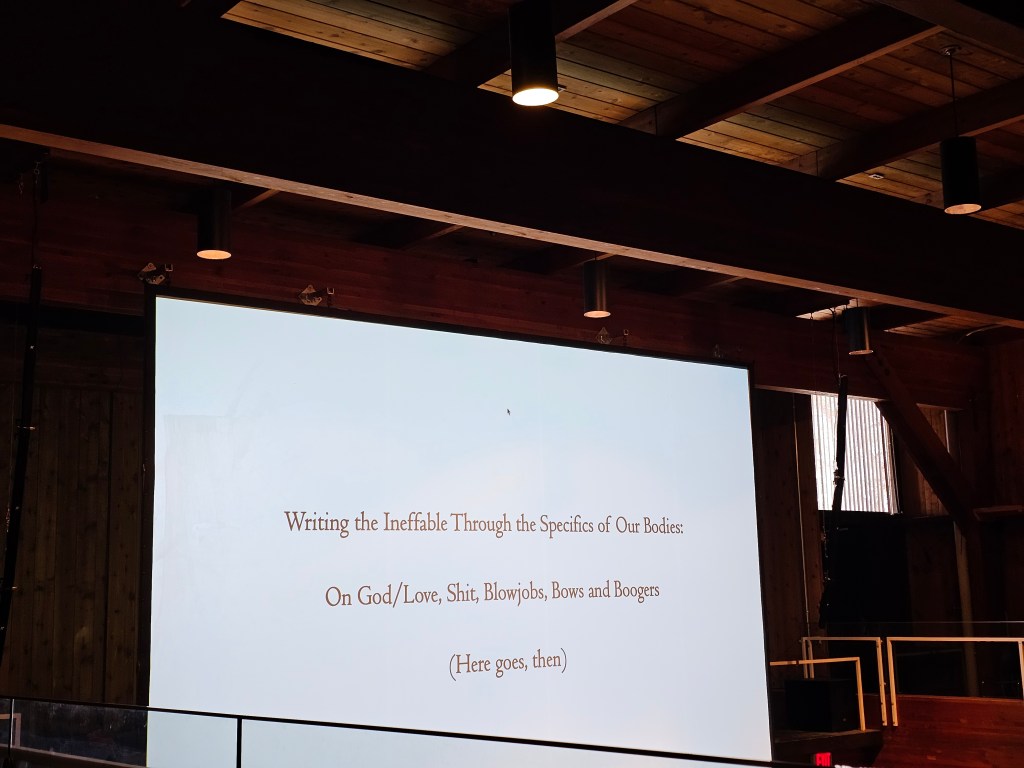
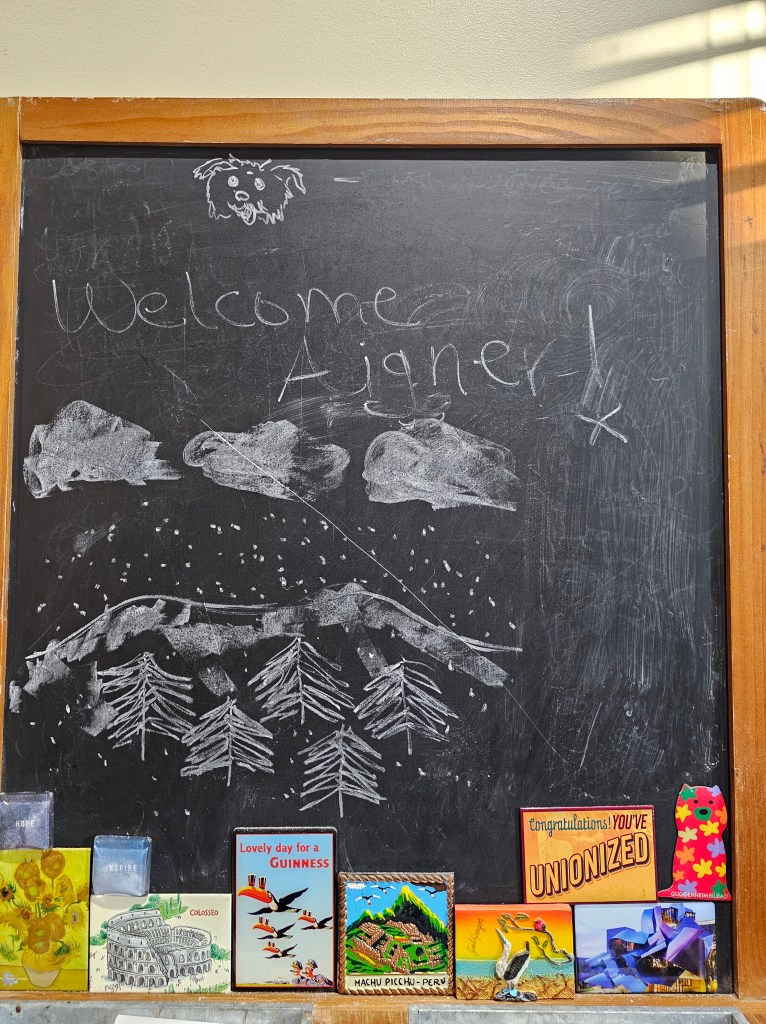
This post is going to cover about eight months and two residences at Bennington Writing Seminars, starting with my last winter residency back at the beginning of 2026. This was the final residency where I would be in workshop and actively participating in the academic side. During the last residency that I’ll cover later in the post is going to be all about graduating and prepping to do my defense.
January 2026: just got back from residency and am feeling underwhelmed by the Bennington requirement. Am I just buying a degree? Have I not worked hard and deserve to be treated as such?
It was a strange residency all and all. And with the end drawing near, I was really hoping that Bennington would have more opportunities lined up for graduates and set us up for better success post-graduation. Many of the meetings I had with teachers and faculty left me feeling less like I was being prepared for the future of my career and more ushered out into the world. I think a lot of this has to do with the low residency aspect. There was this feeling that the writers in the program who would make it, would make it and the others would not no matter what the school itself did. That is not to say that there weren’t chances for people to stand out and get noticed by the faculty and staff who would connect them with agents and editors.
You can read about that and see more pictures of this residency in my newsletter.
I had this experience, but many writers didn’t. The looming graduation also made me start wondering if all of the program was worth it, which if you’ve read this series, that has come up a couple of times in it. A low residency program is paid out of pocket or with loans. I got a scholarship but it didn’t cover the entire fee of the program, so I am leaving with not just a degree but a loan to pay back. This thinking, while stressful, also put a fire under my ass to make sure that I was doing all I could to make the experience worth it financially. I will say that Bennington and my MFA experience has definitely been worth it creatively.
So the first half of the year after getting home from winter residency was filled with applying to professional writing residences, applying to faculty teaching jobs, building out courses, and compiling a short story collection. All of that on top of writing my thesis novel, Project Boulder—new public title, though I think I may have called it other things in public a couple of times.
1/29: Met with fiction faculty advisor, Stuart Nadler, and was told to use this time writing as much as I can and finding a routine to keep going after grad school because many people take a break and don’t start up again.
Since my thesis pages were done and just needed to be edited, I had a lot of free space to just write. So that’s what I did. I wrote a hell of a lot. I think I spent about 4-8 hours each day working on my novel during this time because I needed to churn out a lot of words if I wanted to meet my self-imposed deadline of finishing the full novel at least a month before my thesis was due in May.
My teacher during this final term is Emily Nemens. I selected her because she is very technically skilled and has a history as a professional fiction editor. At Bennington, students get a chance to elect teachers they would like to work with. It’s not a guarantee that you will get the teachers you asked for, but in my time at Bennington, I was lucky enough to always get the teachers I wanted. I was so lucky to have Emily as my faculty advisor. She gave me a lot of guidance on my novel and encouragement.
She could see that I was working with a unique structure and trying to accomplish something extremely ambitious, but she never made me feel like I couldn’t do it. She asked me during our first meeting how best she could help me. We talked through what we should focus on together and what I should spend my time on.
February: Started incorporating more out of the house work sessions to work on my school work in a focused way. I’m still working on my novel rewrite and am almost 20,000 words into the third and final POV. I’ve compiled the short story collection into its near final table of contents and flow, along with finding a name for the collection to query under. I built a list of first tier agents to submit the short story collection to.
I began working out of my loft more and spending time writing and reading at the library, cafe’s, and bars. It was a great way to not get sucked into the tunnel of writing. I also found that outside of my loft without easy access to all my distractions I was able to complete my work in half the time, which was helpful because I was trying so hard to finish my novel draft before my thesis pages were done.
Project Boulder, my thesis novel, is the horror thriller book that I’ve been working on since 2021. After years of querying projects that went nowhere, I decided to take a different slower approach to writing and querying a novel. I spent four years developing the story idea, world, and characters before writing a single word on the novel. My MFA was where I wanted to write the novel under the careful care and attention of professional published authors and a community of serious writers.
If you’ve read my posts and Substack over the past three or four years, than you’ve heard me talk about the book under different names. My thesis term was where I wanted to write from scratch the novel that I originally wrote during the first year of my grad program. I pushed as much work aside during the term so I could just write the book and focus on it.
2/17: A few days ago I sent off my first packet, which had all four annotations in it. I wrote on writing the effects of drugs in fiction, communicating magic systems, the effects of immigration, and dialogue formatting. I also included the opening 10 pages or so of each of my POV characters from my novel.
In order to focus my writing time on my novel, I wrote all of the essays for the term in one month, allowing me to focus the last four or five months solely on novel writing. You can read those annotations in my newsletter. This was such a good idea but also took up a lot of my time during the first month because I needed to read the books and write about them while also still drafting my novel.
2/25: This month I have begun submitting applications and portfolios to residencies. So far, I’ve applied to Jentel and Covenant. I am planning on using the time to work on final edits for my horror thriller novel. Or resting from doing edits on my horror thriller novel. I’ve been thinking a lot about the MFA to residency to publication pipeline. I do not have to worry too much about that because I have already published pretty widely, but I have met people at Bennington who do feel like the MFA is a stepping stone to getting into traditional publishing. Speaking with teachers and other students, the opportunities and connections made at residencies, conferences, and grad programs is worth its weight in loans. Authors find their agents, sell their stories, collections, novels, and selves. Agents curate and cultivate the next crop of literary talent and authors who get the few prominent spots in publishing.
I have heard back from some of the residencies that I have applied for, but they have all been rejections. I’ll know and hear back from all my residency applications by early 2027. I’m still applying to some residencies, but mainly ones in Wyoming, where my novel is set, and local ones in the surrounding area. I’m writing this almost four months after graduation and I do still feel like the connections and teaching I got in grad school were worth the cost. A lot of that feeling comes from the fact that I am working my connections and network and take what I learned to heart. The cost for my MFA is worth it because I am making it worth it.
Early in the year and my term, I worked on things outside of my thesis while writing the last 100+ pages of the book. In February, I read a few books but the ones that have helped me think about my thesis are Sublimation, Brown Girl Dreaming, Black Queen, Debbie Doesn’t Do It Anymore, The Basketball Diaries, and Unclaimed Experience. Trauma writing and how it shows up in fiction stories was the main topic or genre I was reading in, while also reading NK Jemisin novels and stories to help me understand and learn how to write an accessible genre voice.
Something I was concerned about early in my thesis term was what would happen after graduation. So I spent a lot of time building post-graduation momentum by sending out applications to school and class pitches to schools. I heard back from a few of these places while working on my thesis. It was really helpful to know that I was able to get some movement on teaching since Bennington doesn’t have a teaching component outside of the one position offered per term, the Residential Teaching Fellow. The fellowship is a unique one of a kind experience for low residency schools and that position was a competitive one. From a writer in my cohort who landed the position for poetry, the experience was a one of a kind time that was a lot of work but also really rewarding.
When it comes to the MFA->publication pipeline, now on the other side of it having graduated, it is and isn’t a thing. There were people in my cohort who came with book deals already in hand and some who left with the encouragement and connections to agents and publishers. What my fiction advisor said was that the ones who really make it into publication are the ones who continuously put themselves out there and are constantly writing, connecting, and doing things in the literary world.
Life in February as an MFA Writer

3/8: Submitted off my applications for VCCA and Hedgebrook. I’ll be applying to one more residency this year, Ucross, but I have to wait till May for their applications to open. So far, most of the applications have been easy to fill out because I already had a CV, clear understanding of residency project, set schedule and discipline around writing, and writing samples that I felt were the best representation of my work to date. Hedgebrook did ask way more questions than all the other forms but I liked that they wanted to know how I contribute to a writing community and why I wanted to go to Hedgebrook. I found myself being the most creatively free during that application. I won’t know or hear back from any residencies for several months but they are all for the most part happening in late 2026 or early 2027.
I have heard back from VCCA and Covenant and did not get in. I’ll hear back from Hedgebrook and Jentel in November and Ucross by December. I’m also applying to a couple more residencies this year but mainly just ones in Wyoming or places that have connections to financial support and networking.
3/9: I am feeling, not worried, but concerned for the edit load of my novel. I am churning through pages and writing but I am also doing something new that is feeling a bit untethered and wild. I am writing my current POV without any sense of what is going to happen next. Not writing by the seat of my pants but by the seat of my character’s pants and wherever she deems to take them. That means that the draft I am eventually hoping to be 90,000 words by the time I submit it is already over 130,000 words and is probably going to finish at around 160-170,000 words. That is almost double the first draft of the story. What I don’t want to do is panic and lose steam at finishing or try and force my character to tell me her story at the rate of what is seen as publishing standard. My MFA has taught me that while yes, the publishing world is important, that it should not have anything to do with the creative generative process. While I’m writing, I shouldn’t worry about agents, desired word counts of genre, etc. etc. but the publishing professional in me is knocking everything off her desk to try and get me to write like a button downed career writer and not some ripped jeans novel in the back pocket floozy. But there is fire here in these words. It doesn’t make sense yet and the editing of the book is going to be a true tax on my skills and patience. That’s why I’m applying to residencies. My plan is to use the dedicated work space of residencies to dive into the heavy revisions that I know the book is going to require. I won’t be able to edit the entire book at a residency but I can do more there than I can at home with all of my other obligations. My aim is to have this second draft of the novel finished by the end of April. As a treat, I’m going to take some time away from the novel and write out a fun cozy horror slasher that I’ve already been able to write over 10,000 words on during a free day. That novel is not as intricate or intense as the one I am working on right now and I am going to try and give myself a week of free space doing nothing else but writing that cozy slasher.
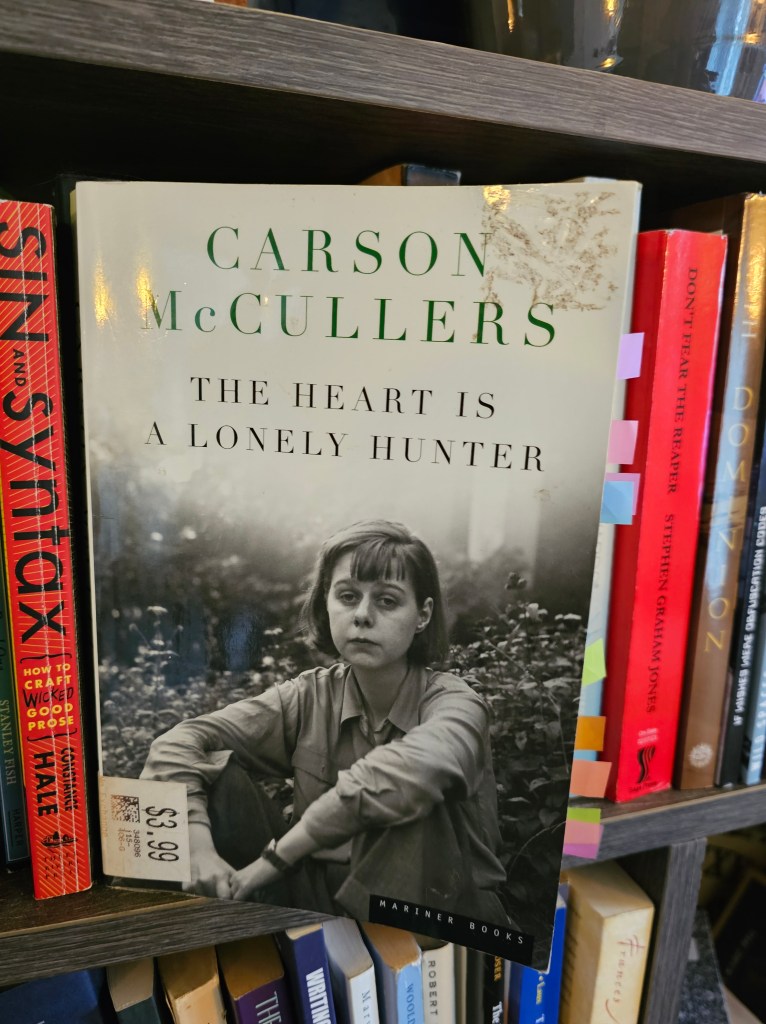
3/26: Everything has been the novel for the most part. It’s either noveling or working. I’ve pitched a few pieces here and there. Been reading a lot. Did a copy work exercise of McCullers’ Heart is a Lonely Hunter that helped me clean up some of the style and writing. Since my thesis is written and beta read, I am taking these last few weeks before crunch time to focus on my line by line work. I talked a lot with my teacher, Emily Nemens, about what I should focus on for this last term since my thesis is all completed and in a good place that I could submit it, though I won’t submit it before doing a really thorough edit. We went back and forth on what to do. Maybe work on a short story for my collection or parts of the novel. I want to use my time wisely since I am so close to the end of my studies. I decided that I’d use these last few months to work on my line by line work. I also worked on my short story collection and landed on a table of contents, narrative flow, and theme for the novel. I also wrote the query letter. Next month I am planning on sending the collection out to a handful of agents before moving to sending it to contests. There is a small batch of agents that take short story collections and represent my other genres, so if I can’t get a yes on that front, then I am going to focus on trying to get it out that way.
3/30: Heard back from Lit Hub about writing an article for them (read finished article here). Also getting down to crunch time on my thesis. Spent the last weekend reading over a cohort member’s thesis and providing some feedback. They did the same for me, though, as of this writing I haven’t read over their comments yet because I am focusing on finishing the novel before I go back and revise the opening pages of each POV character that makes up my thesis. Since I am getting closer to my imposed deadline for completing the novel so that I can switch gears and focus entirely on the thesis on April 13, the day my 3rd packet is due (after that, I only have one more packet to turn in and that’s my thesis packet), I am scheduling full novel days where I work on nothing but the book. So far, I set aside time to write 5,000 words, read a few books to help inform the writing, journal about specific topics to help deepen the writing, and watching some TV related in some way to the novel. I’ve crossed the 150,000 word mark on the novel’s draft, which is bloated and not going to be the ending word count number I’ll submit out (that’ll be closer to 90,000). I am right now just writing the character’s draft of the story. My first draft of the story was all me and all for me. It followed my outline pretty closely and was very structurally sound. This draft is all wild and loose and stranger than I could have even outlined or plotted. This is the real novel. Somewhere between my first draft and this one and a whole mountain of reading and researching is the final draft.
Life in March
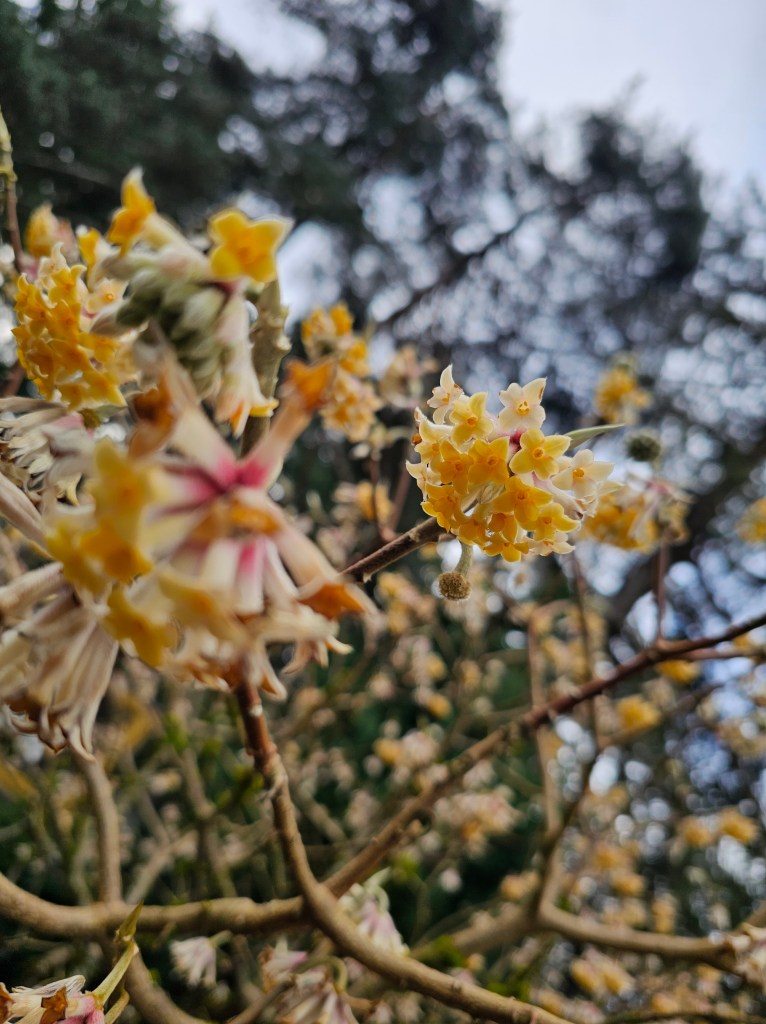
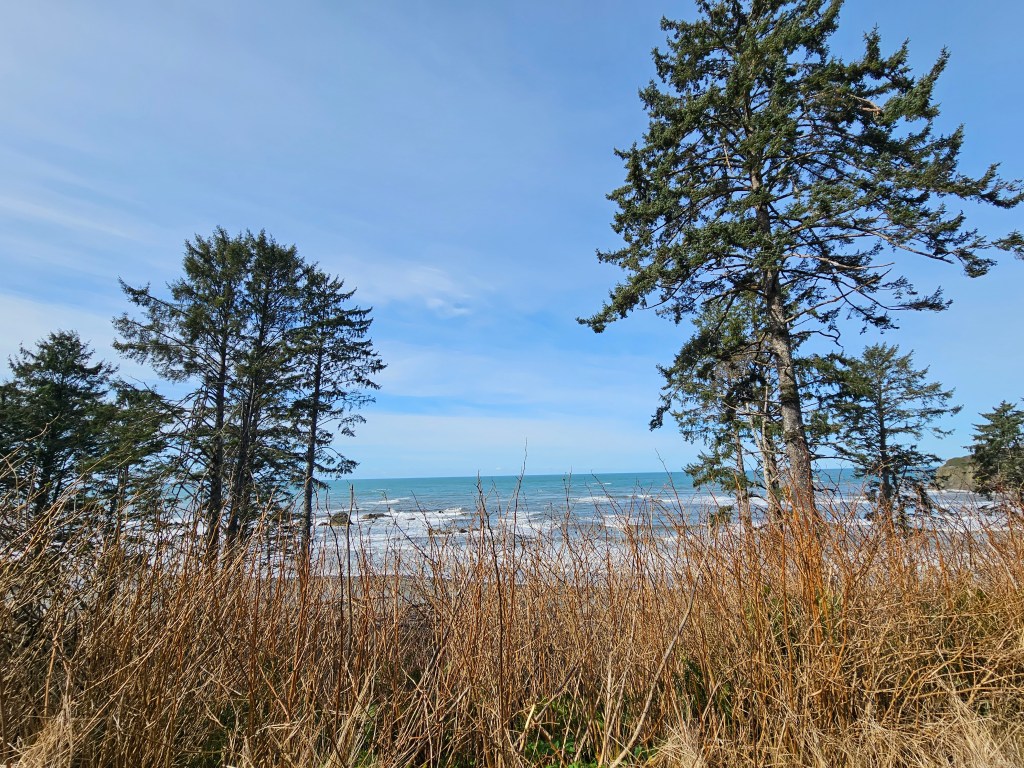
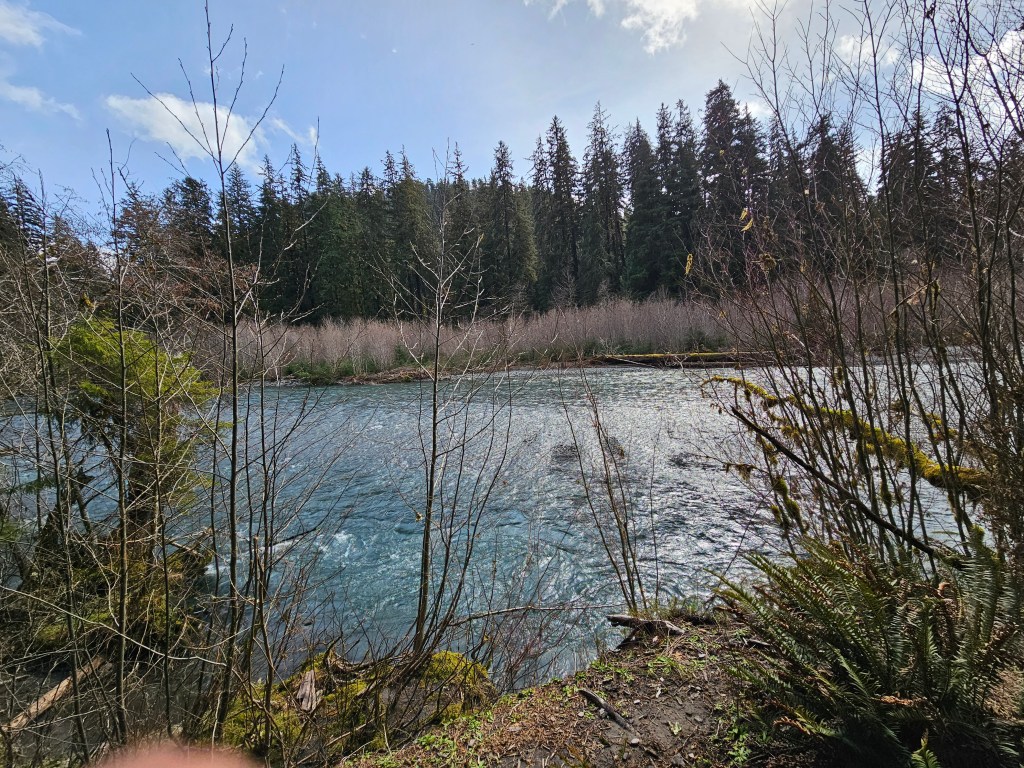
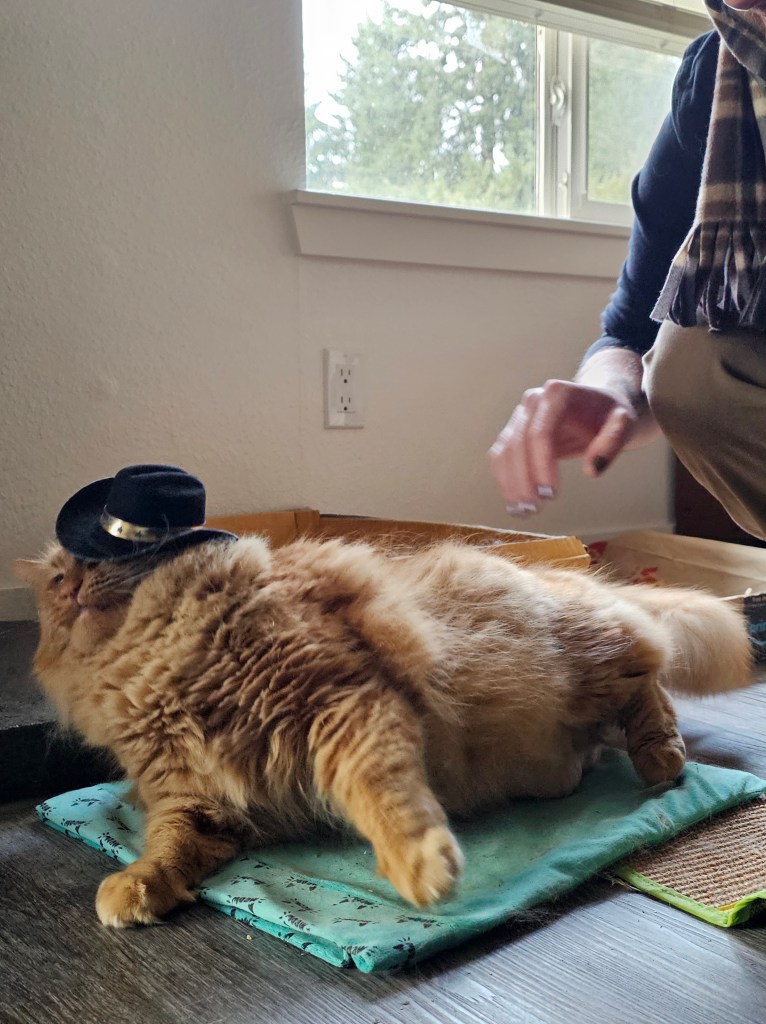
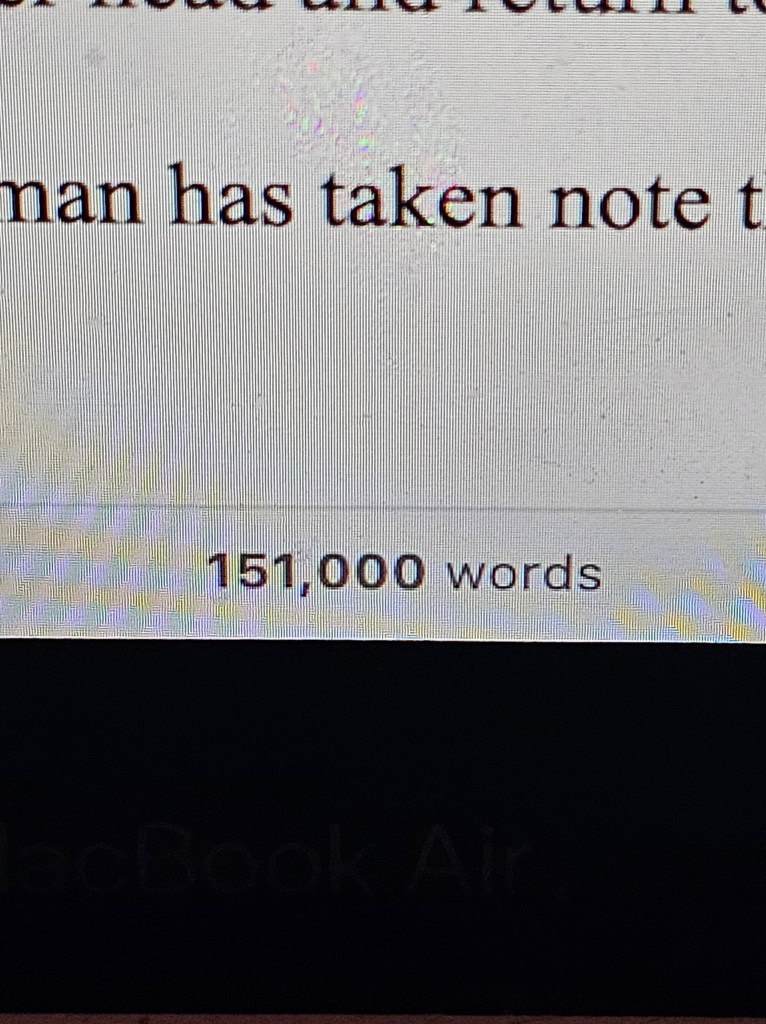
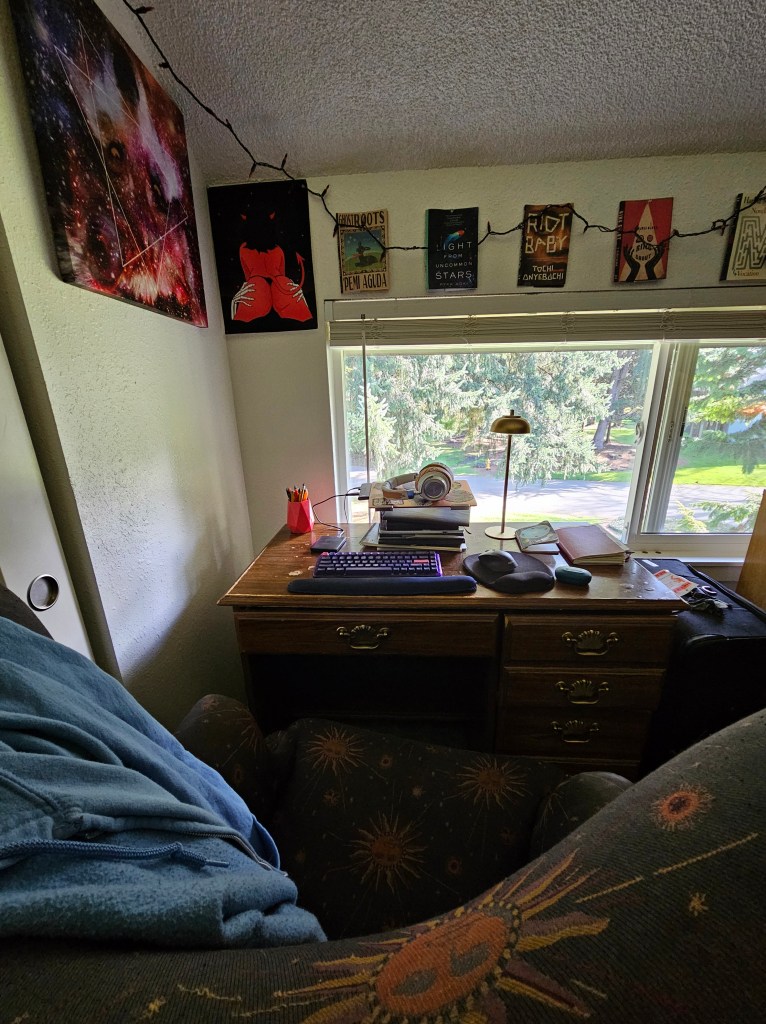
4/5: Full novel writing days. Racing toward finishing the book by 4/13 so I can spend the last month before my thesis is due editing the pages. Building Scene Builder and coming down to release date for it.
By the time April rolled around, I went total novel mad and focused on carving out 4-6 hours each day for writing the novel. My head space during this time was swimming with where the novel was going and the characters. I knew that I needed to complete my novel draft before I would be able to make the thesis pages what they needed to be in order to make sense and be gripping. It may sound like a huge stressor, and in some ways, it was, but it was a necessary stressor that I needed to go through.
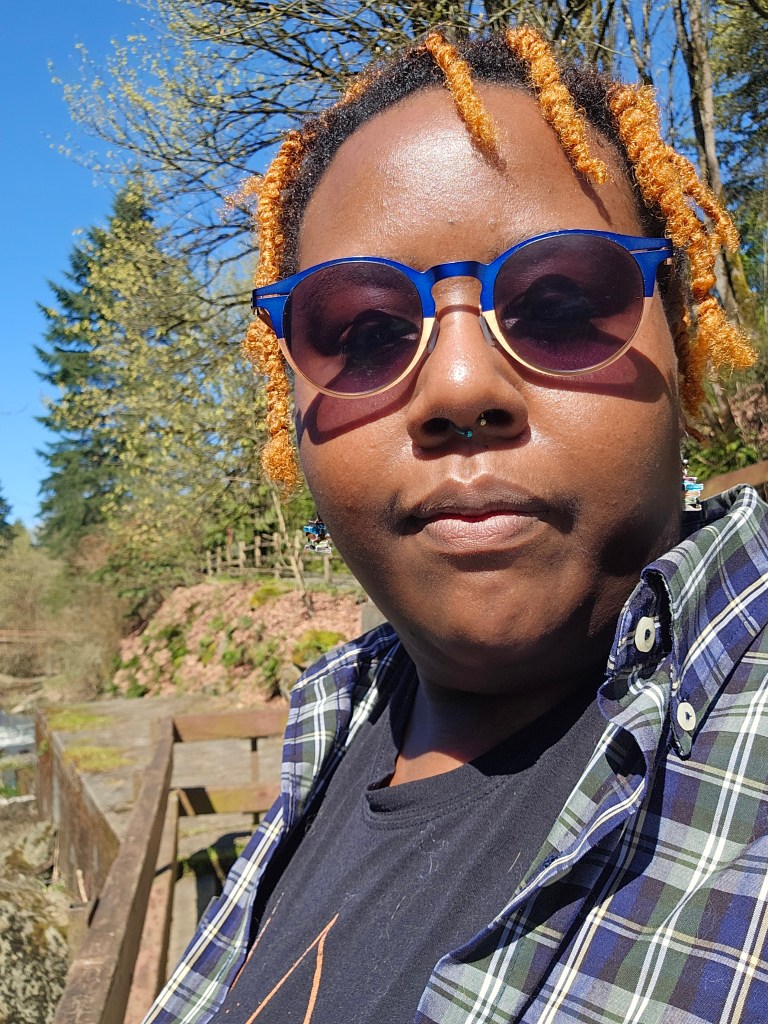
4/6: On the last week of my novel completion deadline and doing more full writing days. Today I did a writing crawl and roved around town to different spots (cafe’s, book stores, bars, and parks) to sit for an hour or two and write. It was a really nice early spring day so I felt full of energy and was able to get just under 6,000 words written, which puts me within 10,000-15,000 words of my ending!
This was such a beautiful day. I took Alexander Chee’s book How to Write an Autobiographical Novel and read it during breaks. It made the whole experience more exhilarating and inspiring.
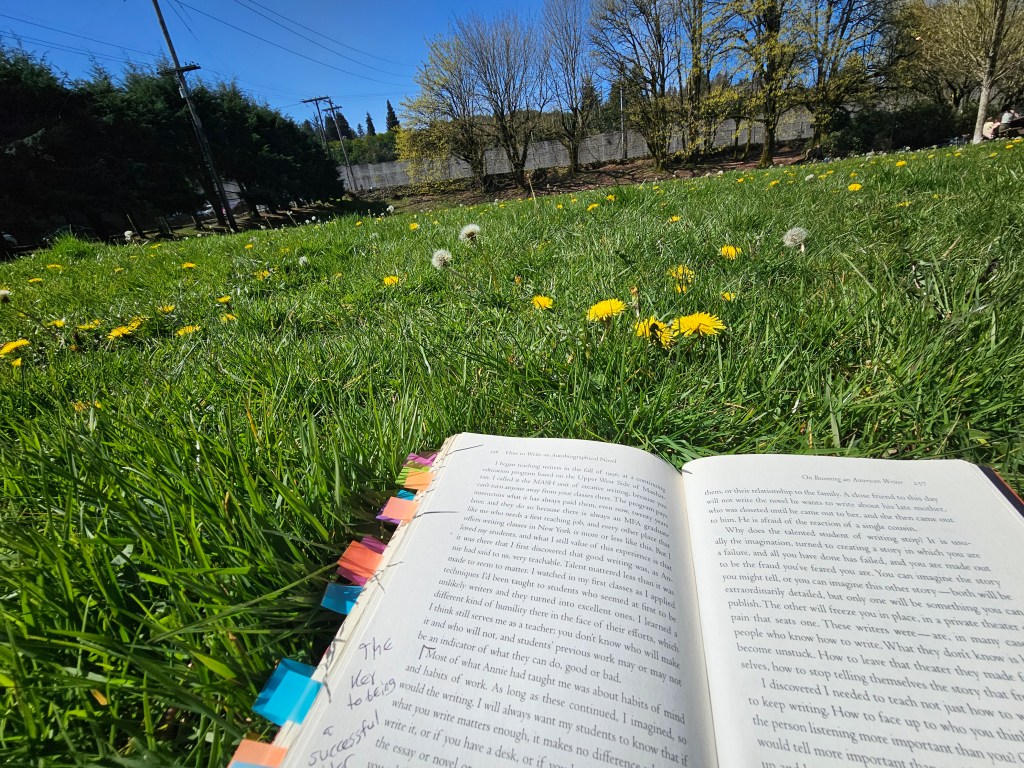
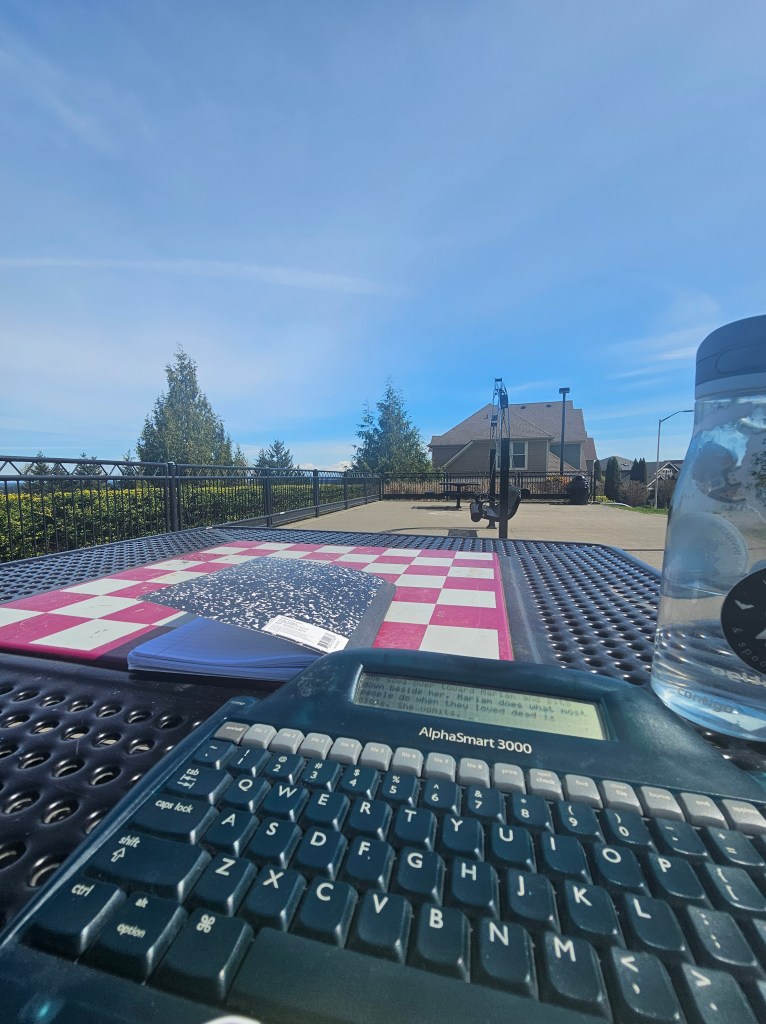
4/15: I finished my novel. I spent the past week doing all writing on my novel each day and went novel mad about it. I wrote around 20,000 to 30,000 words in the past week in a half. While I’ve finished writing the novel, I haven’t typed the ending on the novel because I know deep down that there are at least two more chapters left to write to fully wrap things up but I won’t write them until after going back through and reading the full 180,000 word draft.
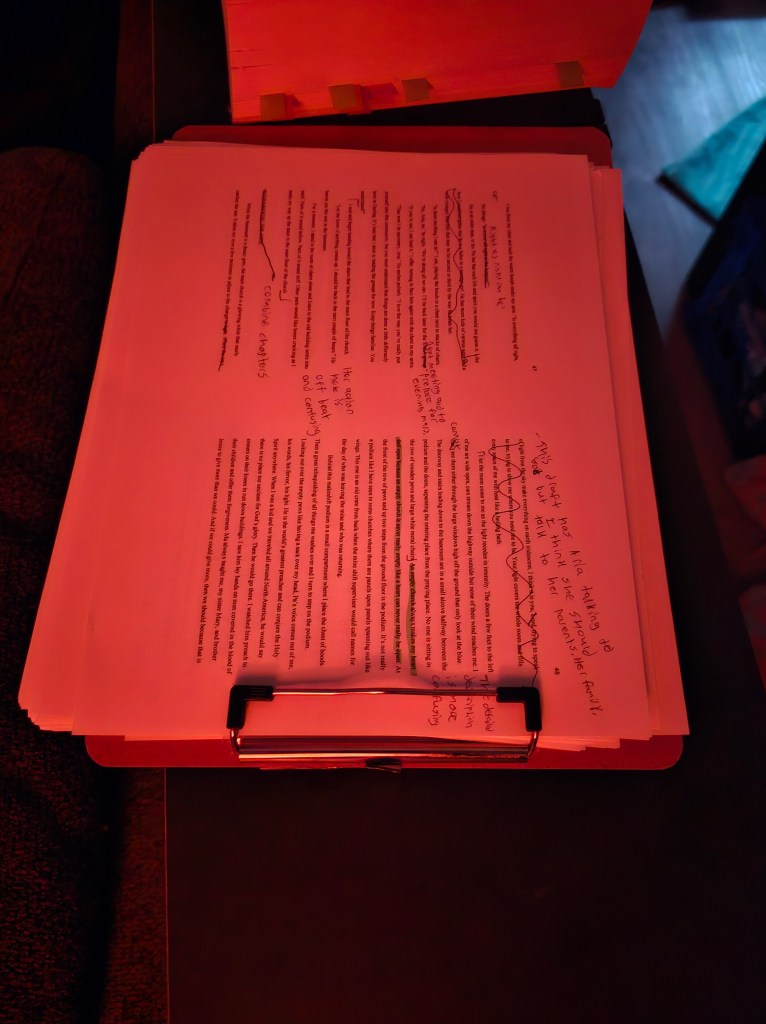
I’m writing these little inserts in Sep-Oct and am currently reading through the printed version of the draft and making developmental edit notes. A few days a week, I’ll read through 20-50 pages of the draft and on the back side of each page, I write out the summary of what happened on the pages. By doing this, I’ll have a page by page synopsis of the novel’s draft. Once I finish reading through the pages, it’ll help me as I go about making my content edits to the digital draft. I’m also applying to some fellowships and grants with the novel. Sometimes the applications call for a synopsis of the project, so do some agents and publishers, so the back of page summaries are going to be immensely helpful.
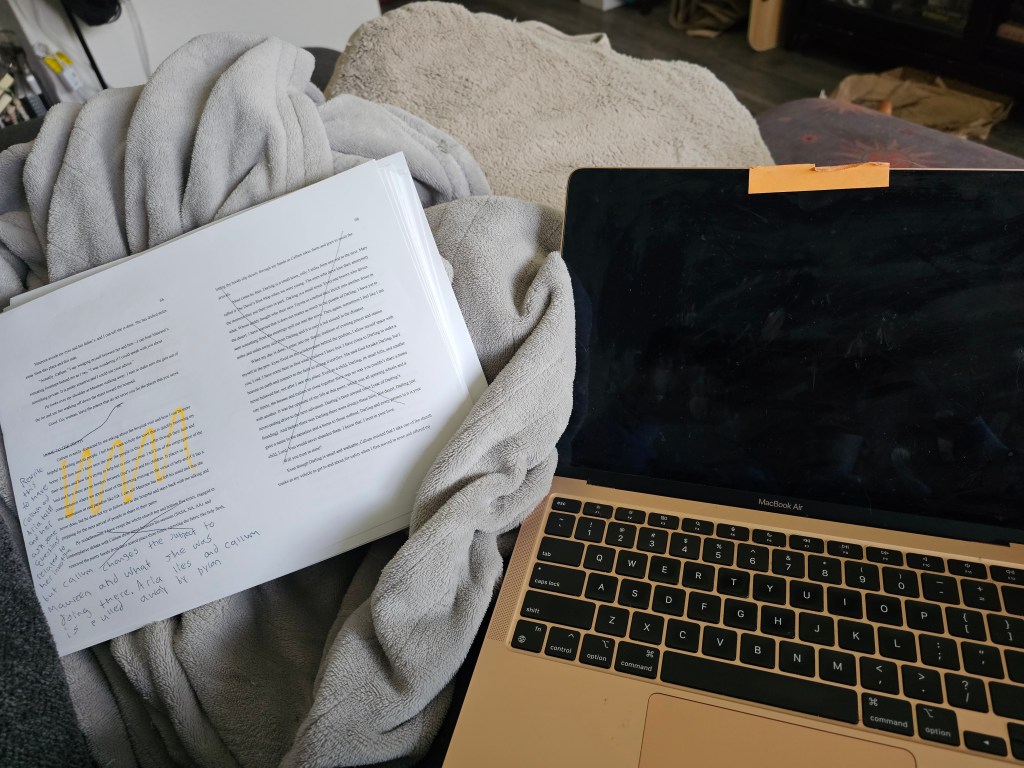
I’ve also noticed that as I write the summary, I can see which pages have a lot of plot movement and which ones don’t. It’s helped me be able to identify which areas can be cut because they don’t progress the storyline or repeat information. I used this method when I was editing my thesis pages (more on that below), and it helped me, so I figured I’d try it on the full draft and start incorporating it into my revision process.
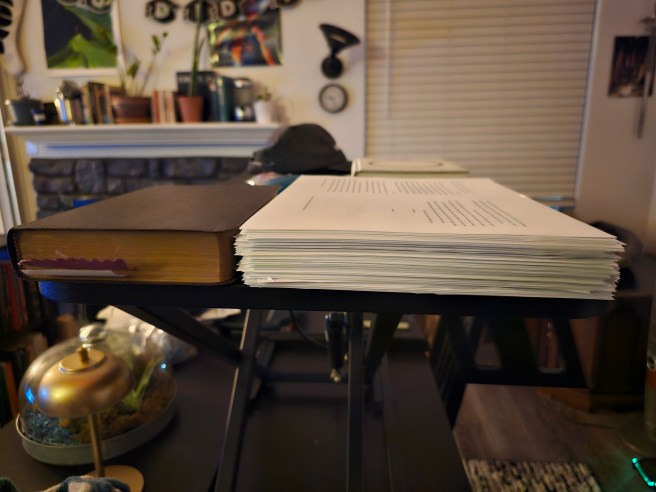
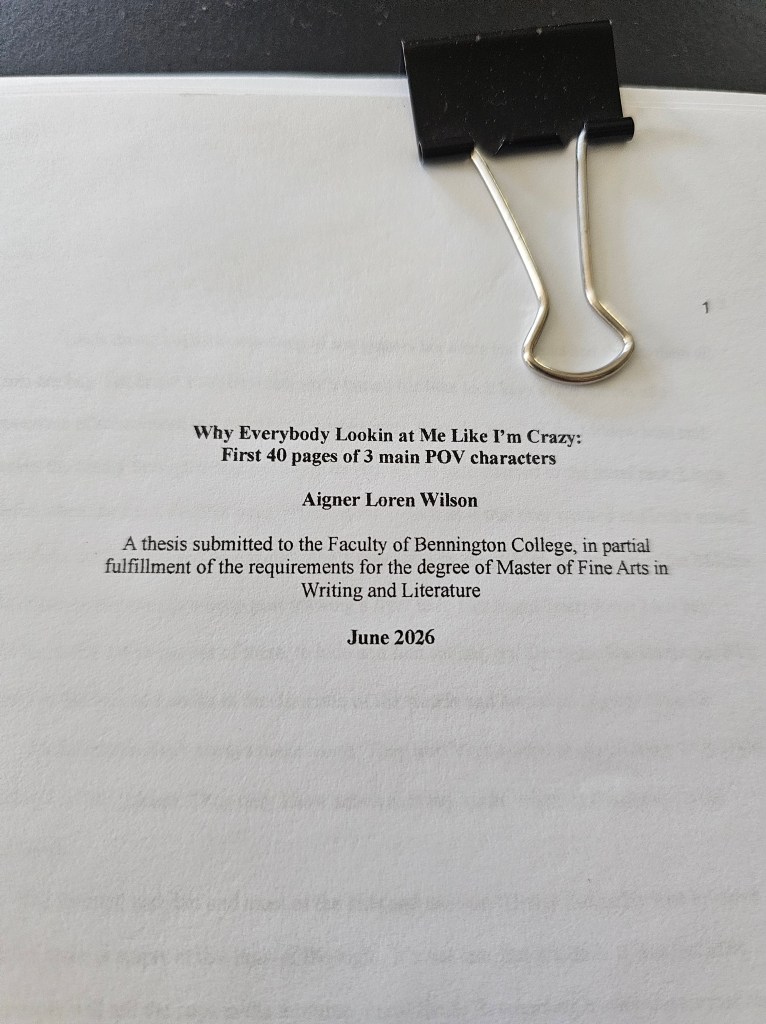
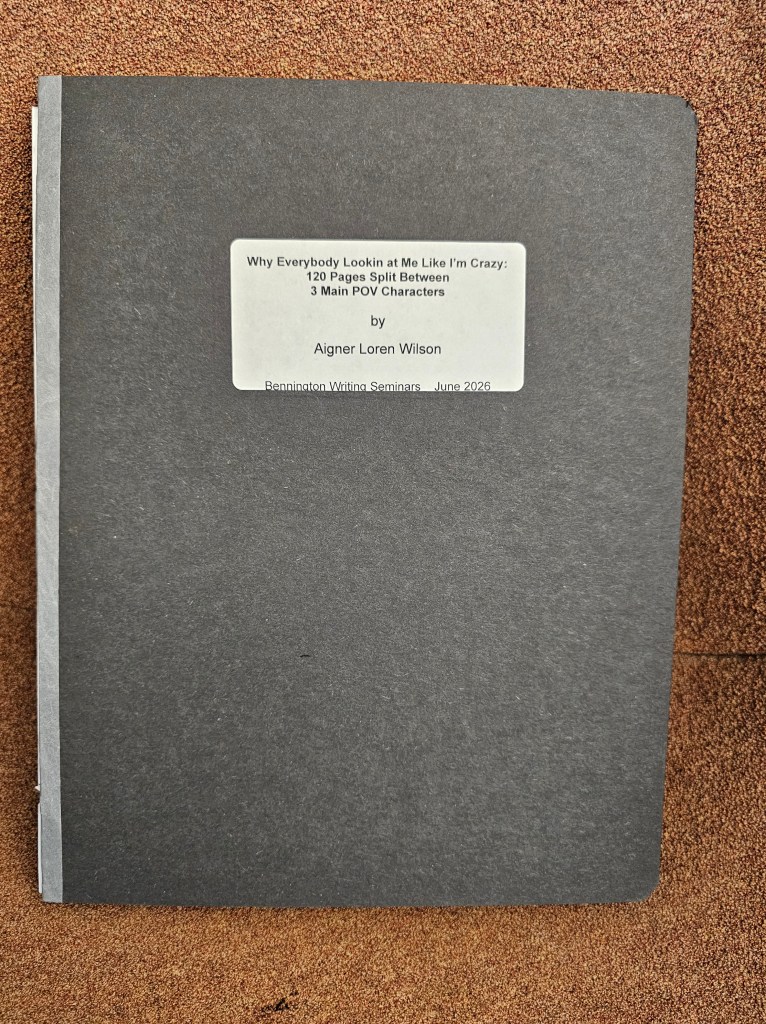
4/27: I printed out my thesis draft—all 120 pages and have begun reading through it and thinking over specifics related to updates and edits I want to make before submitting it on May 15th to my teacher and second reader. I’ll have to officially submit it again for graduation , but this is it, I’m in the final stretch. I’ve also been thinking about my nonfiction books (one related to horror and the other to dialogue) that I have put on hold to work on other works. I do want to keep those on hold till I land an agent and more readership with my fiction works.
I ended up having a little less than a month to edit my thesis pages after I finished writing my book. I wasn’t too stressed on time because I had just finished doing a lot of writing and felt like I had a handle on my characters and story in a way that would make the edits go smooth enough. Another thing that helped me edit through my thesis in a way that wasn’t super stressful is that I freelance and had scheduled my work in clients so that I could give 20-40 hours a week dedicated time to editing my thesis.
4/27: I sent out queries for my short story collection to the small number of agents on my query list who both were open to short story collections and ones that also repped other genres I want to write in through my career. I am going to use my Bennington connections to try to get ins wherever I can and will send off emails to them as well with an ask to connect me with any industry professionals they can to help my collection find a home.
As of October, I’ve heard back from all my queries. I got a full request in September and an agent while on campus for graduation requested that I query her with my short story collection and novel. I’m still waiting on hearing back from those one of those agents, but this is the closest I’ve gotten to a yes from an agent. So even if I don’t get a yes from the agent, I know my writing is on the right track and getting the attention I’ve been trying to garner with my queries for years. You can read about my whole editing and compiling process on my blog post, How I Write: Querying a Short Story Collection.
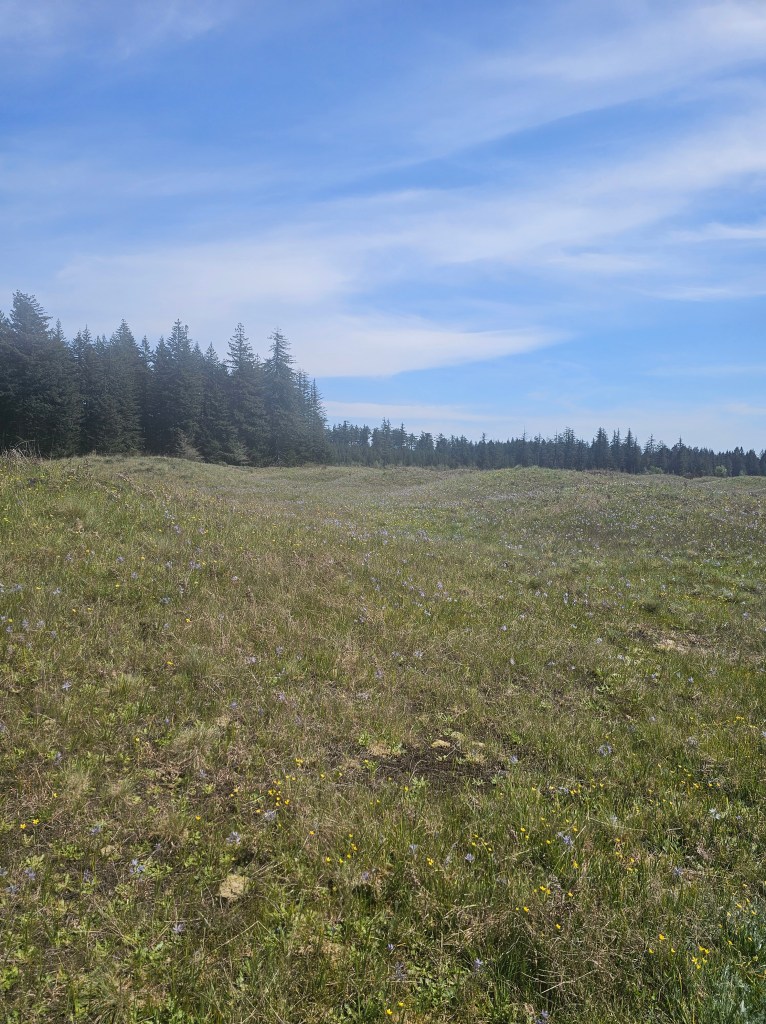
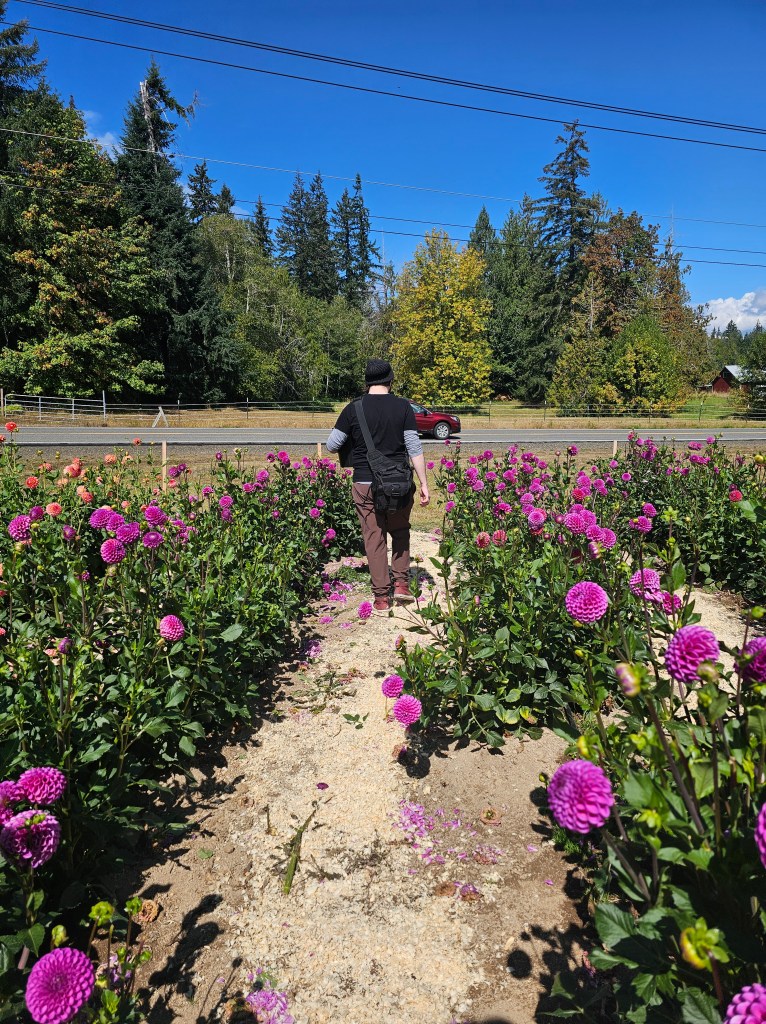
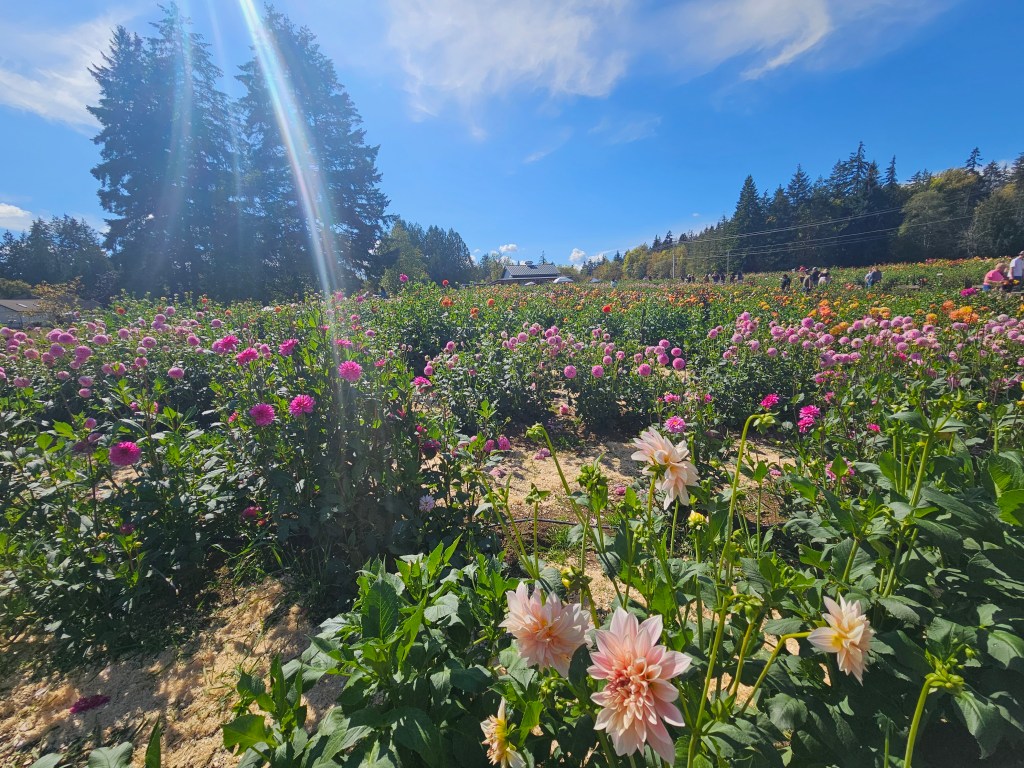
April Flowers and Words
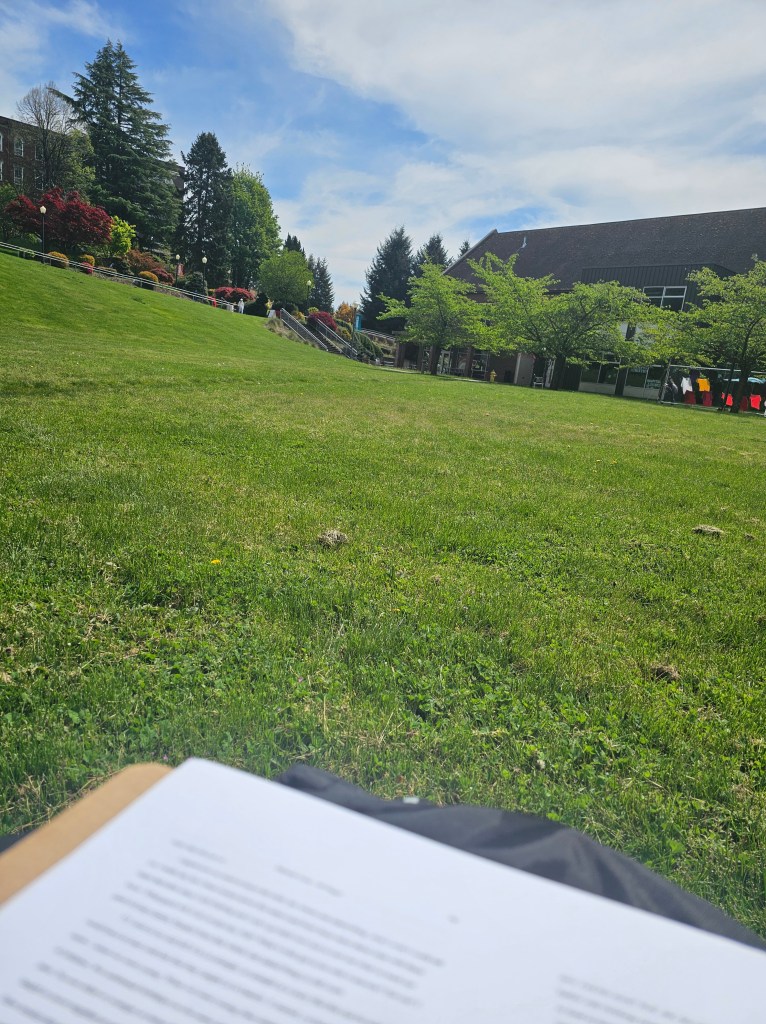
May 1: Sent off application to UCross and felt like a fool for rushing it. The deadline isn’t till July and I had months to prepare and focus on the application, but I fell into the trap of getting focused on just getting it done and not getting it right. I knew as soon as I hit submit that I was wrong in sending the application out. The main thing that I felt like I rushed was not waiting till AFTER I revised my thesis and opening pages, the exact pages I submitted. They aren’t bad, but they are rougher than I would have liked. Everything else about the application I stand by but the material just isn’t where I would want it to be before sending it off. Oh, well. This is just a lesson for next time, if not for me than someone else reading this. If you are submitting applications to residencies, wait till the deadline just to give your work a bit more time.
I took this lesson to heart. The fall fellowship and residency applications I’ve been working on, I’ve taken the full time until the deadline to really refine and work through my material. If I don’t have at least a month before the deadline to work on my submission packet, I haven’t been applying. This fall I’ve so far applied to several short story collection contests (FC2 Ronald Sukenick Innovative Fiction Prize, Ann Petry Award, Dzanc’s Book Prize, University of New Orleans Press Publishing Lab Prize), Atticus Hotel residency, Wallace Stegner Fellowship, and have a handful more on the horizon to apply to before the end of 2026.
Entering into post-grad life, thinking about what’s next and how I can take the moment, verve, and energy that I established and built during grad school was on my mind for most of the past year. I had spoken with Stuart Nadler, the fiction advisor at Bennington earlier in the term. He had told me one of the important things to do after graduation was not to rest, but to keep going. Keep writing. Keep submitting. Keep applying to opportunities. He said that a lot of graduates can easily fall into the trap of taking time off and then not coming back to it or losing the steam from grad school. I ended up scheduling a few interviews, classes, and due dates for articles after graduation so that when I got home from graduation it didn’t feel like there was a lull, but my next thing was already lined up.
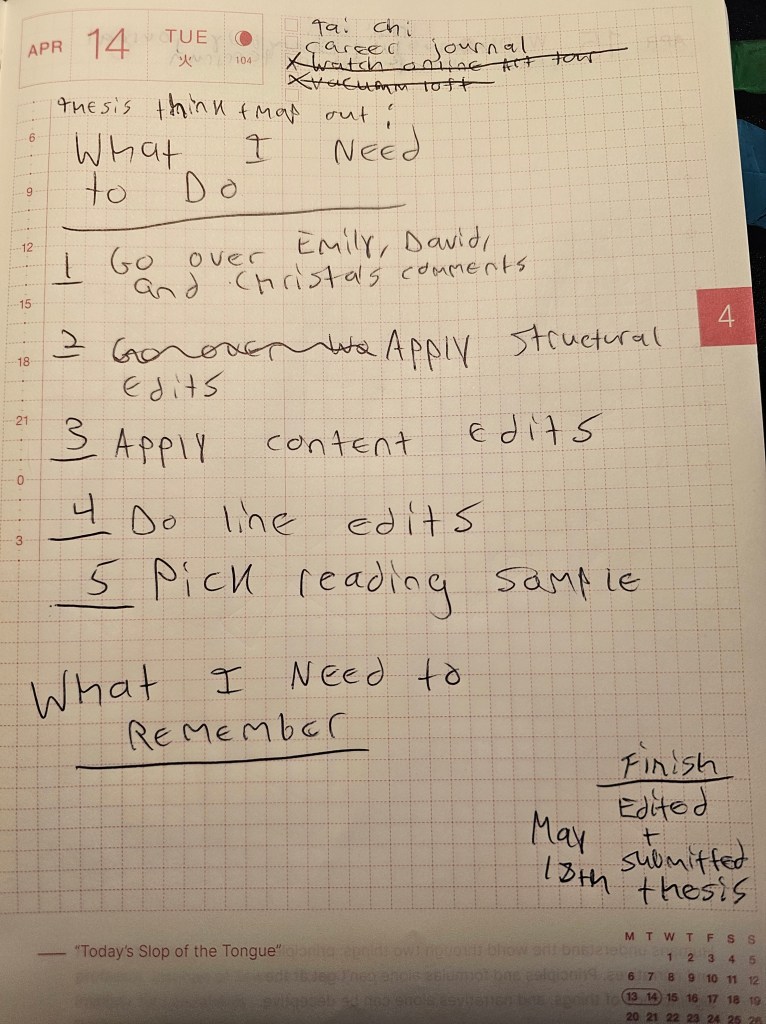
5/13: Edited the first two POVs. I cut and rewrote at least 40 or 50 pages so far of my 120 pages. I don’t feel bad or weird about it because the rewrites and cuts have aligned the story better and fixed pacing issues. Because I did such a bloated or over written draft that had the characters leading me through the story and world, the rewrites are also really easy because I am familiar with my characters and have gained their trust. There are moments during my long editing days where I am doing some chore while thinking of the story and all I have to do is ask the character what did you do during this moment and they tell me—more like show me what happened. It makes the editing exhilarating because I can’t stray too far from something to write on. My characters are open and want this thesis to be good too. They want me to tell their stories in a way that pulls people in and helps them understand their lives better. I am also less than a week away from submitting and still need to developmentally edit another 40 pages and then do a copy and line edit of the pages before submitting to my teacher. I have pushed most things out of my life and am pretty focused only on the thesis. To help me understand how to work with my last 40 pages which are a bit of a wild character voice ride, I have been reading articles and books on distinct character voices and ways to ground the reader in the narrative instead of losing them.
It’s wild to think that I wrote that just a few days before submitting my thesis. I had only edited through part of the thesis and was nearing the deadline. I don’t remember feeling stressed at all while doing those revisions with an impending deadline. I do remember that feeling of exhilaration while reading through the pages and asking hard questions of myself and the draft. When I reached the line and copy edit stage of my thesis, I read all 120 pages aloud multiple times. I read it till my voice was sore and hoarse. One day, I even read for 6 hours straight.
I had to go back through my Storygraph to see which books I read during that time that helped inform my writing on character. They were: Trust by Hernan Diaz, The Broken Kingdoms by N.K. Jemisin (who I ended up doing my final author study on during that last term), Triptych by Karin Slaughter, Asymmetry by Lisa Halliday, and Doctor Sleep by Stephen King.
My author reading into Jemisin during my final term was not as involved as my author focuses for my previous terms where I wrote papers and analyzed Ray Bradbury, Toni Morrison, and Samuel R. Delany’s works and careers. Since I was so focused on my novel and thesis, I only held myself to reading as much of her work (both long and short) as I could handle without overloading myself. I found the time I spent with her work to be transformative for my writing and understanding of how to write complex topics, experiences, and people in accessible ways.
5/22: I submitted my thesis on the 17th—a whole day before it was due. I sent it to both my thesis advisor and my second reader, Rebecca Makki. I have not heard back and won’t get the full feedback till after graduation, I think. What I do know is, I put everything into those pages and worked on them for four weeks on long days of reading and editing. By the end, I rewrote almost half the whole thesis and felt like what I did helped the story make more sense and connect strings that I was trying to connect in clever ways when I could just tell them plainly. Since submitting, I’ve allowed myself to sleep in without an alarm and just rest. I also went and got oysters after submitting as a congratulations to myself. I then saw a stage play of The Hobbit done by a local community theater that was such a treat and a once in a lifetime experience just like submitting my thesis.
I heard back from my teacher and second reader a few months ago. My teacher who had read several earlier drafts of the novel commented on improved the novel and storyline were in the thesis. While the first drafts she had read seemed disconnected and not yet at the point where they were clear to the reader what story they told and why them, the pages I submitted for my thesis cleared that up. My second reader called the dialogue and story original and ambitious. They both made it clear that this novel should be what my focus is. In the words of my second reader, “… the book itself, and what it needs to do next, should be your motivation and your calendar.”
5/25: I heard back from my teacher and it was such an amazing letter. She didn’t say it was perfect or offer me a direct line to her editor but she noticed the work I had done and called out one of the biggest things that I have been working on with this very strange story and that is the confusion. Since I sent off my thesis, I gave myself a slow week where I slept in and rested a bunch. I had work meetings and other obligations I showed up to, but I began reclaiming my time again from grad school. I’ll be leaving for residency—graduation and final residency next week and I am in two spaces. One where I am already done with it and am ready to come back and get back to work. And the other space that is trying to just be in the now and present so that when that final residency comes, I can take it all in and be in it totally. I’ll be giving a speech during graduation, which I have been avoiding working on because no one will be there at my graduation for me and I think I’m emotionally blocked around that so I’m just walking around it. I’ve done two drafts a couple months ago, but have avoided doing it this month.
May as a Writer
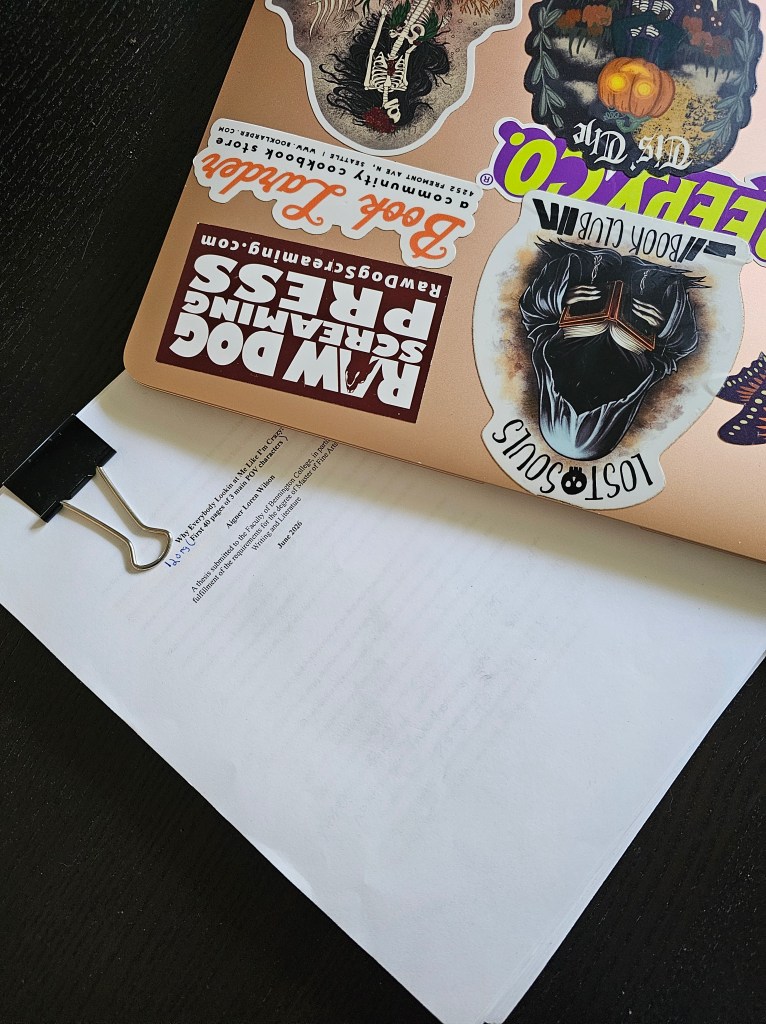
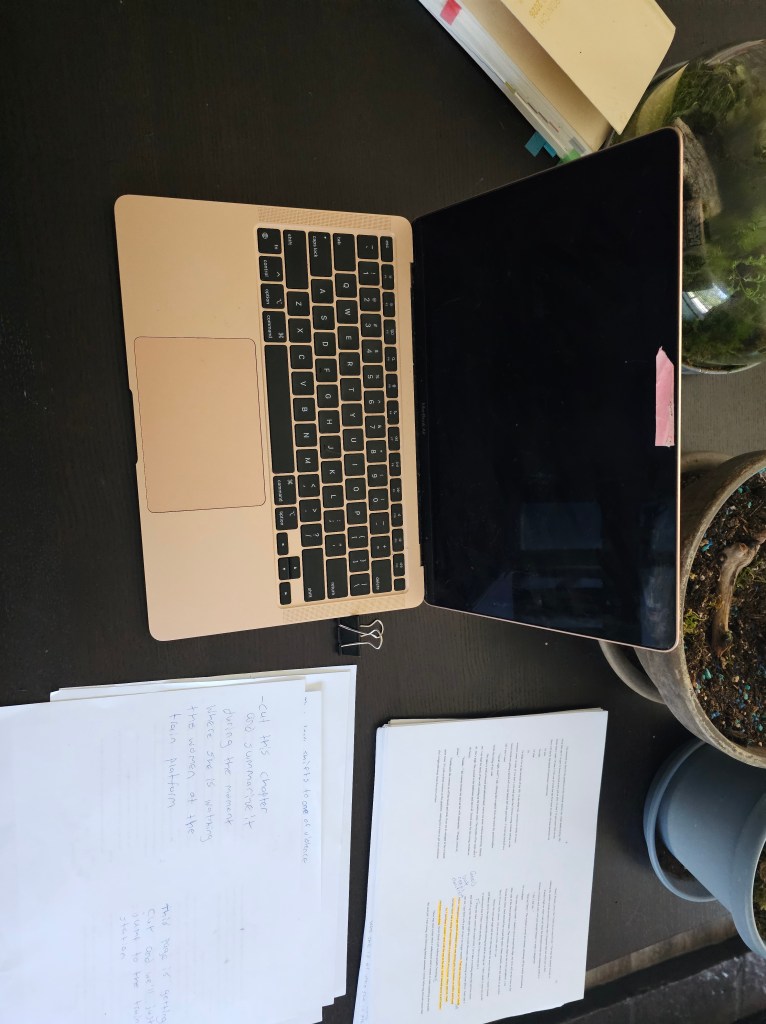
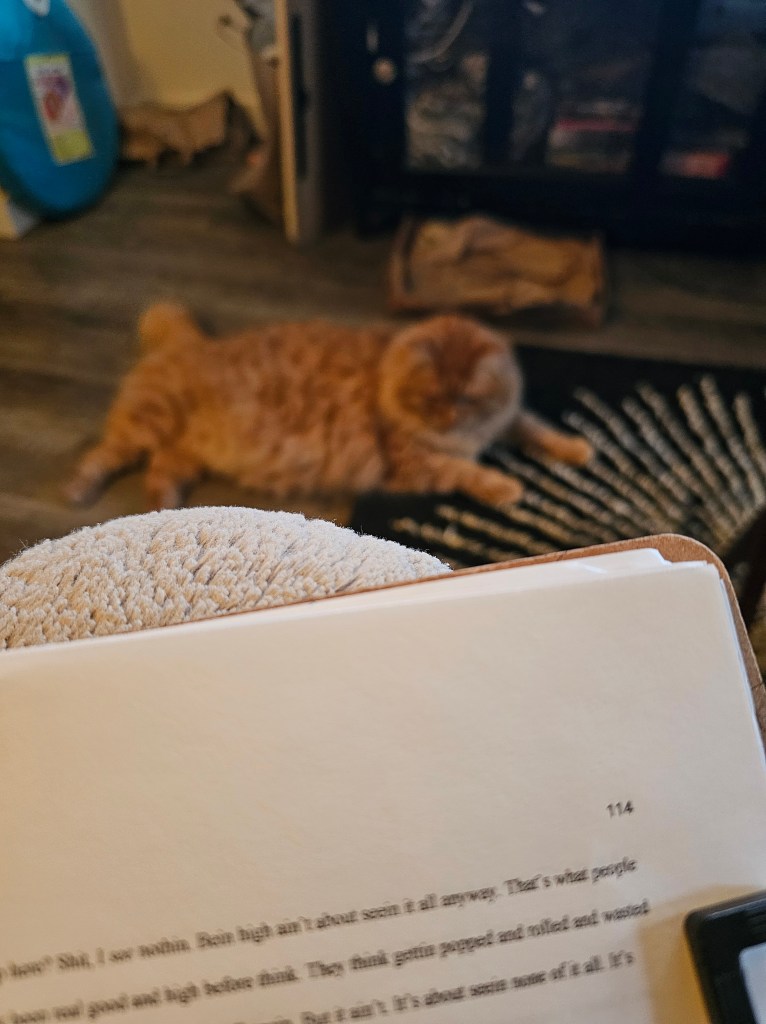
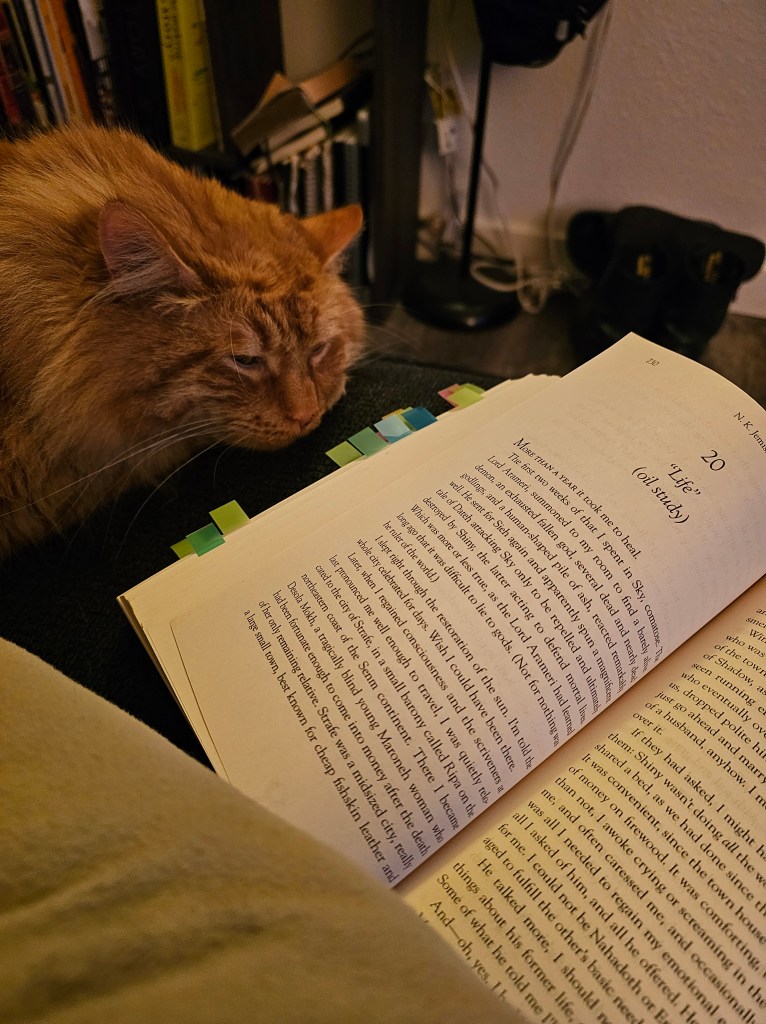
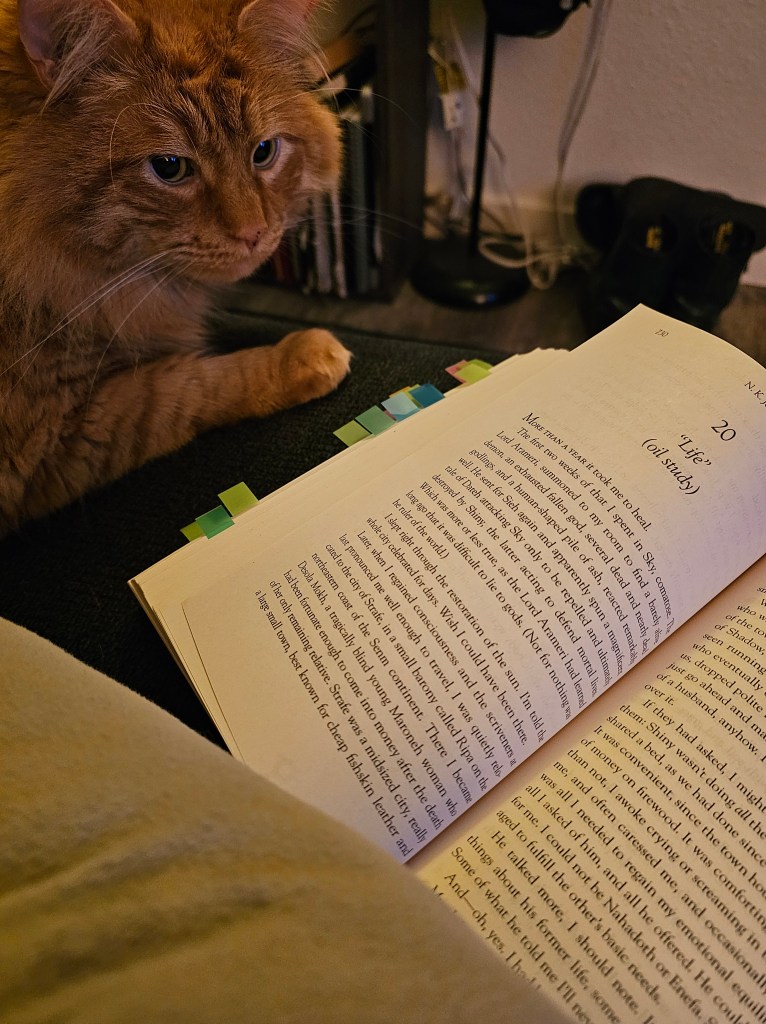
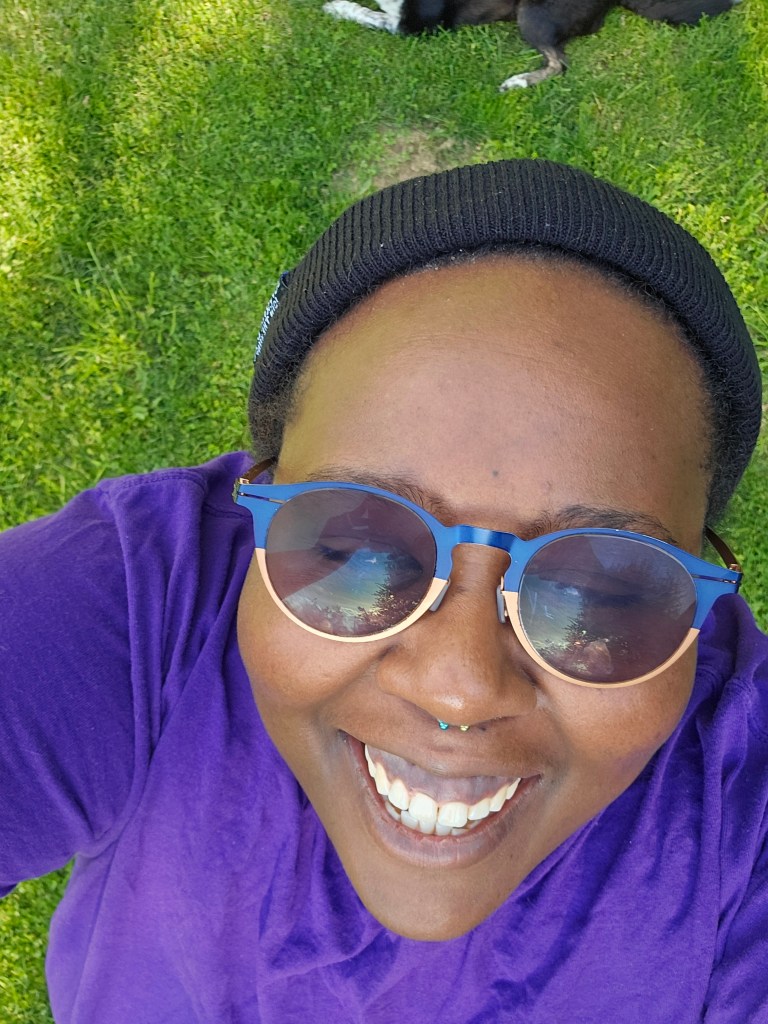
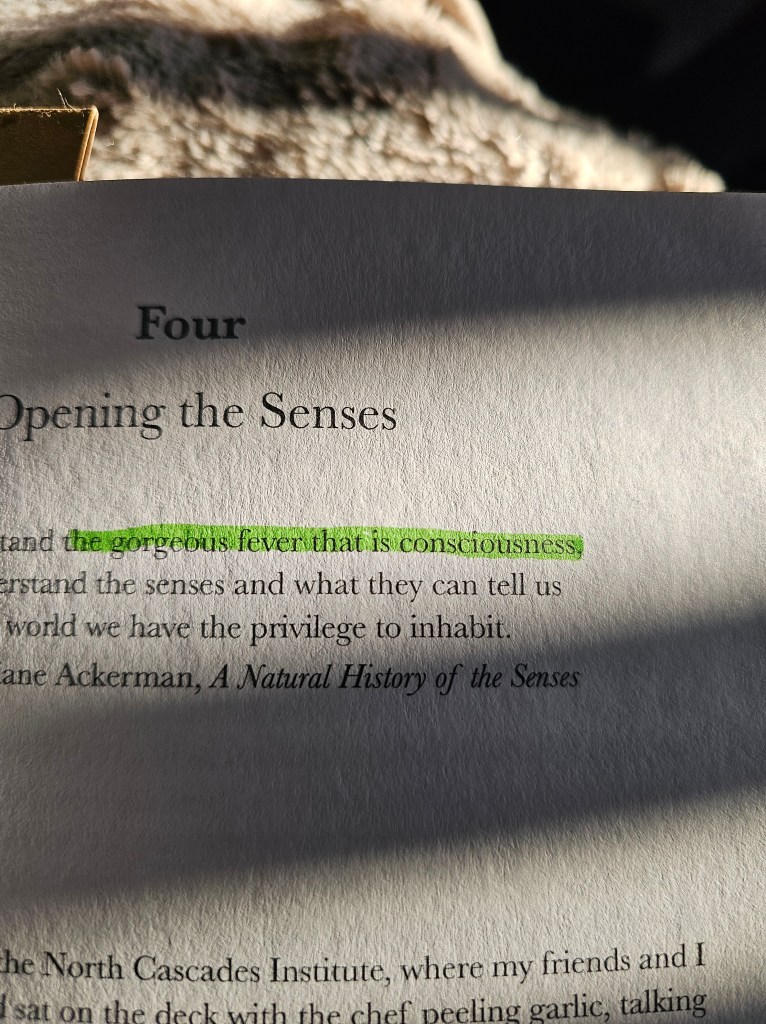
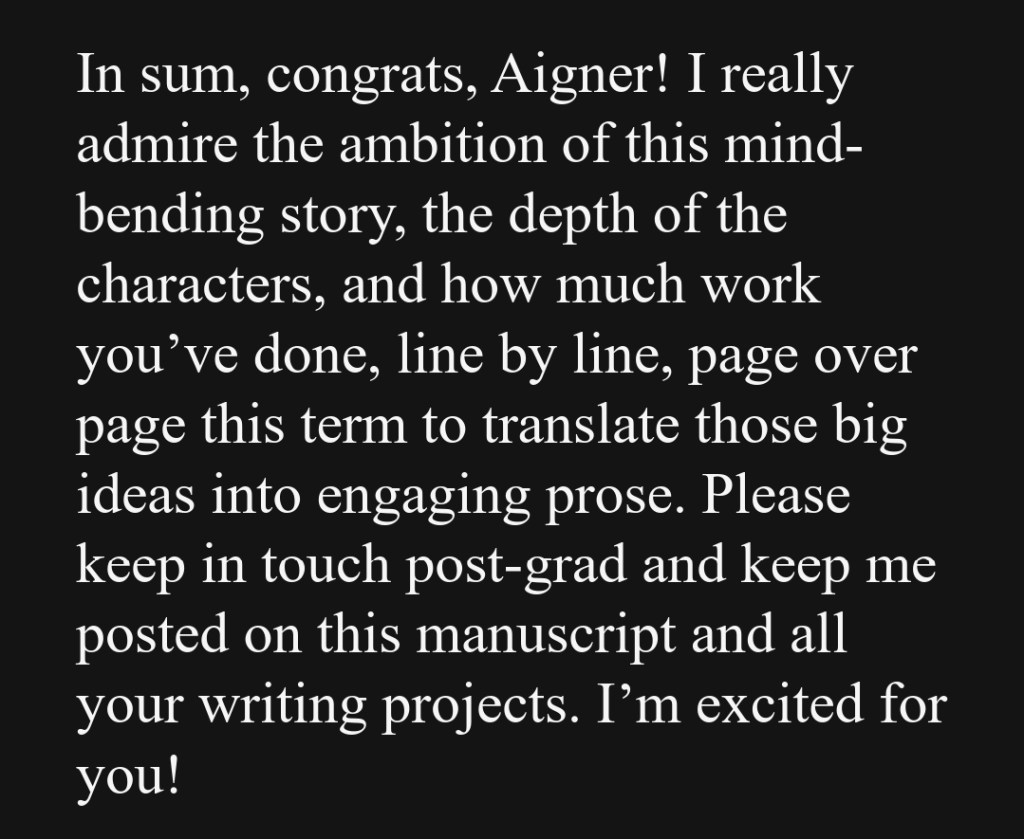
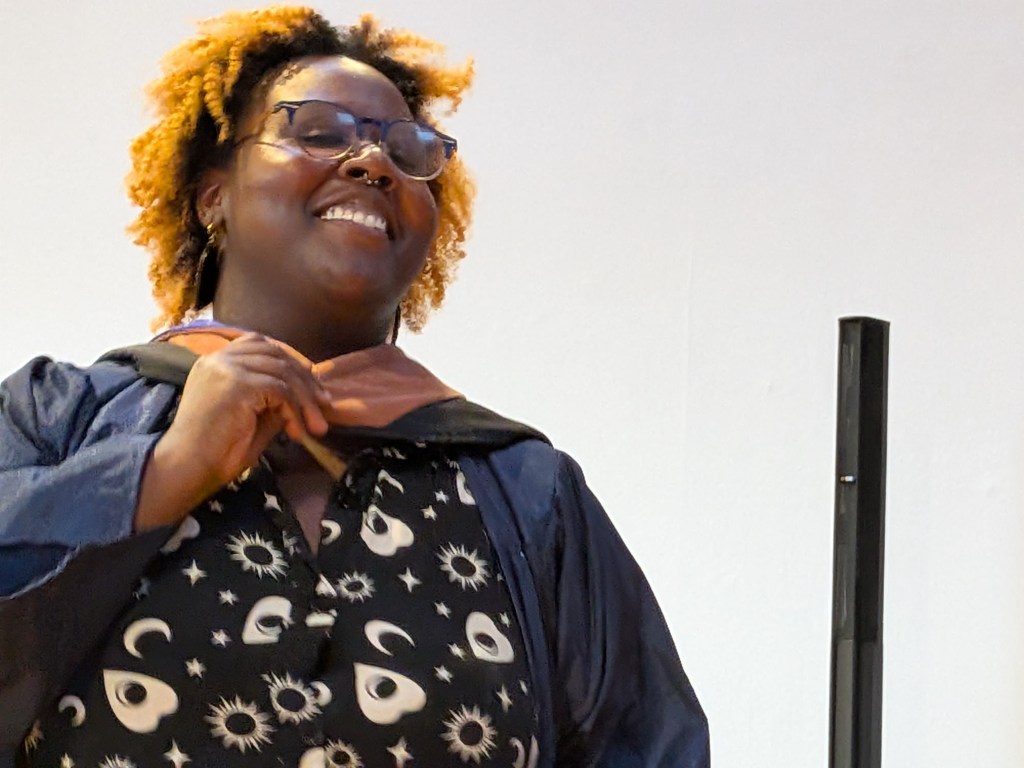
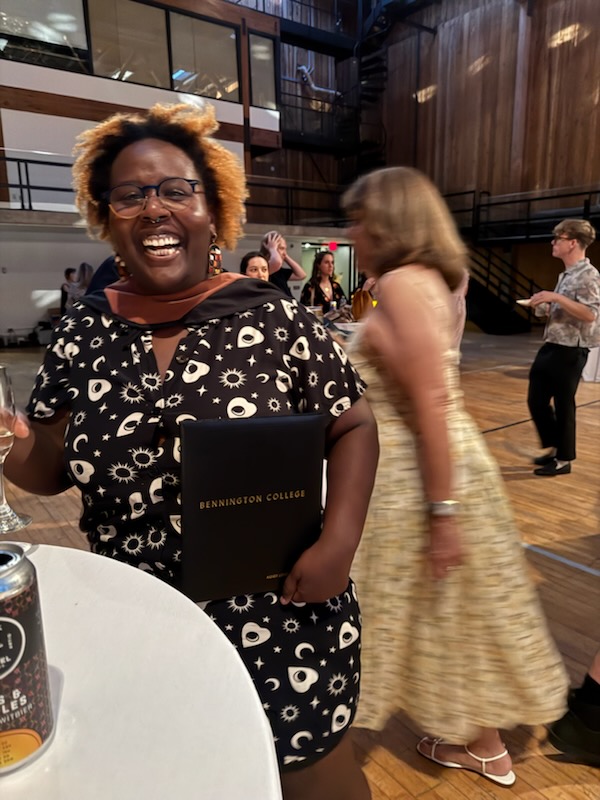
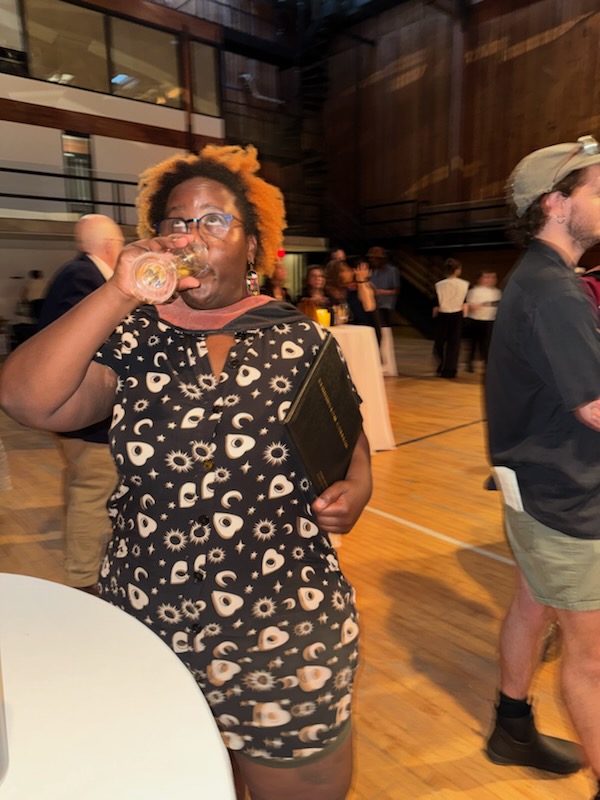
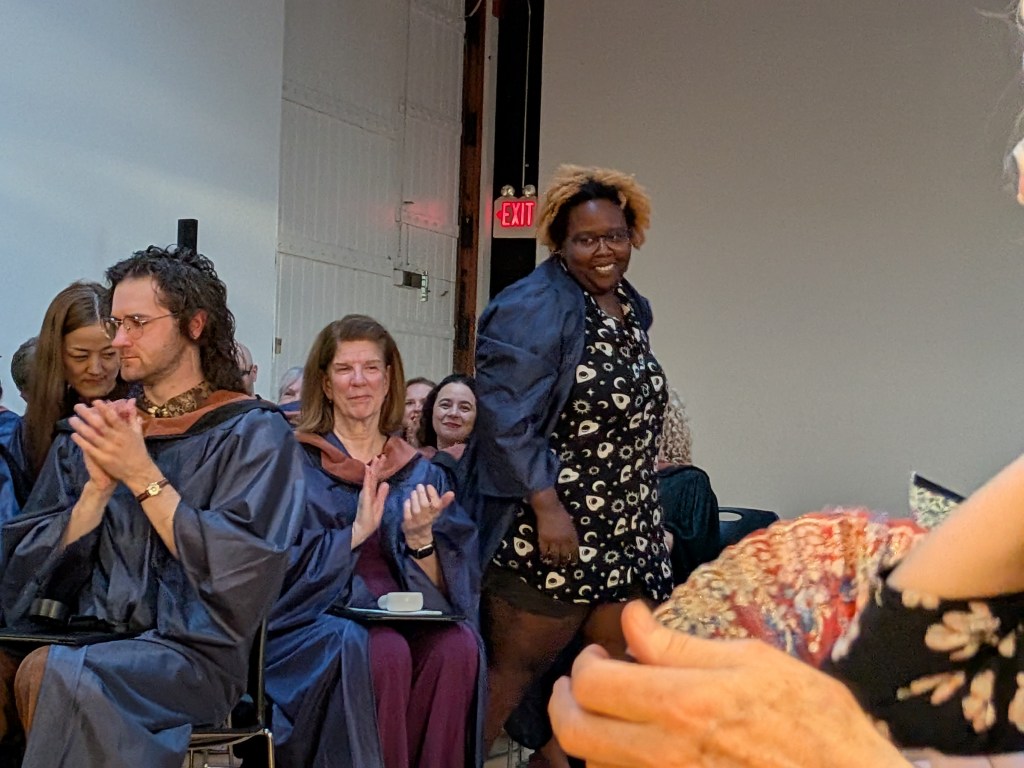
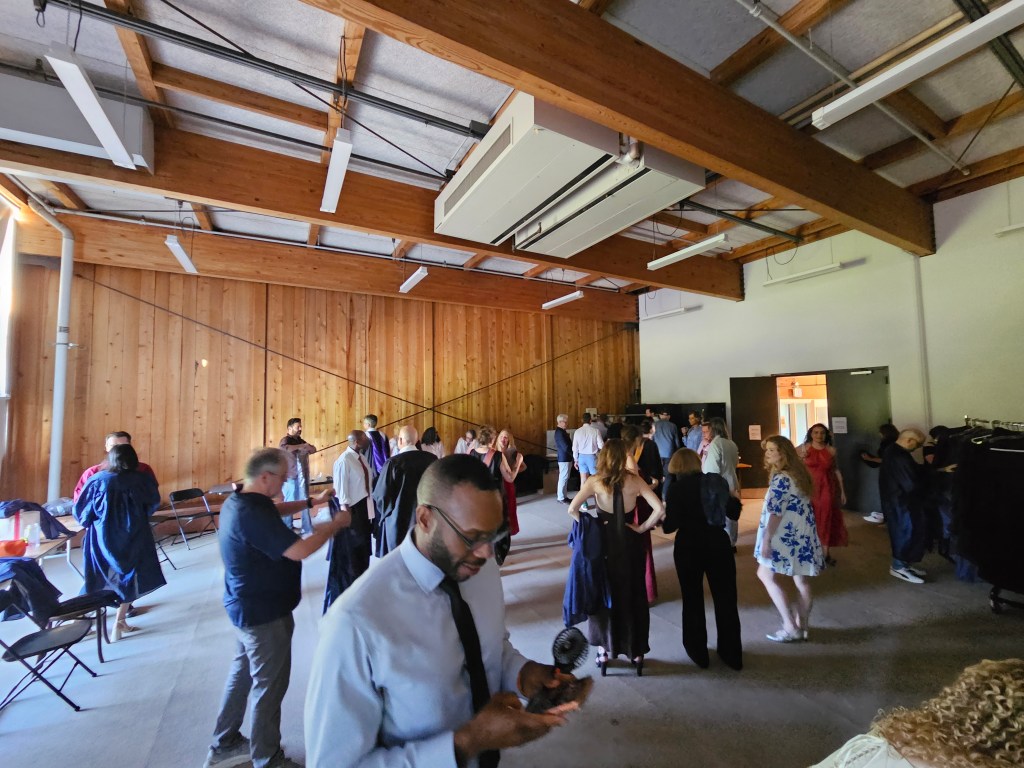
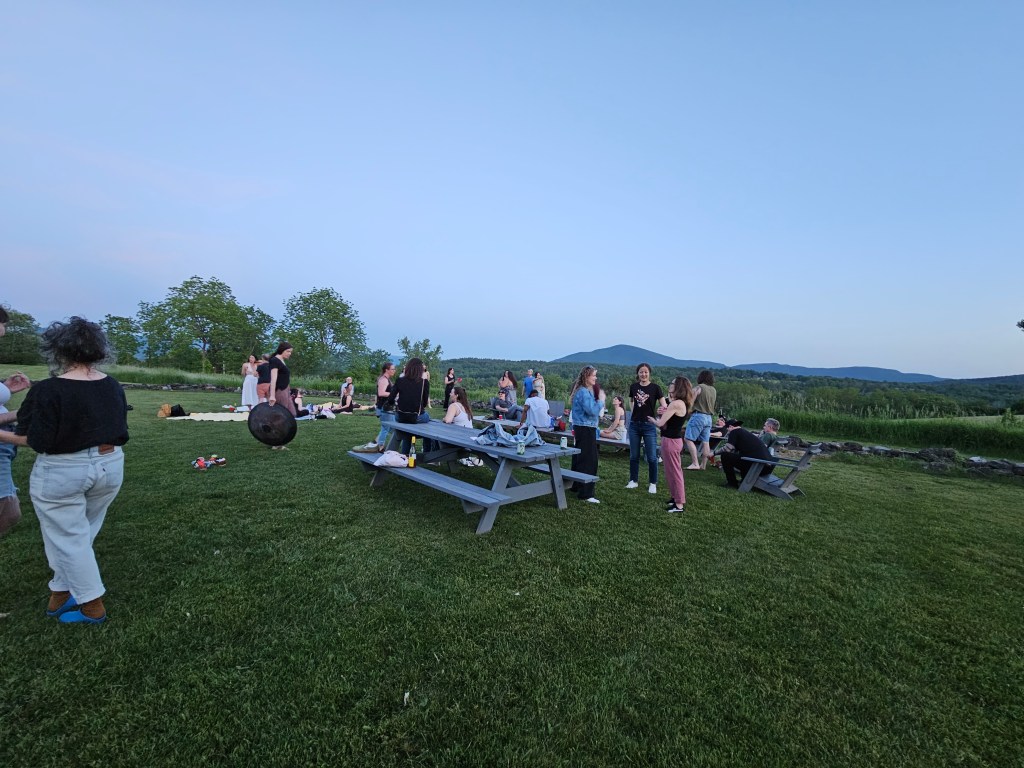
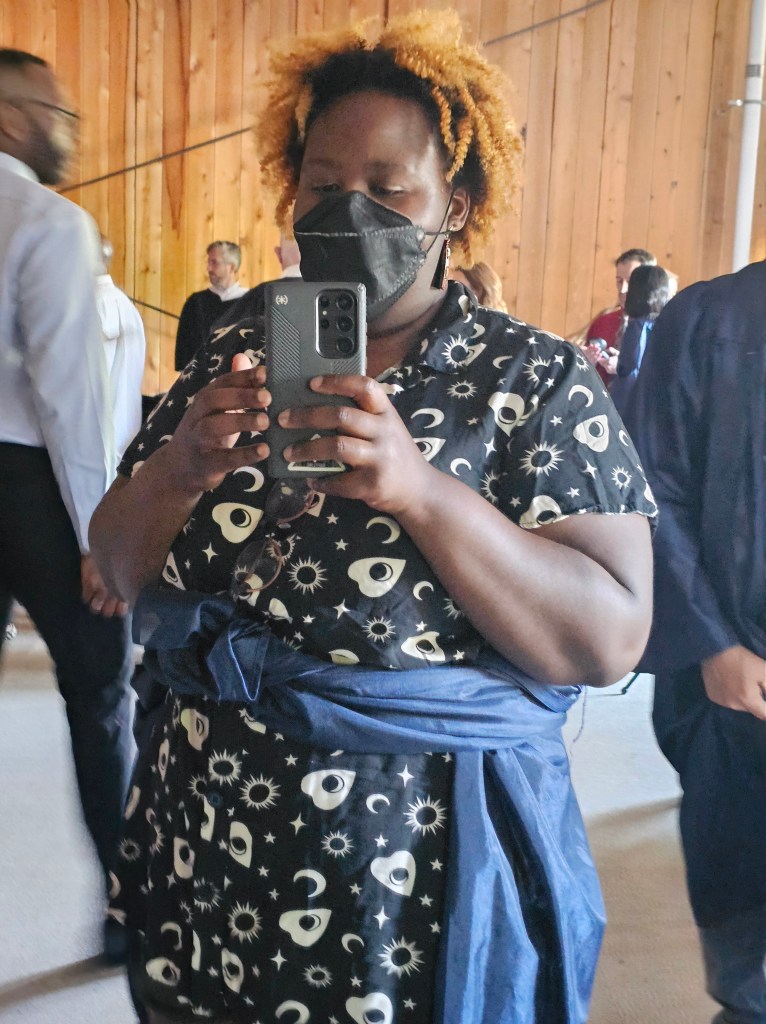
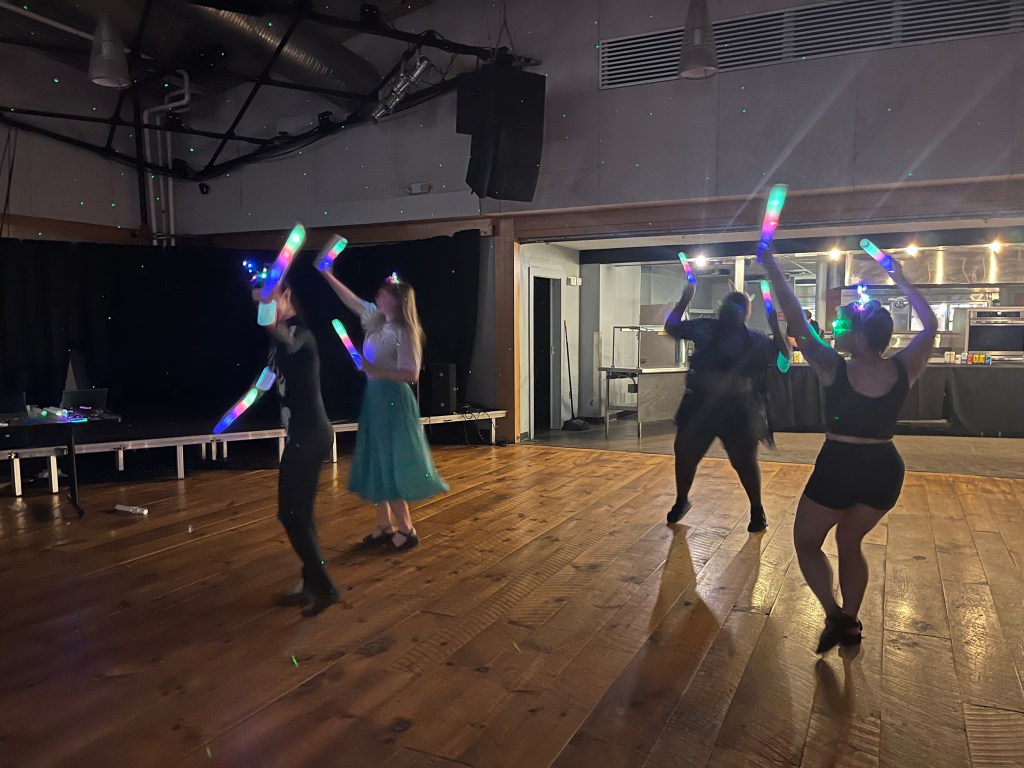
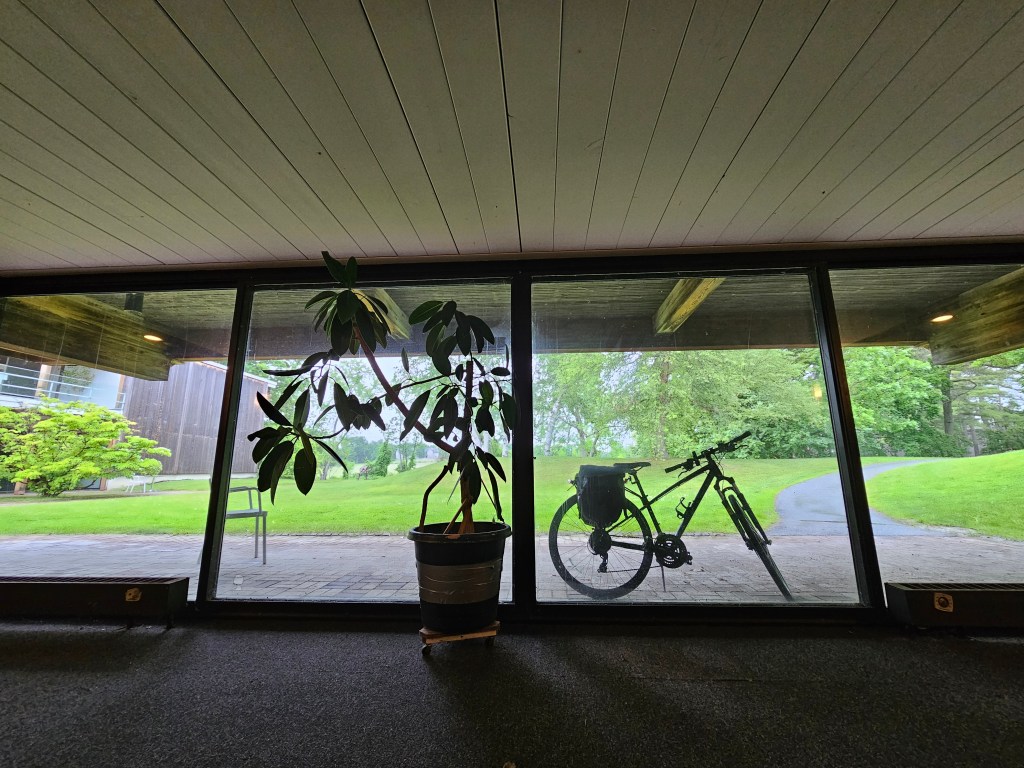
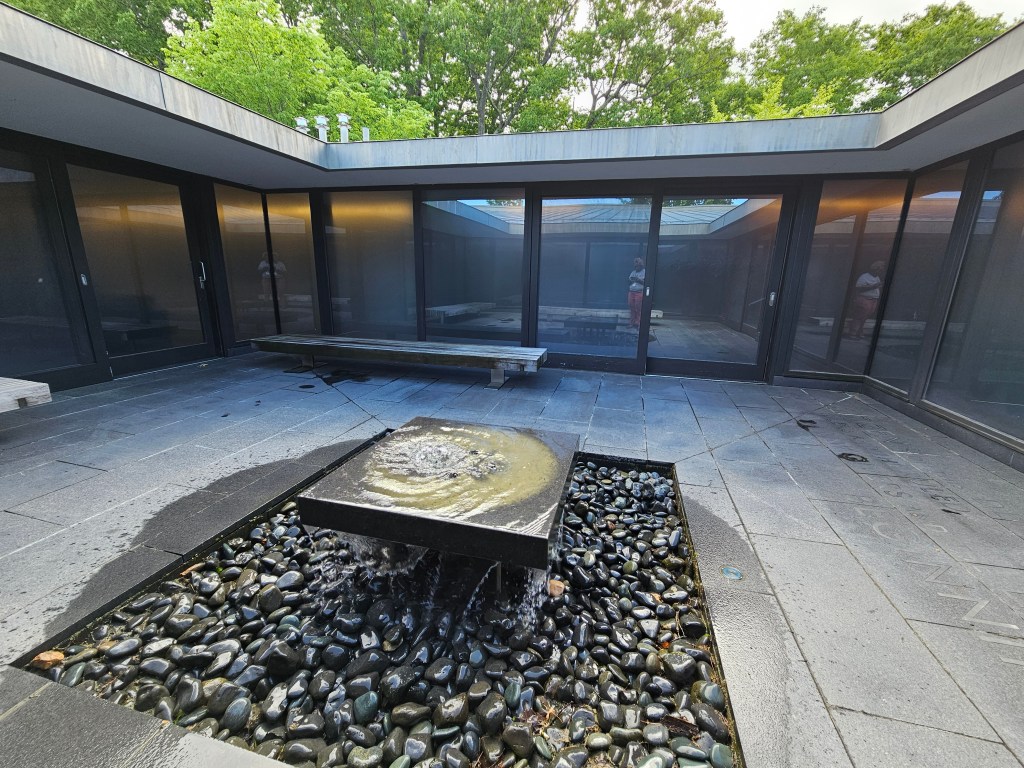
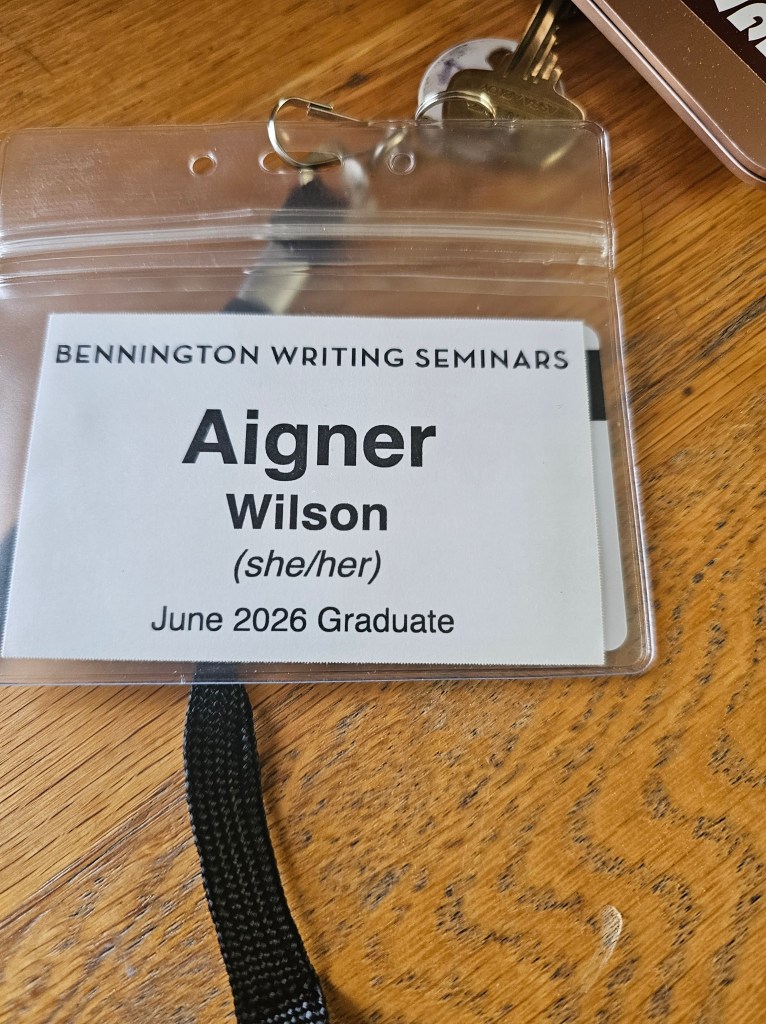
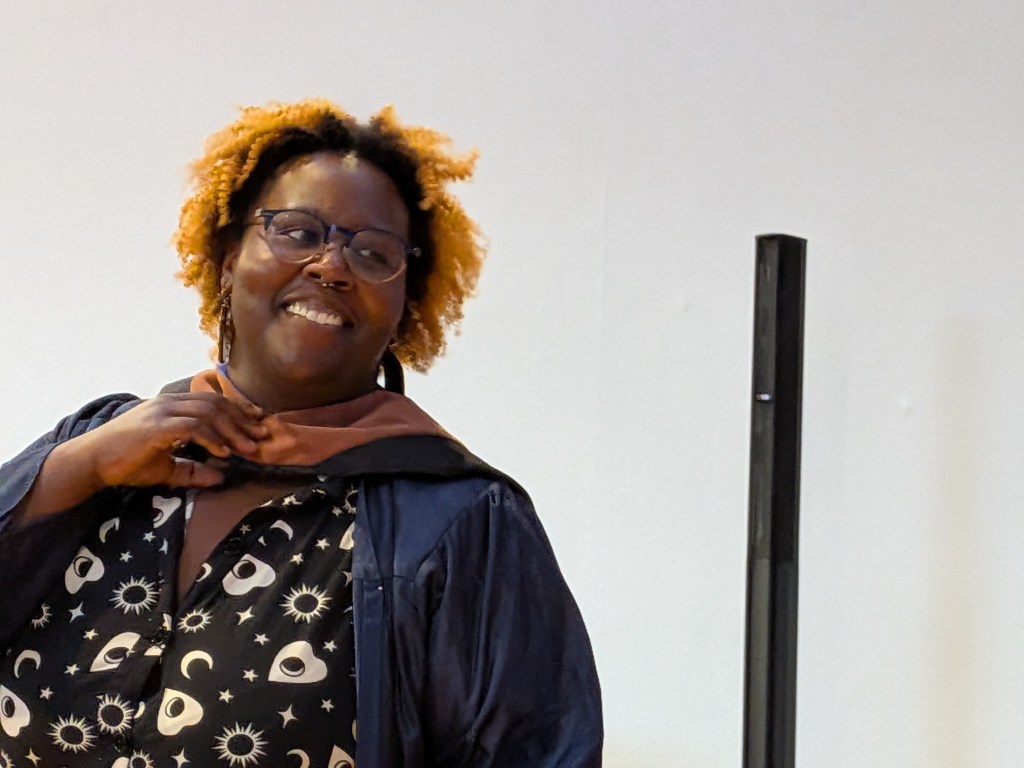
6/20: I graduated this past weekend and had my final Bennington residency. I didn’t do daily diary entries to keep up with everything that I did and I’m glad that I didn’t. I originally went into my final residency with a mind toward networking, getting the last dregs of opportunity from the program, going to readings and lectures and soaking up all the literary arts that I could. What I ended up doing was feeling the full weight of goodbye. I ended up watching all my cohort do their readings and defenses. I walked around a lot. Partied and danced and wandered and talked. I connected deeply with those around me for the most part. I cried only a little and laughed so much. I also met new people who said that this blog series is why they choose to go to Bennington and that made me so happy. It also made me feel like a Bennington celebrity for the incoming class.
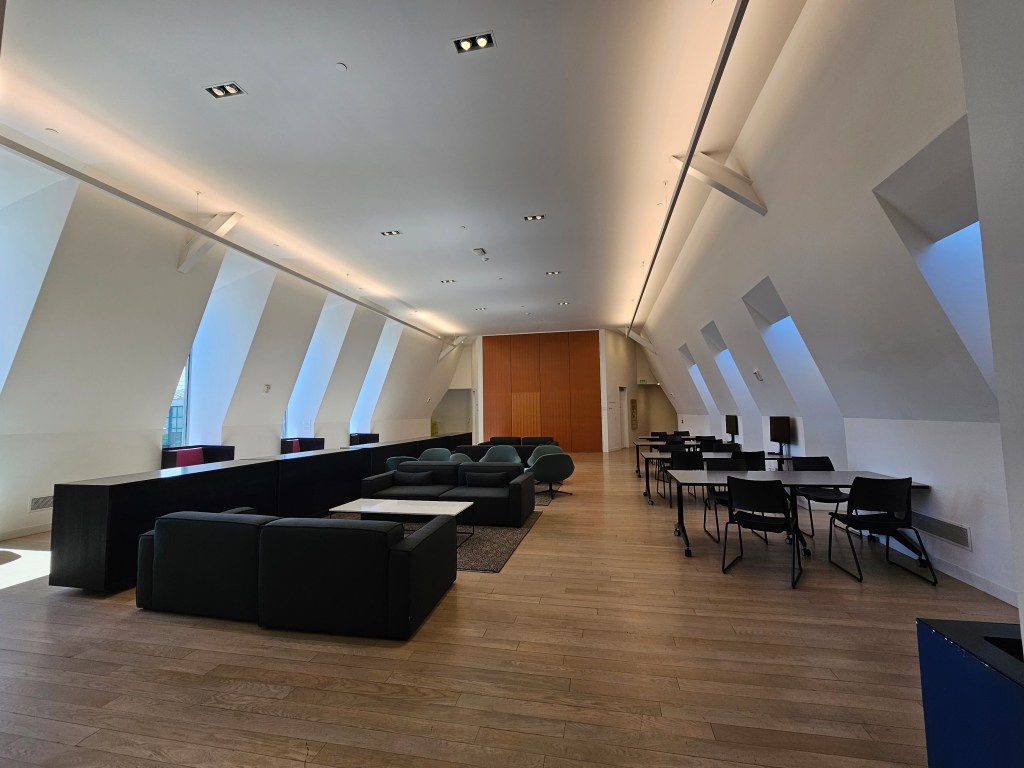
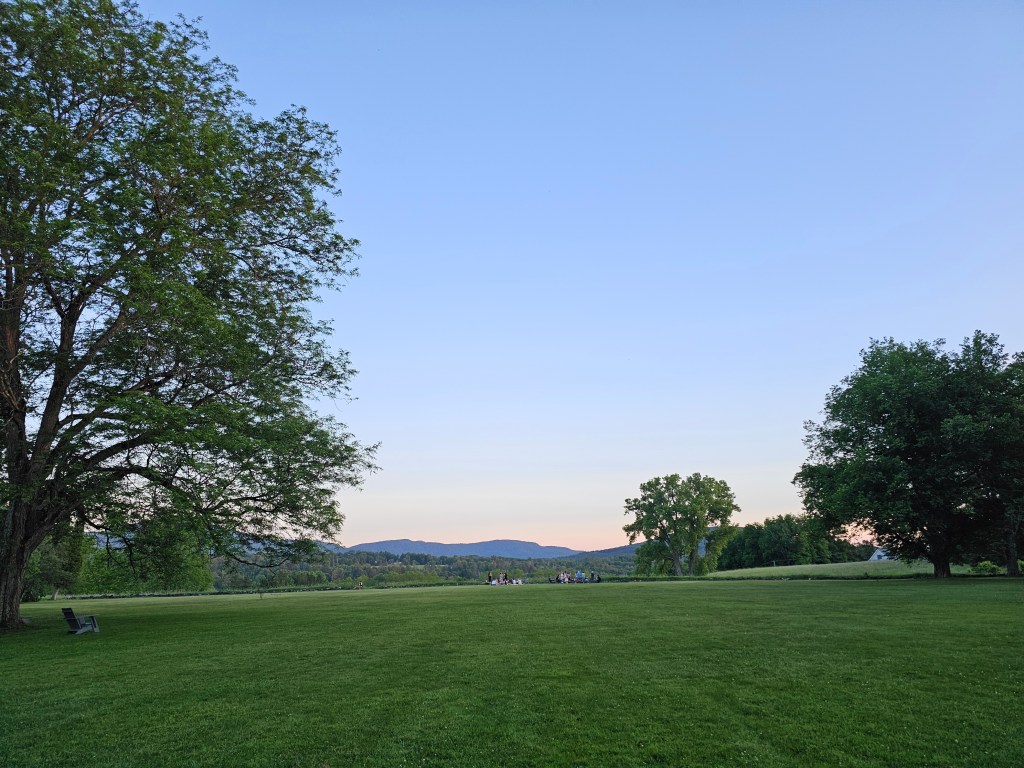
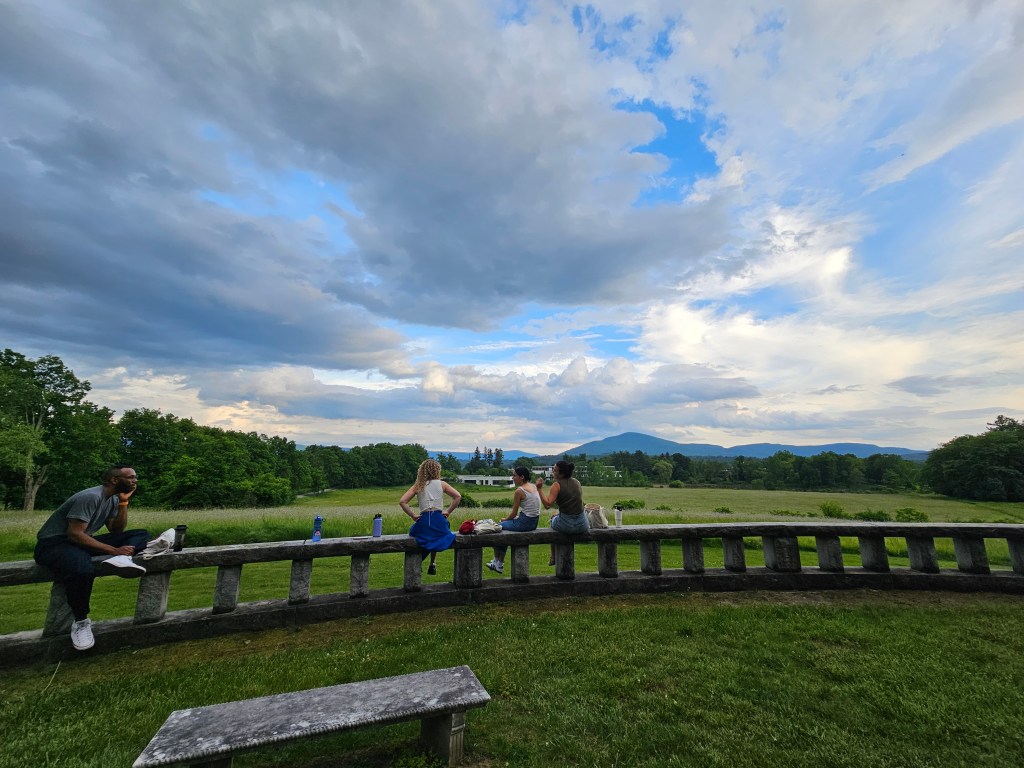
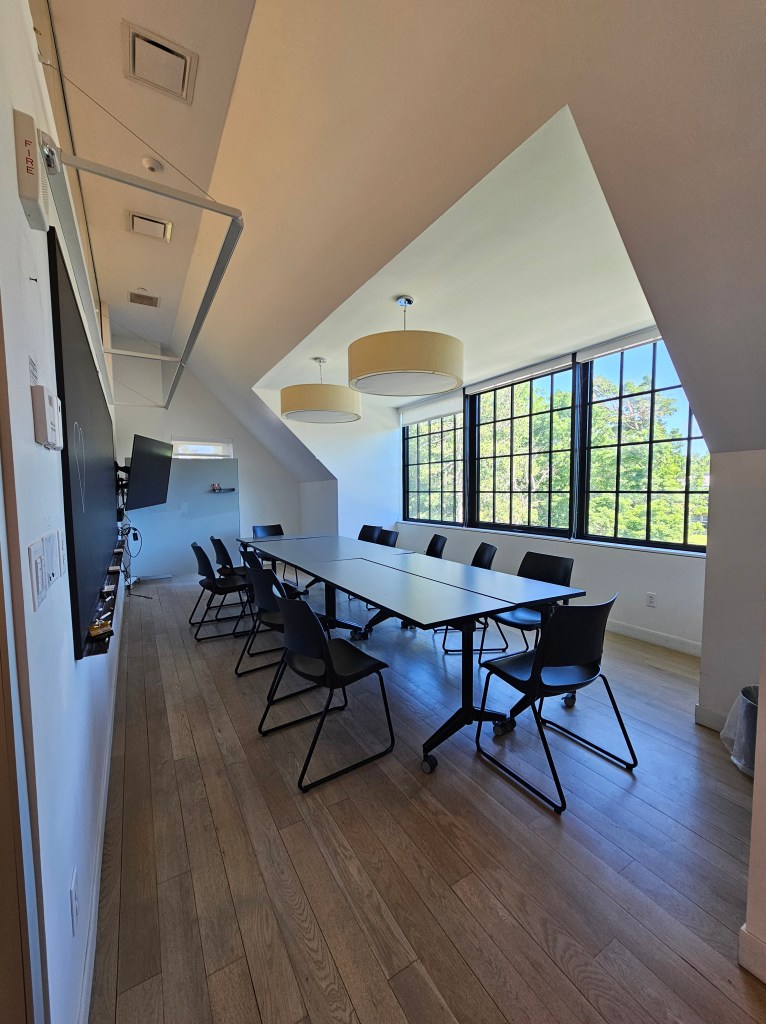
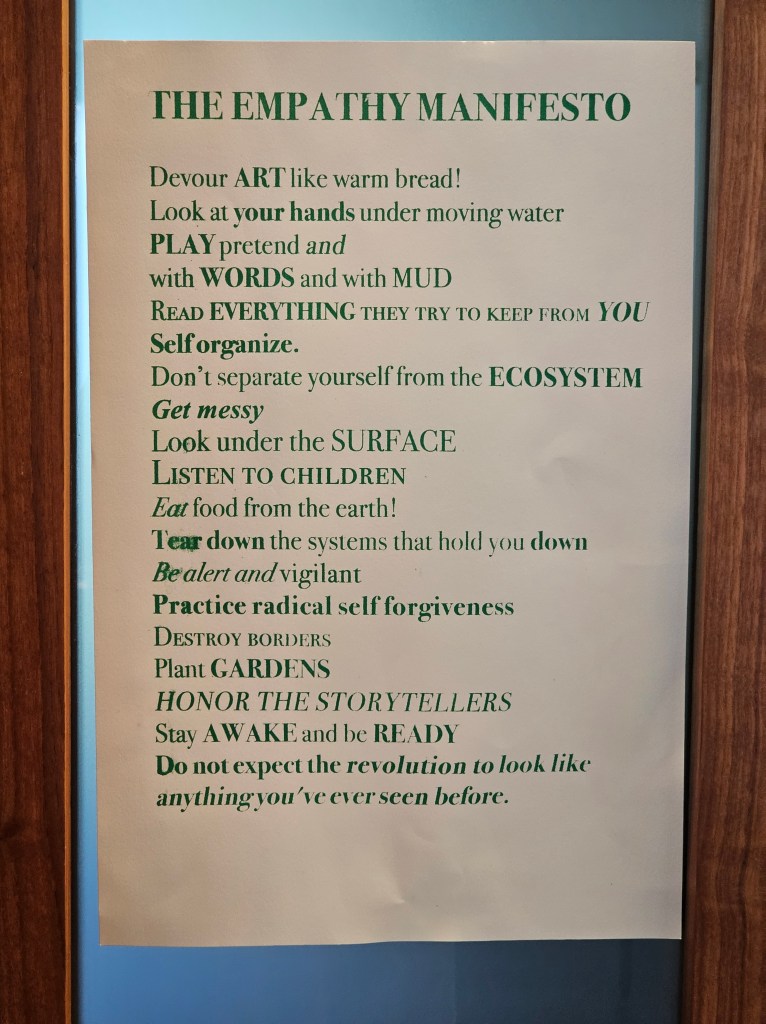
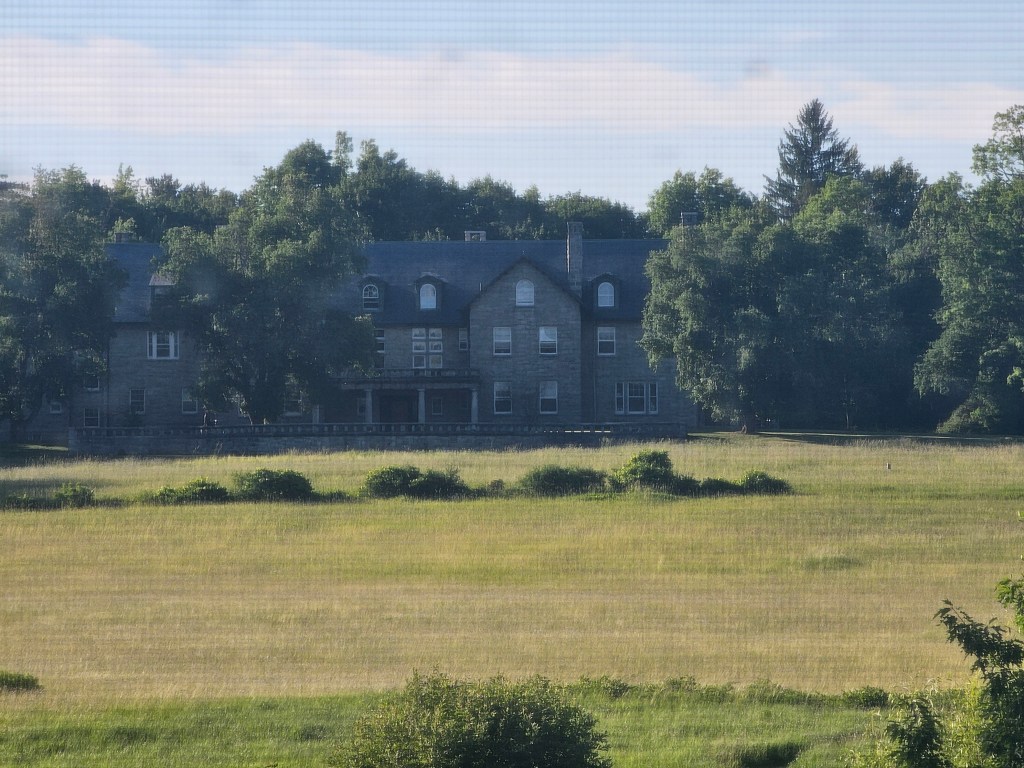
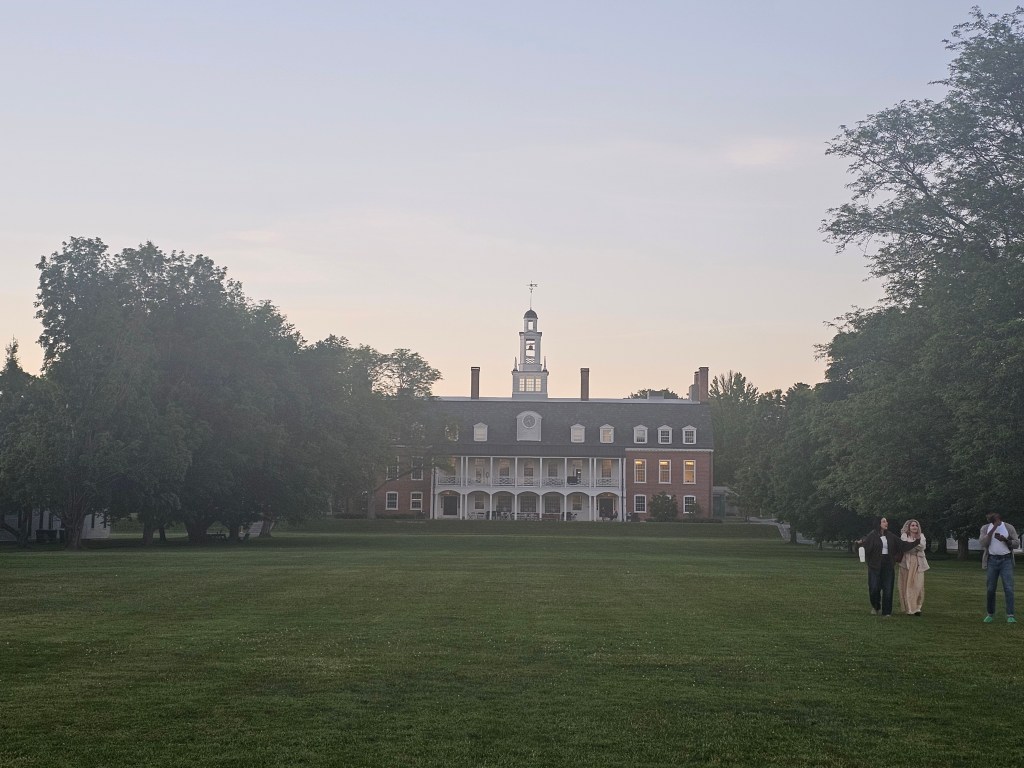
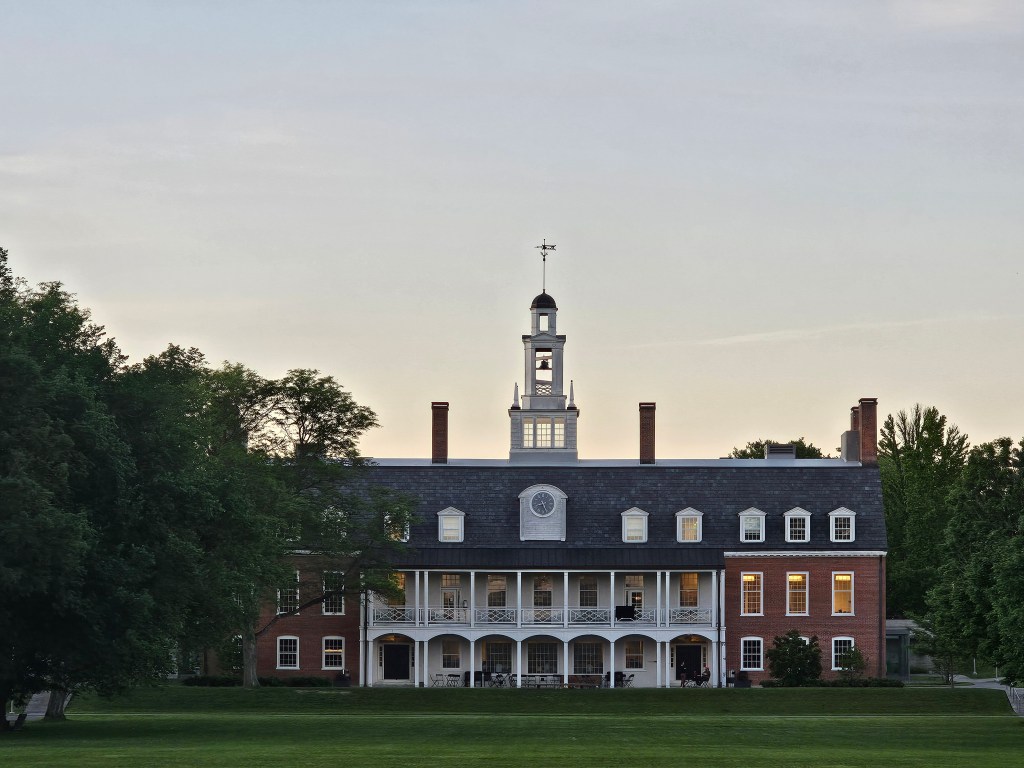
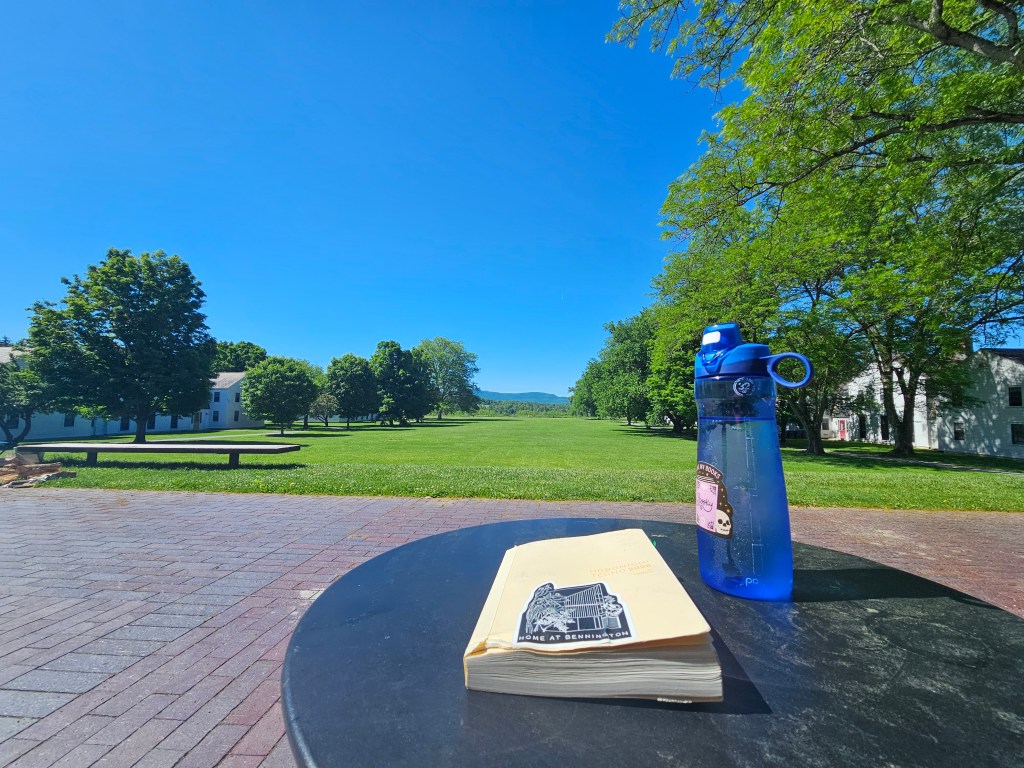
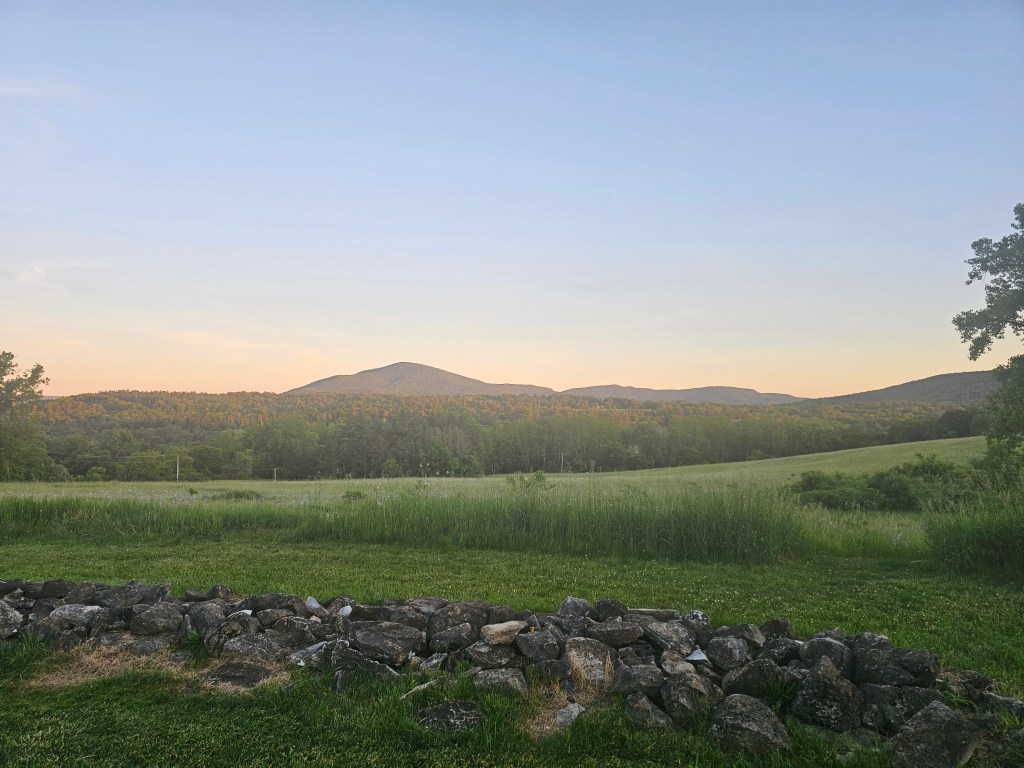
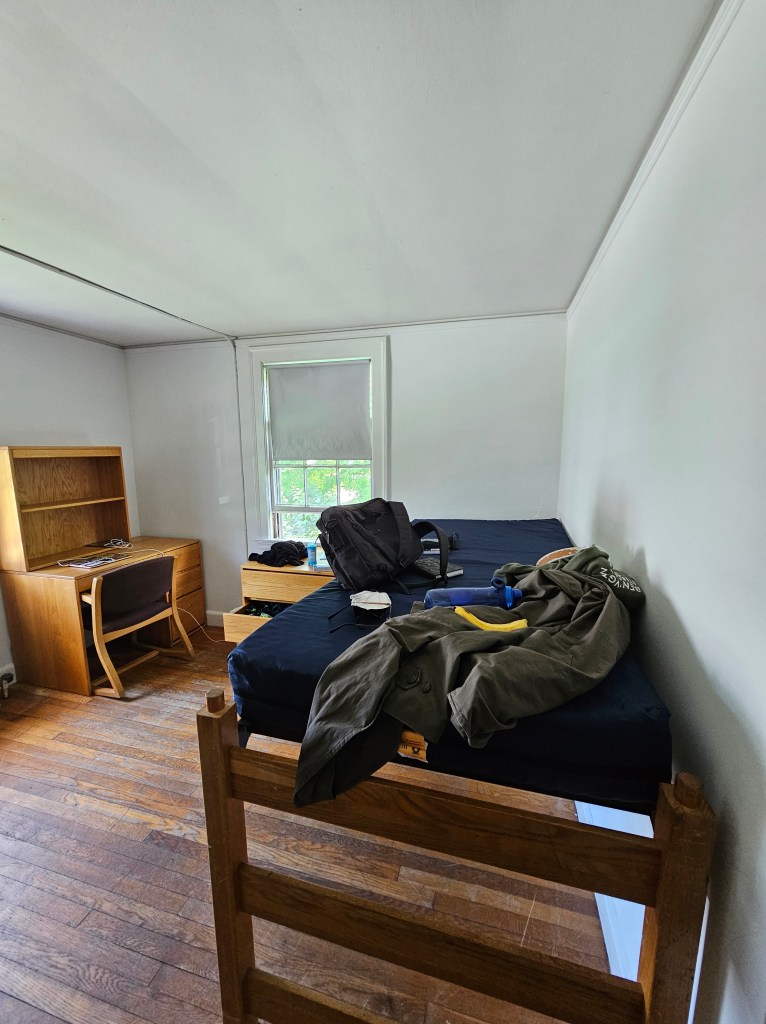
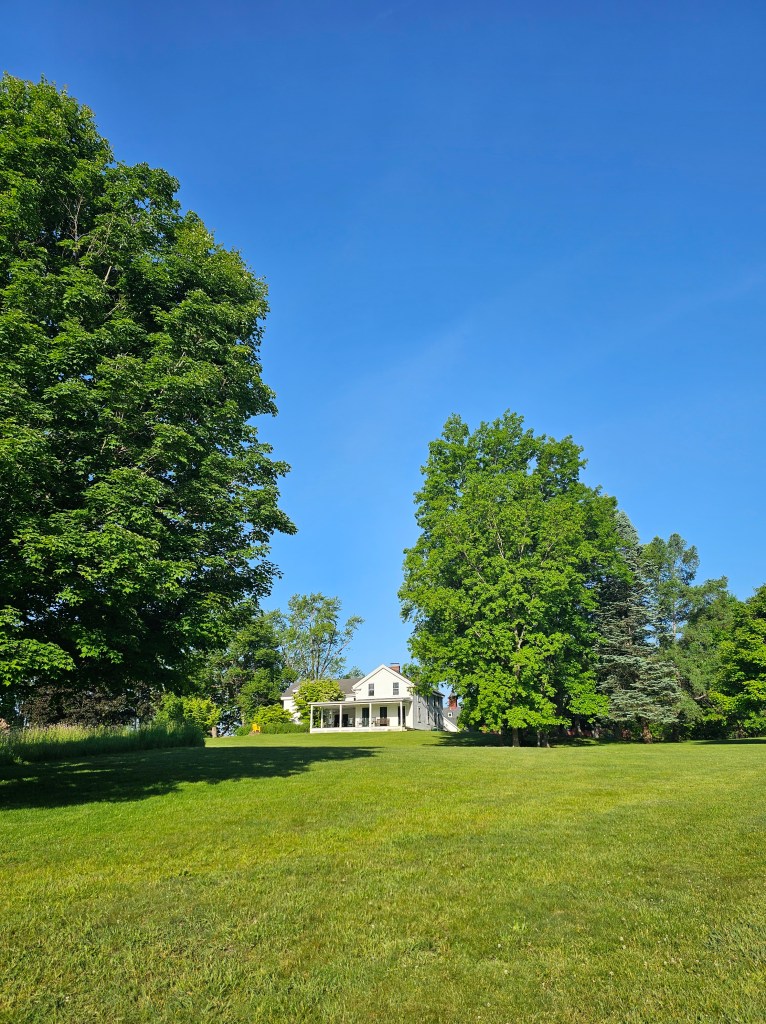
Bennington Writing Seminars June 2026 Summer Residency – My Final Month as an MFA Student
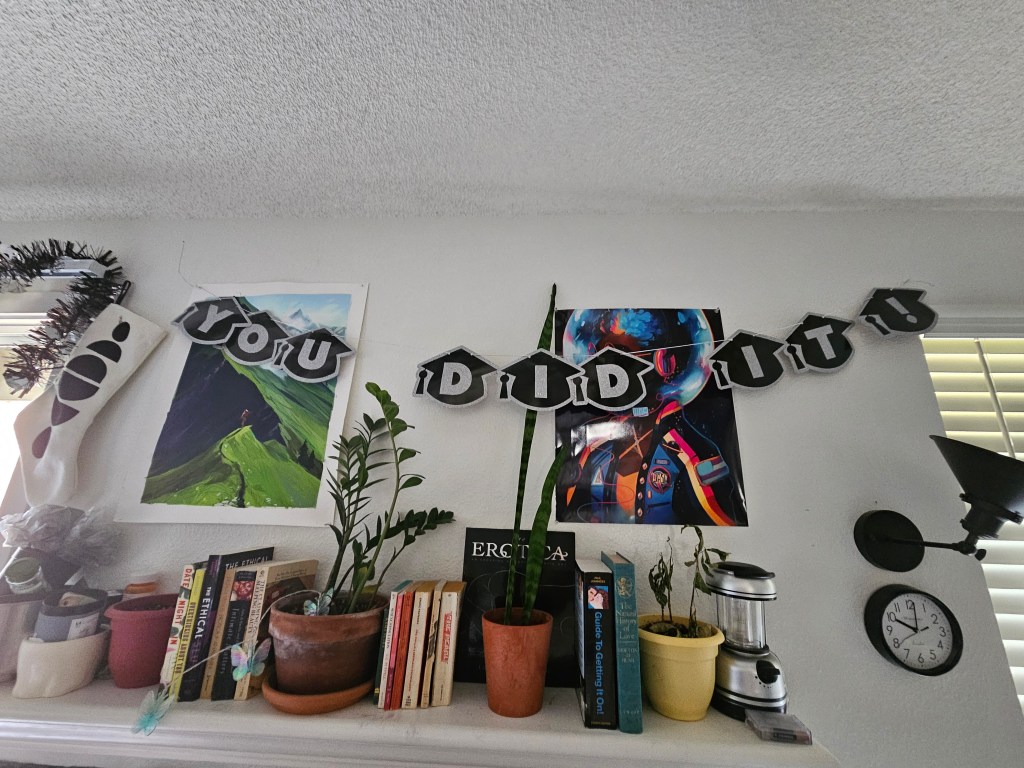
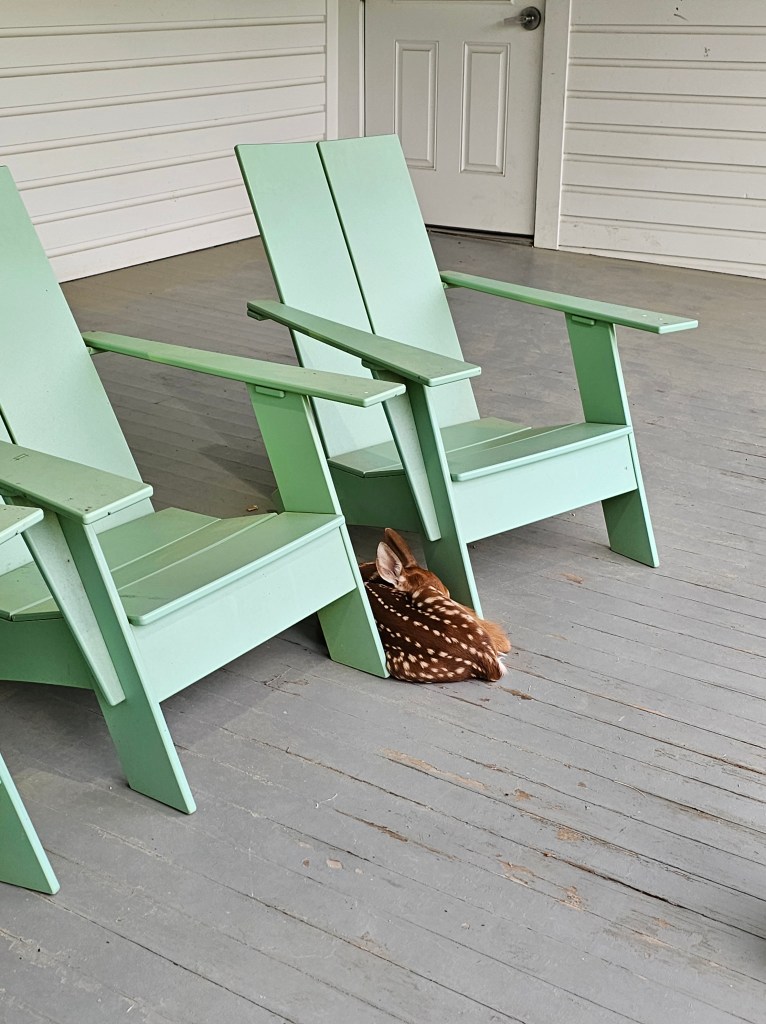
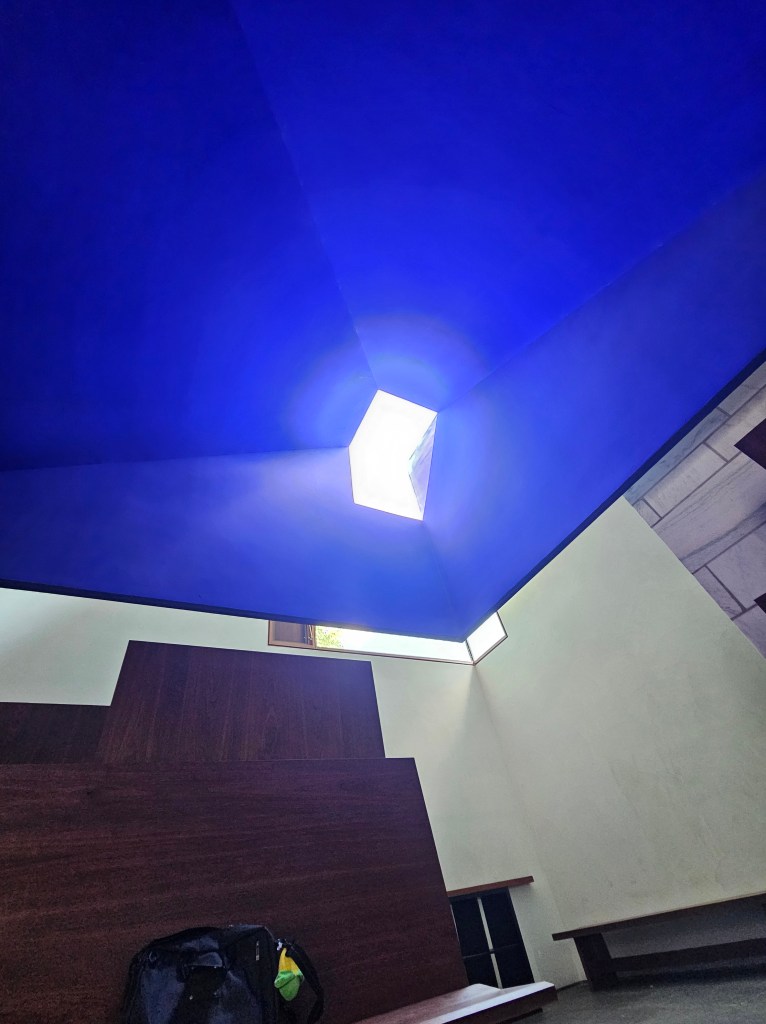
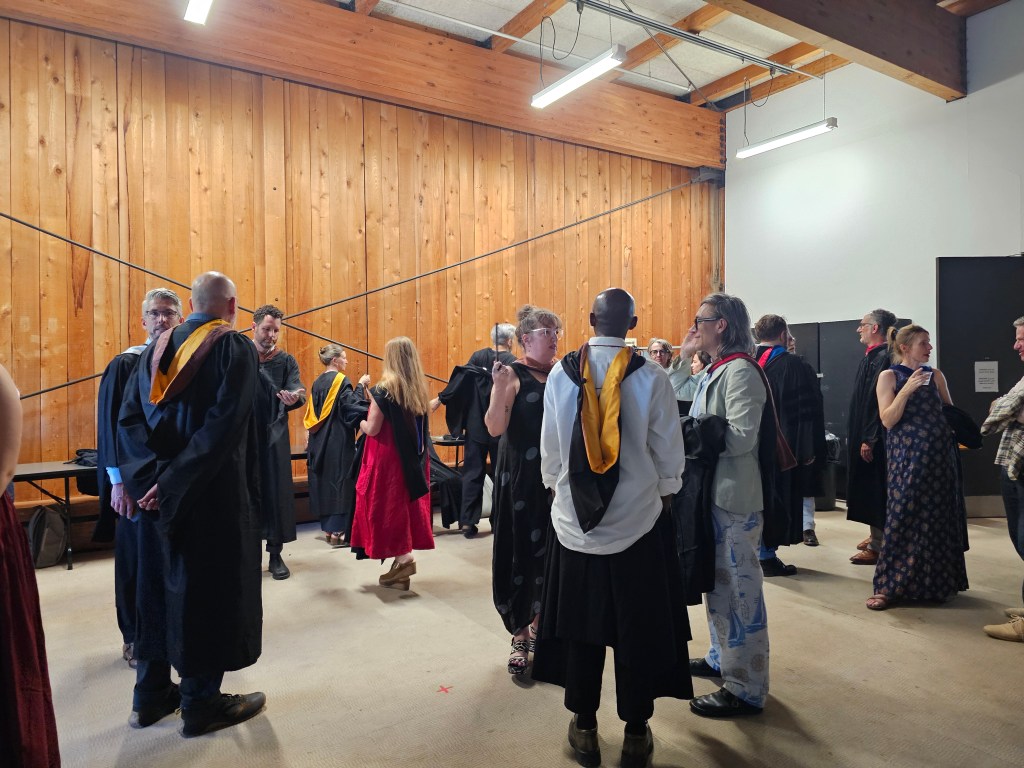
Post-MFA Life – Keeping the Creative Fire Burning
I’m writing this in October, almost four months after graduation. Looking back at those 12 days on campus, I remember it was that same Bennington experience. It’s hard to describe, but I hope I’ve been able to capture it over the past couple of years in these blog posts. Being on campus at Bennington during those days surrounded by other authors and a continuous schedule of events around creating and discussion and connection is like living in a small writer’s colony. There’s a little town just within walking distance of the campus that makes the whole area feel like you could stay forever.
This last residency was that to the extreme because I knew it was going to be the final time. I knew when I landed that I would be saying goodbye and hello and trying to make the most of the whole MFA experience one last time. There was an agent on campus and editors and publishers, so it kinda felt like the pressure was on to make a mark and get noticed, essentially. I wasn’t alone in this feeling and a few people I spoke to had a feeling that they wanted to impress by doing their creative best for their defense and reading. Like a lot of my cohort, I tried to make the most of the connections I had made and also allowed new connections to form.
Some writers did leave with connections—I was lucky enough to be one of them. I met with an agent and pitched my work. It ultimately did not turn into a yes, but the process was still a great way of walking away from campus. With that connection and the feedback from faculty about my book’s promise, I left that last residency mentally swimming.
My partner was going to come to graduation but was not able to in the end. At the time, I was in a down mood about it and felt a bit alone. Then my cohort reminded me that I wasn’t. The time during graduation when I thought I would be celebrating my accomplishment alone, I wasn’t. I had my cohort friends cheering me on and looking at me with so much pride and love.
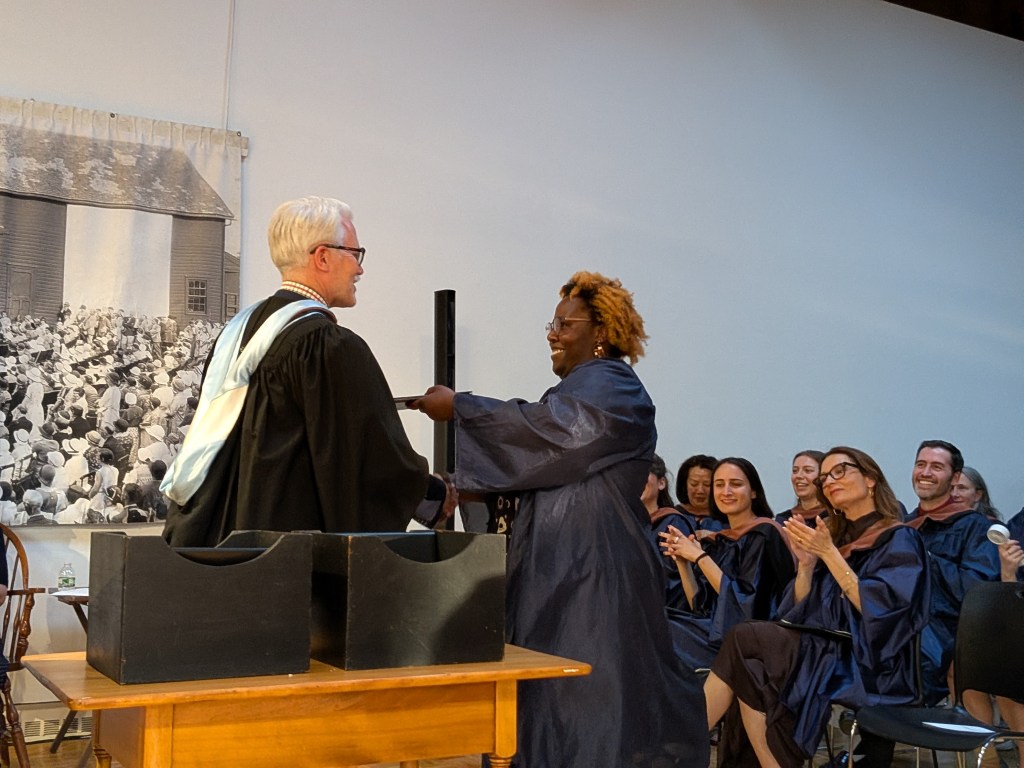
Which was the theme of my speech during graduation. That and the fact that we did it and made it and did something so hard and strange but we did it together, for the most part. Graduation was a beautiful night and ceremony. It came suddenly and ended too soon, but that night I read my defense—a very erotic and dark excerpt from my book—had an agent ask to see both my book projects. And I saw the spine of the milky way and a shooting star.
What’s Next for Me
Over the last several months since graduation, I’ve been pushing and going and doing and writing writing writing. I did take a break after graduation for a month or so, but that time was still filled with writing for Darker Times, the horror criticism and culture magazine I started with a few fine folks in June, and querying and work. I did get the itch to return to the page in August and began to gear up again for writing my next book that I promised to do as a treat since I completed my hard novel for grad school.
I spent September and October drafting that new novel in a quick and passionate way. I just hit done on that over the last weekend. In August, I also printed out my manuscript that I wrote during grad school. The big literary novel that I rewrote twice from scratch during the two years at school—I did a photo essay of the process of writing that first draft. I’m the type of writer who likes to have multiple projects going in different stages at once so that there is always something moving through my creative pipeline. It’s been helpful throughout my career and hasn’t really hindered me yet—though when I was drafting my thesis novel, I did push everything else aside to just focus on that project because I knew it required everything from me.
Now that my newest novel is done, let’s call it Project Waterfall for keeping track of it, I’ve put it aside until December when I’ll do my edits. My focus is now going to turn back to my thesis novel (Project Boulder). I am still reading through the printed out draft of the novel and making developmental edit notes. The plan is to finish that off in November and do more research around the setting, religion, and physics of the world. I’m also using Project Boulder on several fellowship and residency applications that I mentioned above. I’ll continue developmental edits on the project through the end of the year, putting it into Scene Builder, my free scene building app for fiction writers, to both test the program on a unique narrative structure and to make sure the novel is moving the way that I want. Then in 2027, I’ll dive into content, line, and copy edits for Project Boulder with the aim to have a querying or submit ready draft done by summer 2027 or early 2028.
Project Waterfall, even though it’s just in a first draft that I haven’t had a chance to read through again, is in really good shape (famous last words). My plan with that book is to edit it in December while putting Project Boulder into Scene Builder and get it ready to query early 2027. If I don’t land an agent with that book or an agent I do land doesn’t like it, I’ll potentially self-publish the book.
I also launched Scene Builder, a digital version of my popular article series on scenes and spreadsheeting novels. I actually ended up building the app over the last several months of my thesis term on Sundays. One of the things I’ve learned about myself over the last couple of years is that I really enjoy building, designing, and crafting products or experiences or even urban design ideas. Most of these things are simply sketches in my notebook that sometimes appear in stories, but Scene Builder was a digital tool that I knew I could build if I gave myself the time and space. Building that was a great break for my creative mind because it was all coding and building and not writing a story, which is exhausting.
Along with work on my own book projects, I’m helping more people with their own books and stories. I’ve been working as an editor and mentor over the last several months and its been such a rewarding experience to work closely with writers to bring their stories and visions to life.
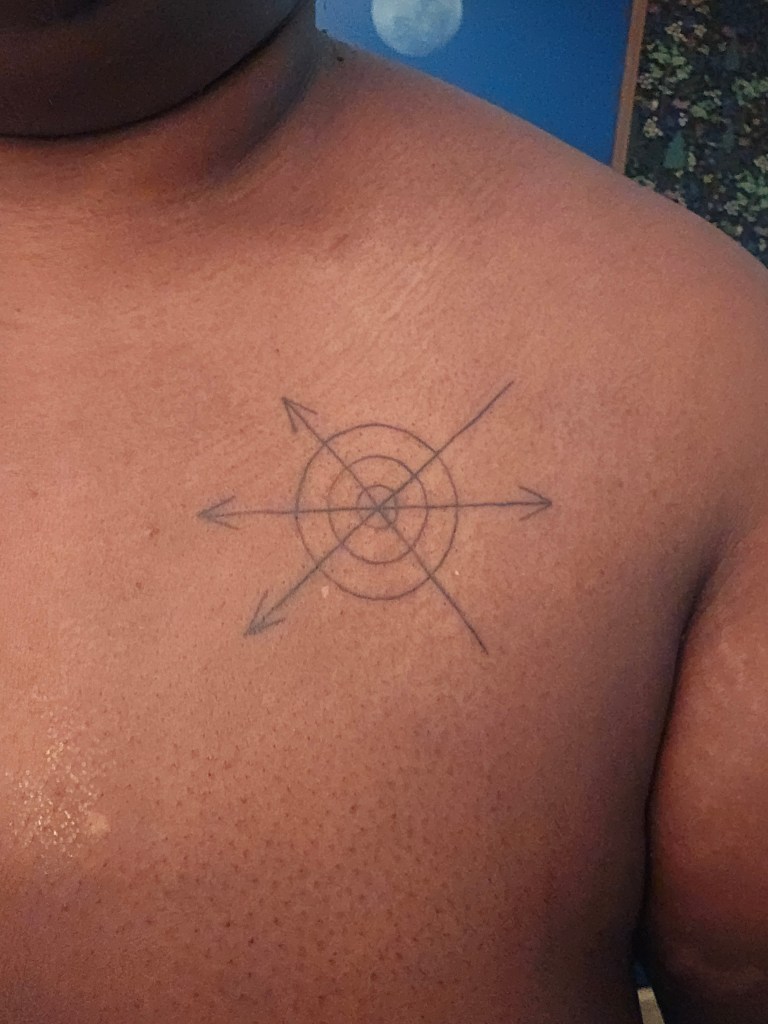
To commiserate the whole MFA, thesis, and novel writing experience of the last two years I got a tattoo. I’ve also just been trying to live my dreamy writing life in the moment moving from boring to exciting to dull to creativity to overstimulated and annoyed and just trying to take it all in without forgetting everything I learned both about writing and myself in the last two years.
If you’re new to the website, consider subscribing to stay up to date with all my writing escapades. I’m Aigner! A Hugo award winning editor and Ignyte Award nominated writer of fantasy, science fiction, horror, and all things weird. You can check out all my stories here. I normally post once or twice a month on this blog, and it’s always about writing and my author career. Subscribe to stay inspired and in the know.
If you want more craft related articles and resources, check out my writing site, Pro Home Writers. Or subscribe to my Substack for thoughtful and in-depth pieces of literary critical analysis around craft.

